Switch 2 Boasts Major Accessibility Upgrades Over Original

▼ Summary
– The Switch 2 is Nintendo’s most accessible system to date, featuring improved system settings, mouse movement, and upgraded Joy-Cons.
– Unlike Xbox and PlayStation, Nintendo lacks extensive accessibility options in first-party titles and has no official accessibility controller, despite joining ESA’s Accessible Games Initiative.
– New accessibility features on the Switch 2 include adjustable text size, speech-to-text for Game Chat, and a screen reader, though these are already standard on competitors’ systems.
– The new Joy-Con mouse movement function is innovative but causes wrist strain and fatigue, making it impractical for prolonged use.
– The Switch 2’s larger Joy-Cons and reduced button resistance improve usability for disabled players, though battery life in handheld mode remains a limitation.
Nintendo’s Switch 2 delivers meaningful accessibility improvements that make it the most inclusive console the company has ever released. While Nintendo has historically lagged behind competitors like Xbox and PlayStation in accessibility features, the latest iteration introduces several upgrades that significantly enhance usability for disabled players.
The customizable control schemes remain one of the standout features, allowing players to remap buttons across different controllers, a game-changer for those with limited mobility. Even better, these settings seamlessly transfer from the original Switch, eliminating the hassle of reconfiguring controls for each game. New additions like adjustable text size, speech-to-text functionality, and a built-in screen reader bring the system closer to parity with its rivals, though these features are long overdue.
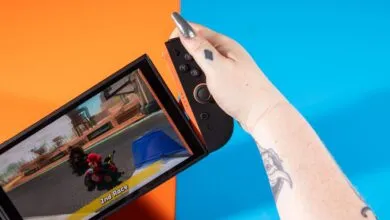
One of the most intriguing innovations is mouse movement support, which lets users glide Joy-Cons across a surface like a computer mouse. While the execution is impressively responsive, prolonged use leads to fatigue and wrist strain, making it impractical for extended gaming sessions. Titles that heavily rely on this input method may quickly become inaccessible for players with certain physical limitations.
The redesigned Joy-Cons offer subtle but impactful refinements. The buttons require less pressure to activate, a small adjustment that makes a world of difference for those with reduced hand strength. The slightly larger size also improves comfort, though battery life in handheld mode remains a drawback, lasting only about two hours before needing a recharge. For players who depend on tabletop play rather than TV docking, this limitation can disrupt the experience.
Despite these flaws, the Switch 2 represents a clear step forward in accessibility. The ergonomic improvements, expanded system settings, and clever input alternatives demonstrate Nintendo’s growing awareness of diverse player needs. While it doesn’t match the comprehensive accessibility suites of Xbox or PlayStation, it’s a welcoming upgrade for disabled gamers who’ve long waited for Nintendo to prioritize inclusivity.
As more games take advantage of these features, the Switch 2 has the potential to become a primary console for players who previously struggled with its predecessor. The progress is undeniable, even if there’s still room to grow. For now, it stands as the most accessible Nintendo system yet, proof that small changes can have a big impact.
(Source: IGN)