Nintendo’s Tomodachi Life thrives on sharing despite restrictions

▼ Summary
– Tomodachi Life: Living the Dream is a life simulation game that functions as a joke-generating machine, offering more creative tools and fewer restrictions than its predecessor.
– The game is a sequel where players manage an island of Mii characters, fostering their happiness and relationships to unlock new areas and features.
– It features robust creation tools for designing characters and islands, including new inclusive options for same-sex relationships and nonbinary characters.
– The gameplay focuses on setting up social situations between characters with almost no restrictions on dialogue topics, allowing for highly unpredictable and adult content.
– Nintendo has banned the use of the Switch’s built-in sharing features for this game to prevent out-of-context sharing of its unpredictable moments, though this limits player expression.
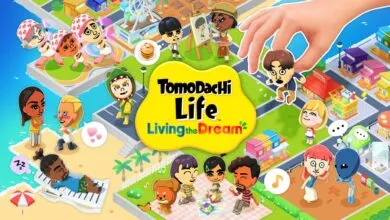
The appeal of Tomodachi Life: Living the Dream lies in its capacity to generate bizarre and often hilarious scenarios from simple inputs. It’s a life simulation game, but its true function is as a dynamic engine for comedy, where characters like popular cartoon figures can bond over unexpectedly dark humor. This Nintendo Switch sequel expands the creative tools significantly, yet it paradoxically imposes strict limitations on how players can share the very content they are encouraged to create, keeping the best jokes confined to the console.
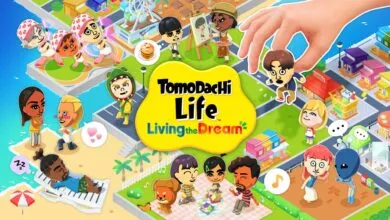
A follow-up to a uniquely strange 3DS title, this game casts you as the overseer of an island populated by customizable Mii avatars. Your role involves managing their basic needs and happiness by cultivating relationships and unlocking new activities. Over time, the island grows to include attractions like a Ferris wheel and a news station, blending elements of The Sims, Animal Crossing, and virtual pet care into a distinct experience.
Living the Dream truly differentiates itself through vastly improved creative freedom. The tools for designing Miis are robust and accessible, allowing even those without artistic skill to craft recognizable characters from various media. Critically, the sequel introduces more inclusive options, supporting same-sex relationships and nonbinary character creation, a welcome evolution from its predecessor. Island customization also expands, though these features unlock gradually.
The core gameplay loop involves orchestrating social situations and observing the unpredictable outcomes. You can foster friendships or romances by simply placing characters together, and the game frequently prompts for conversational topics in a Mad Libs-style format. This passive, observational playstyle is an acquired taste, but it yields consistent and often uproarious results for the right player.
Perhaps the most striking aspect is the apparent lack of content restrictions. Players can name characters and input dialogue with seemingly no filters. In a personal test, allowing a teenager free rein resulted in an island where cartoon characters discussed profoundly inappropriate topics with no intervention from the game. This level of permissiveness is startling for a Nintendo product, a company synonymous with family-friendly content.
This very openness likely explains Nintendo’s decision to disable the Switch’s native sharing features for this title. The company has acknowledged online that the game’s freedom leads to unpredictable moments, noting that out-of-context scenes could be misunderstood or misrepresent the intended spirit of play. Given that a core joy of Tomodachi Life is testing its boundaries, Nintendo may have concluded that any in-game filter would be circumvented by inventive players, making a blanket sharing ban the simplest solution.
However, this restriction feels at odds with the experience. The immediate impulse upon creating a perfect joke is to share it. The game fosters a personal, comparative humor, as players naturally want to showcase their absurd creations. While Nintendo’s policy may curb easy sharing via social media, it won’t stop dedicated fans. Platforms like TikTok will inevitably host recordings captured via external means, featuring these innocent-looking avatars engaging in wildly adult conversations. Ultimately, those players who embrace this unfiltered, share-driven chaos are the precise audience for whom Tomodachi Life: Living the Dream is designed. The game arrives on Nintendo Switch on April 16th.
(Source: The Verge)