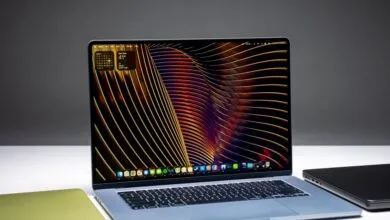
MacBook Pro M5 Pro & Max Review: Blazing Fast Performance

▼ Summary
– New MacBook Pros with M5 Pro and M5 Max chips are launching, with reviews highlighting powerful performance gains.
– The M5 CPU cores are about 15% faster than the M4 generation, and the M5 Max significantly outperforms previous models in GPU-intensive tasks.
– Benchmark tests show the M5 Max’s “super cores” achieved the world’s fastest single-core score and a dominant multi-core score.
– A key surprise is the dramatically faster SSD speeds, which are roughly twice as fast as the previous generation.
– Aside from the new chips and faster SSD, the laptops retain most features from the M4 models, with a more radical redesign expected later in the year.
The latest MacBook Pro models featuring the M5 Pro and M5 Max chips are now available, delivering a substantial performance leap that lives up to the hype. While the design remains consistent with the previous M4 generation, the real story is under the hood, where these new processors and significantly faster SSDs create a powerhouse for demanding professional workflows.
Reviewers confirm that the M5 CPU core is about 15% faster than the M4 generation. In practical terms, this translates to machines that feel noticeably quicker. Jason Snell noted his review unit was 23% faster than his M4 Max laptop, with the Pro and Max configurations offering substantial gains. GPU performance sees a major uplift, especially in the Max versions packed with more cores for intensive graphical tasks. Impressively, the M5 Pro’s GPU holds its own against the older M4 Max, showcasing architectural improvements beyond just core count.
Independent benchmarking solidifies Apple’s performance claims. In tests by Tom’s Hardware, the M5 Max’s “super cores” achieved a leading single-core score of 4,338 on Geekbench 6. Its multi-core result of 29,430 was dominant. However, a standout surprise was the dramatic SSD speed improvement. Apple states the new storage is twice as fast, and real-world tests bore this out. The MacBook Pro completed a 25GB file transfer at a blazing 3,835.38 MBps, more than doubling the speed of the nearest competitor. This boost accelerates everything from app launches to large file workflows.
The chip architecture itself represents an evolution. Analysts describe the M5 Pro and Max as moving to a “bigger.BIG” design. Here, the traditional performance cores now serve as the lower-tier, efficient workhorses, while the new super cores handle peak single-threaded tasks. This rebalancing aims to eliminate bottlenecks and improve overall efficiency across a wider range of activities.
It’s important to note that this update is primarily about internal performance. The physical design, display, and most features are carried over. The M5 Pro and M5 Max chips are the only significant changes, alongside the inclusion of Apple’s newer N1 wireless chip. For users of older Intel or even M3-series Macs, the upgrade is compelling. For those with an M4 model, the decision hinges on whether the combined CPU, GPU, and exceptional SSD speed gains justify the cost.
Early reviews consistently praise the raw power on offer. If your work involves video editing, 3D rendering, software development, or handling massive datasets, these new MacBook Pros deliver a tangible and impressive boost. The consensus is clear: Apple has focused on refining performance, and the result is a line of laptops that set a new benchmark for speed.
(Source: 9to5Mac)