DJI’s Robovac: An Autonomous Drone That Falls Short on Trust
▼ Summary
– The DJI Romo P robot vacuum represents a significant technological leap, offering impressive cleaning performance, a self-cleaning base station, and effective mopping and vacuuming capabilities.
– A major drawback is its high price (over $2,000) and, more critically, serious security vulnerabilities that allowed hackers to access its camera feed, raising significant privacy concerns.
– The large, multi-functional base station automates maintenance like emptying dust and cleaning mop pads, but it is bulky, noisy during operation, and requires periodic manual water tank maintenance.
– Its advanced navigation, using sensors from DJI drones, generally works well for mapping and avoiding obstacles, though it has inconsistencies with certain rugs, small objects, and reflective surfaces.
– While the reviewer was sold on the convenience of high-end combo units, they conclude that similarly effective robot vacuums are available from other brands at a much lower price point, making the DJI Romo a poor value.
The leap from an entry-level robot vacuum to a modern flagship model is genuinely staggering. Having spent two months with DJI’s first foray into home robotics, the Romo P, the contrast with older, simpler machines is profound. This isn’t just a vacuum; it’s a multifunctional floor cleaner with a self-emptying, self-cleaning base station that promises near-total autonomy. The performance and smart features are impressive, representing a significant technological advance. However, a critical security flaw that allowed remote spying casts a long shadow over this otherwise capable machine, raising serious questions about trust and value for a device costing over two thousand dollars.
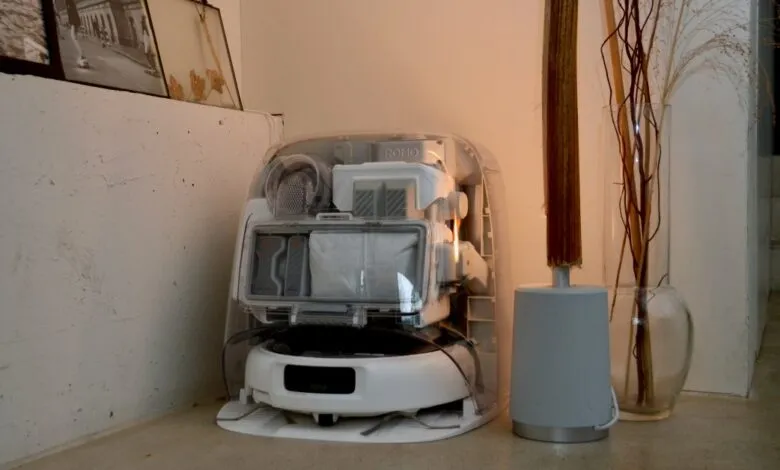
Moving from a basic model to this combo unit feels like stepping into the future. The base station itself is a substantial appliance, almost the size of a mini-fridge. While its transparent design appeals to a tech enthusiast’s sensibilities, its sheer presence can be overwhelming in a smaller home. This dock is the core of the system’s convenience. It doesn’t just charge the robot; it automatically empties the dustbin, refills the water tank, and washes and dries the mopping pads. Maintenance is reduced to periodically topping up clean water and emptying waste, making daily automated cleaning a realistic goal.
DJI leverages its drone expertise with dual fisheye cameras and LiDAR sensors for navigation. The Romo P mapped my open-plan living space in minutes, correctly identifying and avoiding a large area rug during mopping. Its cleaning performance is excellent. It transitions between vacuuming and mopping seamlessly, with extendable side brushes and mop pads that tackle corners effectively. The companion app offers granular control, allowing for custom routines, zone cleaning, and adjustable suction and water flow.
In practical tests, it handled everyday messes well. On polished concrete, it left virtually no trace of scattered oatmeal on its highest setting. It managed pet hair effectively and featured a useful degrease mode for kitchen spills. However, it struggled with semi-dried substances like ketchup and was occasionally tentative on high-pile rugs. Its obstacle avoidance, touted as millimeter-precise, is a mixed bag. It reliably avoided larger items like shoes and dog toys, and impressively navigated around thin playing cards. Yet, it missed smaller objects like coins and sometimes misidentified permanent fixtures like a flush floor outlet as obstacles.
Noise levels are a consideration. The vacuum itself operates at a reasonable volume, but the base station emits a loud burst when emptying dust and runs a constant, low hum during the multi-hour mop pad drying cycle. This background noise can become tiresome.
Then there’s the paramount issue: security and privacy. During testing, a significant vulnerability was exploited that allowed unauthorized access to the robot’s camera feed, essentially letting outsiders peer into homes. While DJI has patched this specific flaw, the incident is a severe breach of trust for a device equipped with cloud-connected cameras and a microphone. The ability to remotely view your home and even speak through the robot is a feature that quickly shifts from novel to unnerving once its vulnerability is exposed. For the latter part of my testing, I disabled the remote video function entirely and covered the camera with tape.
After extensive use, the Romo P has proven itself as a powerful, convenient cleaning tool. The system is robust, and the high level of automation is genuinely liberating. Yet, the combination of its premium price and the shadow of security concerns gives pause. For a similar investment, one could opt for a human cleaning service for a considerable time or choose a highly capable robot vacuum from other brands at a lower cost. The Romo represents a strong first effort from DJI, but lingering doubts about data privacy make it difficult to recommend without reservation in a market filled with competent alternatives.
(Source: The Verge)