PowerA Wireless Switch Controller Review: A Budget Alternative
▼ Summary
– The PowerA Advantage Wireless Controller for Nintendo Switch 2 is criticized for being too expensive at $69.99/£49.99, offering poor value compared to the slightly more expensive official Pro Controller.
– Its build quality feels cheap and hollow, with uncomfortable hard plastic thumbsticks, shallow triggers, and a spongy D-pad that hinder gameplay.
– The controller has problematic button placement, as its tiny Start and Select buttons are awkwardly positioned at the bottom of the face, making them difficult to press.
– It does have some positive features, including strong battery life of up to 30 hours, functional motion controls, and a variety of eye-catching design options.
– The review concludes it is not competitive at its price, recommending alternatives like the official Pro Controller or the 8BitDo Ultimate 2 for superior build and features.
Looking for a wireless controller for your Nintendo Switch 2 without the official Pro Controller’s price tag can be tricky. The PowerA Advantage Wireless Controller presents itself as a budget-friendly option, but a closer look reveals significant compromises that make it hard to recommend at its current cost. While it functions and offers long battery life, the overall experience is hampered by a cheap feel, awkward button placement, and underwhelming components.
Priced at $69.99 / £49.99, this controller sits in an awkward spot. It’s only about fifteen dollars less than Nintendo’s own Pro Controller, a product renowned for its quality. For that small price difference, the sacrifices are substantial. The build quality feels hollow and lightweight, using plastics that seem less durable than what you’d expect at this price point. This is especially noticeable when you consider that PowerA’s own wired version, which shares a nearly identical build, starts at a much lower $39.99.
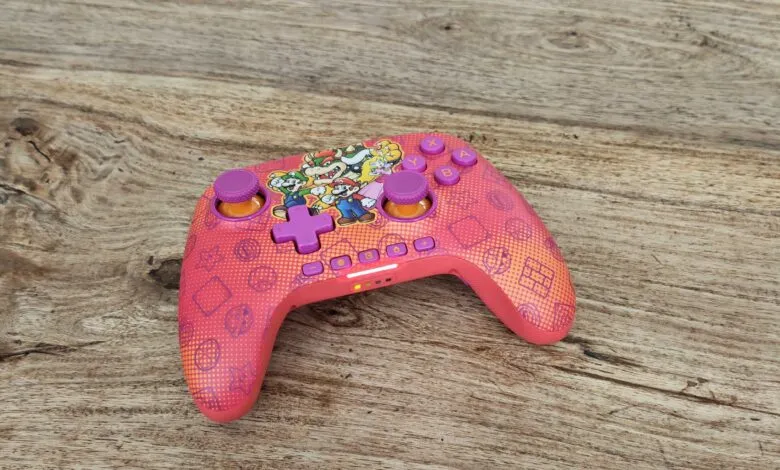
Several design choices actively hinder gameplay. The Start and Select buttons are frustratingly small and placed in a row at the very bottom of the controller’s face, making them awkward to press without shifting your grip. The triggers are shallow and offer a spongy, unsatisfying pull, while the thumbsticks, though featuring Hall effect sensors for longevity, are made of a hard plastic with an abrasive texture that becomes uncomfortable during long sessions. The D-pad is also broadly shaped and imprecise, making it a poor choice for retro games or fighting titles.
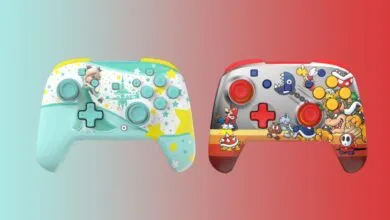
It’s not without its merits. The battery life is impressive, reliably reaching up to 30 hours on a single charge. Motion controls work well for aiming or motion-assisted games. The controller also wins points for style, offering vibrant licensed designs featuring characters from Super Mario, Kirby, and Pokémon, which are more visually interesting than the official pad’s plain options. There are also two programmable rear buttons, though setting them requires using a physical button on the controller itself rather than software.
When stacked against the competition, the value proposition weakens. The official Nintendo Switch 2 Pro Controller, for a bit more money, delivers superior build quality, HD rumble, amiibo support, and even longer battery life. Alternatively, the 8BitDo Ultimate 2 controller often sits in a similar price range but feels more premium and includes a handy charging dock. Even much cheaper budget controllers avoid some of the fundamental ergonomic issues found here.
This controller might be acceptable as a heavily discounted spare for casual multiplayer sessions, particularly if you adore one of its themed designs. However, for anyone seeking a primary or high-quality secondary controller, the investment is better directed elsewhere. The combination of a near-premium price with a sub-par tactile experience makes it difficult to justify a purchase unless found at a deep discount. For most players, saving a little longer for a more competent alternative is the wiser choice.
(Source: TechRadar)