LG’s 39-Inch 5K2K OLED: My Top CES 2026 Monitor & Dream Gaming Panel
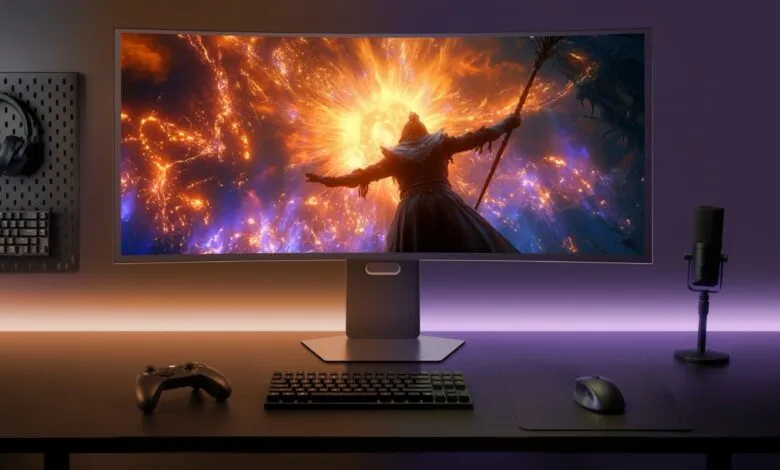
▼ Summary
– CES 2026 was notable for a lack of major PC tech from Nvidia and AMD, with Intel’s Panther Lake and new monitors like the LG UltraGear Evo 39GX950B being the highlights.
– The LG UltraGear Evo 39GX950B is a 39-inch 5K2K (5120×2160) OLED gaming monitor with a 21:9 ultrawide aspect ratio and a pixel density equivalent to a 32-inch 4K display.
– It features a 165Hz native refresh rate, a more ergonomic 1500R curvature compared to its predecessor, and is positioned as an immersive single-display solution.
– The author anticipates a price around $1,000, viewing it as a long-term investment despite concerns over OLED burn-in and the absence of LG’s latest RGB-stripe subpixel layout.
– The monitor is presented as a compelling compromise offering sharpness for work, immersion for gaming, and a desirable form factor, making it a standout announcement from the show.
While the broader PC hardware landscape at CES 2026 felt somewhat subdued, the monitor category delivered a standout star. The LG UltraGear Evo 39GX950B, a 39-inch 5K2K OLED gaming monitor, emerged as the most compelling display for both immersive gaming and productive workflows. This panel cleverly combines the pixel density of a 32-inch 4K screen with the expansive, seamless real estate of an ultrawide format, creating what could be the ideal hybrid display.
The native resolution of 5,120 by 2,160 pixels offers a significant advantage. It provides the same sharp, crisp text and image clarity you’d expect from a 32-inch 4K monitor, but within a wider 21:9 cinematic aspect ratio. This makes it an excellent choice for users who want precision for creative tasks or daily computing without sacrificing the enveloping feel needed for gaming. Compared to a smaller 27-inch 4K panel, the 39-inch size offers far more immersion without a perceptible loss in detail during gameplay.
LG has equipped this display with a 165 Hz native refresh rate, ensuring buttery-smooth motion. For competitive gamers, there’s also a 330 Hz mode, though it operates at a reduced 2,560 by 1,080 resolution. The form factor itself is a major selling point. A 39-inch ultrawide strikes a practical balance, offering ample screen space without the physical footprint and ergonomic challenges of massive 49-inch or 57-inch super-ultrawide models. Furthermore, LG has wisely opted for a gentle 1500R curvature on this model, a welcome improvement over the more aggressive 800R curve found on its larger 45-inch sibling.
Of course, such premium technology comes with a premium cost. While the exact price is yet to be confirmed, it’s reasonable to expect it will land below the launch price of its predecessor. If it stabilizes around the $1,000 mark, it represents a significant investment. However, amortized over several years of exceptional performance, the value proposition becomes clearer for enthusiasts seeking a top-tier, do-everything screen.
There are, however, a couple of considerations. The panel uses an RGWB subpixel layout, which includes a white subpixel to boost brightness. Some users might prefer the purer color punch of a standard RGB stripe or Samsung’s QD-OLED technology, which doesn’t rely on a white pixel. The other perennial concern with OLED is the risk of image retention or burn-in. While modern panels have robust protections and real-world problems have been less severe than early fears suggested, the thought of potential issues over a planned five-year ownership period can give some buyers pause.
Despite these minor reservations, the LG UltraGear Evo 39GX950B stands out as a near-perfect convergence of size, resolution, and panel technology. It addresses the practical limitations of larger ultrawides while delivering outstanding picture quality and performance. For anyone seeking a single, high-end display to master both work and play, this monitor is arguably the most exciting prospect to emerge from the show floor.
(Source: PC Gamer)