Nex Playground Review: Why My Kids Laughed and Cried
▼ Summary
– The Nex Playground is an underpowered, expensive ($250 plus subscription) motion-tracking game console for kids that frequently suffers from poor tracking and a library of low-quality, repetitive games.
– Despite its technical flaws and mediocre game library, the device’s simple, controller-free gameplay that encourages physical movement provided significant fun and engagement for the author’s children.
– The console’s single-camera tracking system, which lacks true depth perception, is easily confused by factors like patterned clothing, long sleeves, poor lighting, and the presence of non-players in view.
– Many games are frustrating due to imprecise controls, lag, and mechanics that struggle without depth sensing, such as an inability to accurately aim in sports titles.
– The author concludes that while the Playground offers fun through accessible, active play, it represents poor value due to its high cost and the overall low execution quality of its games.
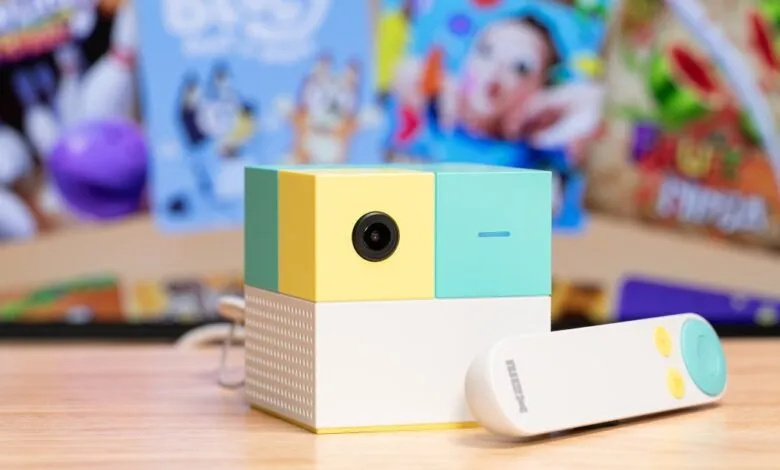
Finding a gaming system that truly captivates young children can be a surprising challenge. The Nex Playground is a unique console that uses a single wide-angle camera to track body movements, allowing kids to play without any controllers. It promises active, screen-based fun with a library of certified kid-safe games. However, this innovative approach comes with significant trade-offs in tracking accuracy, game quality, and overall value, creating an experience where laughter and frustration often go hand in hand.
The concept is straightforward. The device is a compact cube that connects to your TV. It uses computer vision to estimate a player’s pose from a 2D image, letting them bowl, dance, or race by moving their body. This controller-free simplicity is its greatest strength. During testing, children were immediately drawn in, eager to jump and swing their arms. The barrier to entry is virtually nonexistent, which led to spontaneous family participation, even from relatives who typically avoid video games. The joy of seeing themselves on screen, manipulating the action with physical gestures, was a powerful draw that often overshadowed the games’ shortcomings.
Yet, those shortcomings are considerable. The single-camera system lacks true depth perception, which leads to frequent and confusing tracking errors. The console can struggle to distinguish between multiple players if they are close together, mistakenly merging their limbs into a single entity. One child’s raised hand could accidentally steal another’s turn, resulting in genuine tears of frustration. Players also found that the system would sometimes lose track of a hand mid-action, ruining a carefully aimed bowling shot or steering attempt. The technical limitations require a very specific play environment: strong, front-facing light, no long or patterned sleeves, and ideally no other people in the camera’s view. For families, these conditions are often impractical, especially during evening playtimes in cozy pajamas.
The game library itself is a mixed bag. While it features popular licenses like Bluey, Peppa Pig, and Teenage Mutant Ninja Turtles, the actual gameplay tied to these brands is often shallow and repetitive. Many titles feel like simplistic shovelware with basic graphics, lacking the charm and polish found on platforms like Nintendo Switch or Apple Arcade. Sports simulations are particularly hampered by the lack of depth sensing; in tennis, for instance, you cannot aim your shot with your arm, only control the swing timing, forcing you to move your entire body to direct the ball.
Despite these flaws, genuine fun emerged from specific experiences. Games that embraced the chaos and didn’t demand precision were big hits. A mirror-like app with silly filters had children laughing hysterically as they shot lightning from their hands. A pose-copying game and a solid Breakout clone that used full-body movement provided engaging entertainment. The children repeatedly asked to play a Flappy Bird-inspired game where up to four players jump to keep dragons aloft, proving that a good concept can triumph over technical imperfection.
Ultimately, the Nex Playground presents a paradox. It is an expensive system with a subscription fee, plagued by inconsistent tracking and a library filled with mediocre games. For the price, the amount of quality content feels insufficient. However, its core magic, the immediate, physical, and shared play it enables, resonates powerfully with children. They forgive its failures for the sheer novelty of controlling a game with their whole body. It serves as a reminder that fun isn’t always about flawless execution; sometimes, it’s about the shared experience of taking another turn, even if the machine is a little bit broken.
(Source: The Verge)