The Xbox is Everywhere, So Why Buy One?

▼ Summary
– The author has a long personal history with Xbox consoles but now primarily uses PlayStation 5 and finds their Xbox Series X underutilized.
– Microsoft’s current strategy emphasizes cloud streaming and multi-platform accessibility over traditional Xbox console exclusivity.
– PlayStation 5 is preferred for its unique Dualsense controller features, user interface, and timed exclusive games.
– Xbox Game Pass has significantly increased in price, making it less valuable for the author compared to purchasing individual games.
– Recent Xbox-branded hardware collaborations feel like modified PC devices rather than dedicated gaming consoles with integrated experiences.
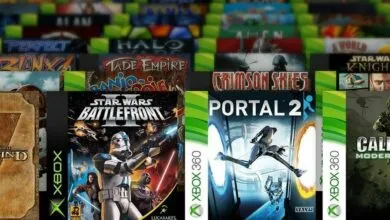
Finding a compelling reason to purchase a dedicated Xbox console has become increasingly difficult for many gamers. With Microsoft aggressively pushing its games and services onto rival platforms, the traditional console war feels like it’s shifting toward a battle for ecosystem dominance rather than hardware supremacy. This strategic pivot makes the physical Xbox box itself seem less essential than ever before.
My own history with Xbox stretches back to childhood, beginning with an original hand-me-down unit. I vividly recall pleading with my mother for an Xbox 360, only to later need a replacement when the infamous “Red Ring of Death” struck. I have oddly fond memories of operating a 360 without its outer shell, a window open to prevent overheating, and using creative physical persuasion to coax a stubborn disc tray into accepting the latest Call of Duty. Even in 2020, I purchased an Xbox Series X, a decision that now feels questionable. These days, it serves primarily as a dedicated Game Pass machine, powered up only occasionally when a must-play title arrives on the service.
Despite these nostalgic connections, my enthusiasm for the brand has steadily declined. For the first time, I have no intention of buying whatever new hardware Microsoft releases next.
This sentiment aligns perfectly with the company’s own public-facing strategy. In late 2024, Microsoft launched its “This is an Xbox” marketing campaign, which deliberately showcased an Xbox console alongside a laptop, a mobile phone, and a Steam Deck, all running Xbox Game Pass. The message was unambiguous: the future of Xbox is cloud streaming. While marketing hyperbole is a given, Microsoft has spent the subsequent months fully committing to this vision.
This commitment is now visible in game trailers themselves. New announcements frequently list availability on “Xbox Series X|S, Xbox PC, and Xbox Cloud Gaming,” positioning the cloud not just as an access method but as a primary platform worthy of promotional space.
Microsoft’s overarching plan appears to focus on placing the Xbox experience on every possible screen, rather than convincing everyone to buy a specific piece of hardware. The concept of a true console exclusive, in the traditional sense, has practically vanished from Microsoft’s strategy. PC gamers miss almost nothing from its vast studio portfolio, and this is increasingly true for PlayStation 5 owners as well.
This trend isn’t exclusive to Microsoft. The wider industry is moving in a similar direction, with a significant portion of the PS5’s exclusive library eventually making its way to PC, often after a timed delay. In this context, consoles seem to compete less with PCs and more directly with each other, which makes Xbox’s hardware-agnostic approach particularly surprising. For a consumer, owning a PlayStation 5 and a gaming PC is a highly functional combination that offers tremendous value.
When forced to choose between a Sony or Microsoft console, the PlayStation 5 emerges as the more compelling option for a dedicated console experience. The DualSense controller’s advanced haptic feedback provides a genuinely unique sensation unmatched elsewhere. I also find Sony’s user interface, trophy system, and social features more to my liking. Furthermore, its exclusives, while not permanently locked to the platform, remain there for a substantial period, making the PS5 the only way to play several excellent games at launch. It’s worth noting that both current-generation consoles suffer from controllers prone to stick drift, a significant flaw where my 8BitDo Pro 3 connected to a PC outperforms them in reliability.
The existence of a competitive Xbox brand remains vital for the health of the market, however. It serves as a crucial challenger to the established oligarchy in the console space. Nintendo, for better or worse, operates in its own distinct domain with unique selling points, allowing it and Sony to coexist without the same intense, direct competition that characterizes the Sony-Microsoft rivalry.
Xbox Game Pass has undoubtedly been Microsoft’s crowning achievement over the last several years. The service offered access to a vast library for a modest monthly fee, complete with cloud saves and mobile streaming. However, recent price increases have pushed the subscription beyond what I consider reasonable. The Ultimate tier I used to subscribe to saw a 50% price hike, now bundled with Fortnite Crew. The new $15 per month Premium tier offers fewer games and, critically, lacks day-one access to titles from Xbox Game Studios.
The PC-only tier also received a 40% increase, making Game Pass more expensive across the board. A yearly cost of $360 is a significant sum, more than I’ve spent on individual games I actually played through the service in the past year.
While Game Pass continues to host great games like the recently launched Grounded 2 and the upcoming The Outer Worlds 2, the value proposition has shifted. Purchasing those games at full retail price would consume only a fraction of the annual subscription cost, and you would own them permanently. Grounded 2, for instance, costs the same as one month of Game Pass Ultimate, the only way to play it via the service. If you plan to play it for longer than a month, the subscription model becomes an overspend. As my gaming time becomes more limited, I’ve grown more selective, and I simply wouldn’t extract $360 worth of value from the service this year.
Part of the console appeal is the hardware experience itself. People don’t buy consoles solely for game access, which is available through many avenues. They buy them for a streamlined, fuss-free gaming experience at a specific price point, a benefit that now seems to be eroding. My PC is a multi-purpose tool for gaming, work, and creativity. When I turn on my PS5, it’s with the singular intention of playing a game. That clear separation is one of my favorite aspects of console ownership.
Microsoft claims it is “actively investing in our future first-party consoles and devices,” yet we’ve recently seen new hardware bearing the Xbox logo that isn’t a console. Take the Asus ROG Xbox Ally X. For all practical purposes, this is not an Xbox. It’s a Windows handheld with some custom software skinning. You are playing PC game versions with all their inherent complexities, not benefiting from a unified software and hardware design meant for sofa-based relaxation. It is, essentially, a mini-PC with an Xbox badge, albeit the closest a handheld PC has come to replicating the console feel.
We also witnessed the launch of a specially themed Meta Quest 3S, complete with Xbox branding and a matching controller, a collaboration clearly intended to drive Game Pass usage on the VR platform.
I have no doubt the next proper Xbox will be branded as the “most powerful” yet and will likely feature a mildly refreshed controller. With luck, it might even incorporate Hall effect or TMR joysticks to finally address stick drift. However, the company’s intensified focus on partnerships, cloud streaming, and the rising cost of its flagship service leaves the Xbox ecosystem feeling both too expensive and insufficiently unique to justify my investment.
My interest in consoles persists, as I’ve genuinely enjoyed playing recent hits on the Nintendo Switch 2 and PlayStation 5. My Xbox Series X, however, has become a punchline among friends, the “mistake” from five years ago. Booting it up recently to play Grounded 2 required downloading the game, a system update, and reconnecting power and Ethernet cables. It had become the device I unplug to make room for something else. When the next-generation Xbox arrives, whatever its name, I don’t want that same joke collecting dust on my shelf.
(Source: PC Gamer)