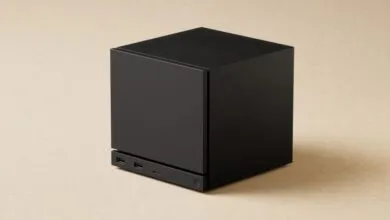
Steam Machine’s 2026 Future Uncertain After Update

▼ Summary
– Valve’s Steam Machine, a console for PC gamers, was originally announced for a 2025 release but is now facing delays.
– In a recent update, Valve stated it hopes to ship in 2026 but cited memory and storage shortages as significant challenges.
– The announcement suggests a potential delay to 2027 is being seriously considered, abandoning the previous target of early 2026.
– Pricing remains unconfirmed and is volatile due to component scarcity, which is driving up costs like PC RAM.
– Despite the uncertainty, Valve’s statement does not completely rule out a 2026 release, though it now seems unlikely.
The highly anticipated Steam Machine, Valve’s console designed to bring the vast PC gaming library into the living room, now faces an uncertain launch timeline. Originally announced for a 2025 release and later targeted for 2026, the project is encountering significant production hurdles. In a recent community update, Valve indicated that memory and storage shortages are creating substantial challenges, pushing the planned shipment window into question and potentially delaying the launch to 2027.
This news came from a brief paragraph within a larger “Year in Review” post on Steam’s official platform. The statement carefully noted that the company hopes to ship in 2026 but will share concrete plans only after finalizing them. This represents a notable shift from the more confident stance Valve held just months prior. Back in February, the company had reassured the community that the hardware was on track for a release in the first half of 2026, though specific pricing and timing details remained fluid.
The latest communication, however, effectively abandons that earlier Q1 or Q2 2026 target. The core issue revolves around global supply chain constraints affecting critical components. Scarce memory components are not only difficult to procure but are also driving manufacturing costs upward. This presents a particular problem for the Steam Machine’s value proposition. A key selling point was offering a streamlined, console-like PC gaming experience without the complexity and expense of building a full system. With PC RAM prices at historic highs, hitting an attractive consumer price point becomes increasingly difficult.
Valve has not provided updated pricing information, which is likely in a state of constant revision behind the scenes. While the company’s statement does not completely rule out a 2026 release, the language strongly suggests it is now considered unlikely. The project’s future hinges on how quickly the component market stabilizes and whether Valve can secure parts at a viable cost. For now, gamers eager for this hybrid platform must continue to wait as the company navigates these industry-wide challenges.
(Source: 9to5Google)