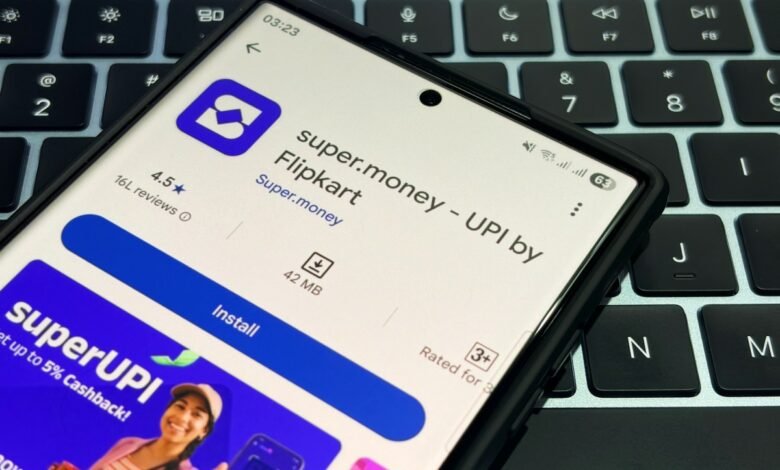
Flipkart Super.money & Kotak811 Launch Free UPI Payments
▼ Summary
– Super.money is partnering with Kotak Mahindra Bank to bundle UPI payments, savings accounts, and secured credit cards into a single account to monetize India’s free digital payments system.
– The partnership aims to issue 2 million secured credit cards in the first year, with 60% going to first-time borrowers, and 5 million within two years to drive profitability by 2026.
– India’s UPI system processes over 19 billion free transactions monthly, preventing fintechs from charging merchant fees, so Super.money uses secured cards to reintroduce rewards and cashbacks.
– Super.money generates about $3 million monthly revenue primarily from personal loans (80%) and credit cards (10%), while retaining 85% of users and targeting customers under 30.
– The fintech requires a minimum ₹1,000 fixed deposit for its “3 in 1 Super Account,” which earns interest and provides cashbacks, focusing on a profitable user base rather than mass-market competition.
India’s digital payments landscape has been transformed by free UPI transactions, creating a challenging environment for fintech companies seeking sustainable revenue streams. Flipkart’s financial technology division Super.money has joined forces with Kotak811, the digital banking platform of Kotak Mahindra Bank, to address this very challenge. Their innovative solution combines UPI payments, savings accounts, and secured credit facilities within a single integrated account, creating a pathway to profitability through increased customer engagement.
This strategic alliance has ambitious targets: approximately two million secured credit cards within the first year, with around sixty percent designated for first-time borrowers. Over a two-year horizon, the partnership aims to distribute five million cards. Super.money CEO Prakash Sikaria revealed that the company currently serves ten million active users and anticipates the Kotak collaboration will generate roughly ten percent of next year’s revenue as the platform works toward achieving profitability by 2026.
India’s Unified Payments Interface has revolutionized money movement with instant, cost-free bank transfers that now exceed nineteen billion monthly transactions. While tremendously successful for consumers, this system presents profitability challenges for fintech firms since regulatory guidelines prevent charging merchant fees that traditionally fund reward programs and credit offerings. Super.money’s approach of combining secured cards with savings accounts to reintroduce financial incentives represents a potential blueprint for creating viable business models within free payment ecosystems.
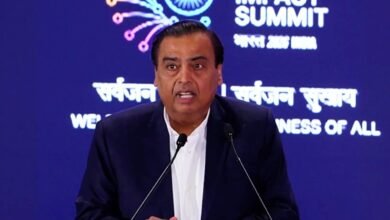
Sikaria explained their strategic perspective: “We don’t approach UPI as merely a payment solution. We utilize UPI to construct a comprehensive financial services ecosystem where we attract and maintain customers through the payment platform.”
Launched in June 2024 as Walmart-owned Flipkart’s newest financial venture following PhonePe’s separation, Super.money has already achieved approximately three million dollars in monthly revenue. This translates to an annualized revenue rate of about thirty-six million dollars. The platform has rapidly ascended to become one of India’s top five UPI providers, consistently processing over two hundred million transactions monthly from May through August according to National Payments Corporation of India data.
The company’s revenue distribution shows personal loans accounting for eighty percent, credit cards contributing ten percent, and payment products like bill payments and mobile recharges making up the remaining ten percent. Super.money maintains an impressive eighty-five percent user retention rate, with sixty to seventy percent of transactions coming from customers under thirty years old.
Sikaria outlined the company’s dual revenue strategy: “Our business model operates on two monetization engines. The first involves financial services including personal loans, cards, and deposits, while the second focuses on commerce. We plan to implement a Klarna-inspired ‘pay-in-three’ model for commerce transactions, creating a financial layer that enables customers to make purchases now and pay later within our ecosystem.”
The collaboration with Kotak Mahindra Bank, India’s fourth-largest bank by market value, provides Super.money with access to extensive regulated banking infrastructure. This follows an earlier partnership with Utkarsh Small Finance Bank specifically for secured card offerings, signaling the fintech’s strategic move into mainstream retail banking services.
The joint offering introduces what the companies term a “3 in 1 Super Account,” integrating a savings account, UPI payment capabilities, and a fixed-deposit-backed secured credit card designed particularly to expand credit access for new borrowers.
Opening this integrated account requires a minimum fixed deposit of one thousand rupees (approximately eleven US dollars). Account holders earn interest on their deposit while receiving cashback on transactions. The account also features UPI-on-credit functionality, a credit line supported by the deposit that eliminates the need for income verification documents.
Sikaria explained why secured cards serve as their primary product: “Secured cards align perfectly with India’s zero-fee UPI framework while still enabling the rewards and cashback programs that the original system wasn’t designed to accommodate.”
He further clarified their customer targeting strategy: “We’re focused on attracting users who demonstrate higher engagement potential with our product offerings. UPI functions as our core customer acquisition tool, but for individuals uninterested in our financial services or additional products, we don’t intend to serve them purely from a payment perspective.”
The Kotak partnership follows closely on Super.money’s collaboration with SoftBank-supported Juspay to introduce a streamlined one-click checkout experience for online merchants, with particular focus on direct-to-consumer brands. Approximately one thousand merchants currently utilize this solution, with plans to expand through additional partnerships with D2C companies and other Flipkart group entities.
Transaction revenue from merchant discounts funds the cashback programs, while standard acquisition fees charged to partner banks provide additional monetization. The company plans to issue about two hundred thousand secured cards monthly through the Kotak partnership before expanding to other banking institutions.
Flipkart has invested approximately fifty million dollars to launch Super.money’s operations. As the business expands, the fintech anticipates needing additional funding, potentially including external investors. Sikaria noted that while the specific funding strategy remains undecided, the company has attracted significant investor interest.
The company maintains controlled expenditure, with Sikaria describing current monthly cash burn as “low single-digit millions” without providing exact figures. Rather than competing directly with mass-market payment platforms targeting hundreds of millions of users, Super.money concentrates on India’s top ten to thirty million users.
Sikaria summarized their vision: “We aim to establish a powerful secured card franchise with profitable financial performance, beneficial for our company, our banking partners, and our customers alike.”
(Source: TechCrunch)