Stop Duplicate Vendor Assessments with Njordium VMS

▼ Summary
– Njordium Cyber Group has launched a Vendor Management System (VMS) designed to eliminate the costly duplication of third-party assessments required by overlapping European regulations.
– The problem is severe, with 77% of recent data breaches originating from vendors and risk teams spending over 37 hours weekly on repetitive administrative tasks.
– Currently, vendors for regulated firms are assessed multiple times in parallel for different regulations, creating disconnected evidence trails seen as a compliance failure.
– The VMS solution allows a single vendor assessment to simultaneously satisfy multiple regulations and standards, generating aligned outputs and maintaining all data on the client’s own infrastructure.
– The system includes built-in modules for AML compliance, helping to ensure different internal teams operate from a single, unified view of vendor risk and intelligence.
Managing third-party risk has become a critical and time-consuming challenge for European financial institutions. With overlapping regulations like NIS2, DORA, the Cyber Resilience Act, and GDPR, organizations often find themselves conducting the same security assessment on a single vendor multiple times to satisfy different regulatory bodies. This redundant process is not only inefficient but also creates a fragmented compliance record that can be viewed as a failure by auditors. Research indicates that a staggering 77% of data breaches now originate from a third party, highlighting the urgent need for a more streamlined and effective approach to vendor management.
The administrative burden is immense, with risk teams dedicating over thirty-seven hours each week to repetitive tasks yet still struggling to keep pace. For banks, insurers, and payment firms, this means the same vendor might be assessed four or five times in parallel, generating disconnected evidence trails. This situation is exacerbated by the operational launch of the European Anti-Money Laundering Authority (AMLA), which introduces another layer of scrutiny for obliged entities.
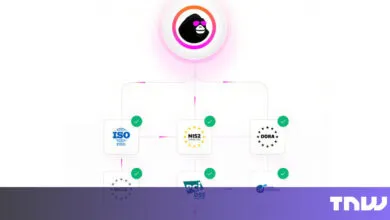
A new platform directly confronts this systemic problem by enabling a single, comprehensive vendor assessment. This one evaluation simultaneously meets the core requirements of major frameworks, including NIS2, DORA, the Cyber Resilience Act, GDPR Article 28, and ISO 27001. The system then automatically generates aligned outputs for other critical standards like supply-chain security (ISO 28001) and enterprise risk management (ISO 31000). This eliminates costly duplication and creates a unified, immutable audit trail.
Beyond cybersecurity, the platform integrates essential compliance workflows. Built-in modules for ultimate beneficial ownership screening, politically exposed persons monitoring, and suspicious activity reporting help organizations proactively close gaps. This ensures that anti-money laundering teams and vendor intelligence units are operating from the same, consistent dataset, a alignment that is now crucial under AMLA. All sensitive data remains securely within the client’s own infrastructure, either on-premise or in a private cloud, with no information ever leaving their control.
Industry analysis points to a fundamental architectural flaw in current processes. As noted by company leadership, independent research from Whistic, KPMG, and Gartner all converged on the same conclusion in recent studies: the underlying system is broken, not the effort being applied. The solution is not to add another layer of complexity but to remove it entirely. The principle is one assessment yielding multiple regulatory outputs and a single, definitive audit trail, establishing a new operational standard.
The platform’s key features are designed to consolidate and simplify risk management. By providing a centralized hub for all vendor intelligence and compliance evidence, it prevents the dangerous silos that often exist between different departments. This holistic view allows organizations to identify and mitigate risks before they escalate into breaches or regulatory penalties, ensuring that when an auditor examines their processes, they see a coherent and defensible program.
(Source: NewsAPI Cybersecurity & Enterprise)