Trump Invites Japanese Kei Trucks to US Market
▼ Summary
– President Donald Trump expressed admiration for Japanese kei trucks and directed the Department of Transportation to clear regulations for their production and sale in the US.
– Kei truck imports to the US have surged, with sales tripling in five years, though federal rules currently only allow imports of vehicles 25 years or older.
– The legality of kei trucks on US roads is complex, involving federal safety standards and a patchwork of unclear state registration laws.
– While kei trucks have a small, growing fan base as an alternative to large vehicles, their small size likely limits their appeal to the majority of American buyers.
– Trump’s announcement was part of a broader rollback of Biden-era fuel efficiency rules, a move experts predict will increase long-term fuel costs despite claims of affordability.
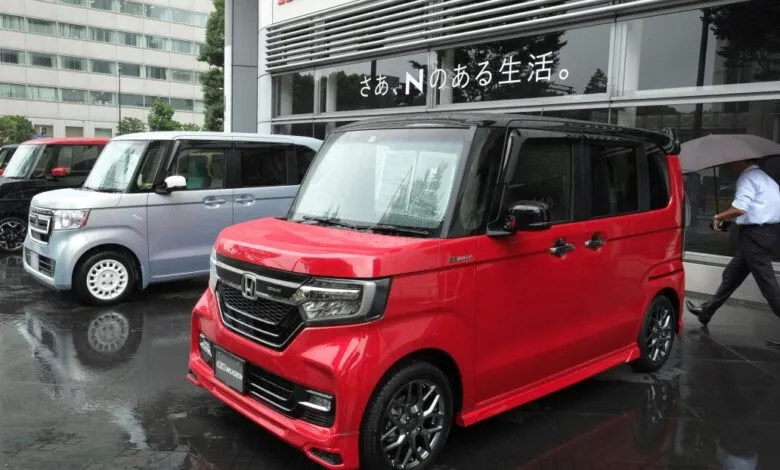
The recent spotlight on Japanese kei trucks, those remarkably compact utility vehicles, has reached the highest levels of U.S. government, sparking a conversation about their potential place in the American automotive landscape. President Donald Trump recently expressed his admiration for these diminutive trucks during a policy announcement, directing officials to remove regulatory barriers for their domestic production and sale. This move aligns with a broader push to alter national fuel economy standards, aiming to lower vehicle costs, though analysts debate the long-term financial impact on consumers given potential rises in fuel expenses.
During a briefing focused on revising national fuel efficiency rules, Trump described the imported kei trucks as “very small” and “really cute,” drawing a comparison to the classic Volkswagen Beetle. He stated he was authorizing the Department of Transportation “to immediately approve the production of those cars.” U.S. Transportation Secretary Sean Duffy confirmed the directive, announcing, “we have cleared the deck so they can make them in America and sell them in America.” The specific regulatory changes referenced were not immediately detailed by the department.
Kei vehicles, built to meet Japan’s strict light-vehicle specifications for engine size and dimensions, have seen a notable surge in American interest despite a complex regulatory environment. Federal law currently permits the import of these mini-trucks only if they are at least 25 years old. State laws governing their on-road registration and use vary widely and are often ambiguous. Furthermore, any new model sold would need to meet all U.S. Federal Motor Vehicle Safety Standards, which govern everything from structural integrity to steering column placement.
Nevertheless, a pathway for these vehicles might exist under existing rules for low-speed vehicles, similar to those covering golf carts in many jurisdictions. Sales figures underscore a growing niche market, with imports of used kei trucks tripling over the past five years; approximately 7,500 were brought into the country last year alone. Their appeal lies in their stark contrast to the large SUVs and pickup trucks that dominate American roads, offering a frugal, minimalist alternative for a dedicated community of enthusiasts who actively connect and trade merchandise on social media platforms.
The central question remains whether these ultra-compact trucks could achieve mainstream success in the United States. While they have a passionate following, their extremely small size and limited power may not meet the needs or preferences of the average American driver. The policy briefing itself was primarily centered on rolling back stringent fuel economy standards established under the previous administration. While the stated goal is to enhance affordability for car buyers, many industry observers caution that any upfront savings on vehicle price could be negated over time by increased spending at the fuel pump.
(Source: The Verge)