£35bn plan to build 14 mini nuclear reactors across the UK
▼ Summary
– Polish billionaire Michał Sołowow’s firm SGE plans to build 14 GE Vernova Hitachi BWRX-300 small nuclear reactors across three UK sites, targeting first power in 2034 at an estimated £35bn.
– The reactors would generate 4.2GW total, enough for roughly eight million homes or about 11% of UK electricity demand for at least 60 years.
– Small modular reactors (SMRs) like the 300MW BWRX-300 are promoted as faster and cheaper to deploy than traditional large plants, with factory-built, repeatable units.
– SGE seeks a privately financed project with a government-backed Contract for Difference and National Wealth Fund engagement, but SMRs remain unproven at scale with no BWRX-300 yet commercially operating.
– If successful, the plan would make Sołowow a major UK power builder, highlighting the shift from AI chips to the need for reliable electricity generation to power data centres.
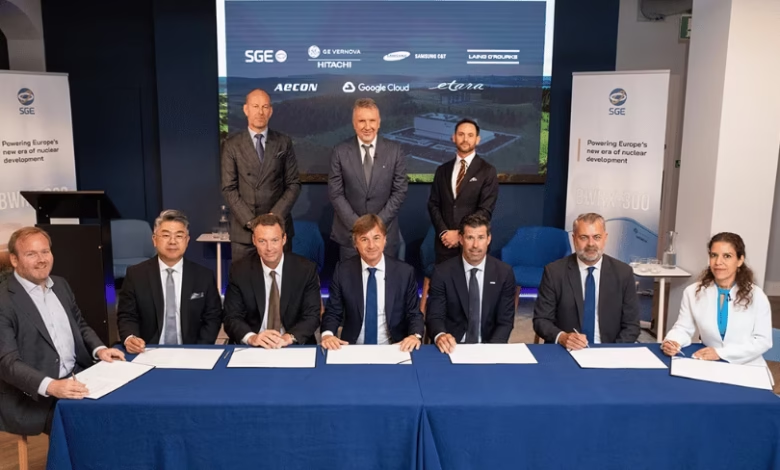
A Polish billionaire has unveiled an ambitious £35bn proposal to construct a fleet of small modular nuclear reactors across the UK, marking one of the largest private-sector bets on atomic power in the country. Michał Sołowow’s company, SGE, plans to install 14 GE Vernova Hitachi BWRX-300 reactors across three British sites, with a target of first electricity generation in 2034. The proposal has been submitted under the UK government’s new Advanced Nuclear Framework, positioning it as a key test of the nation’s nuclear revival strategy.
The scale is substantial. Combined, the reactors would deliver 4.2 gigawatts of capacity, enough to power roughly eight million homes , about 11% of the UK’s current electricity demand , for at least six decades. SGE, a Warsaw-based developer founded in 2019, has assembled a delivery team that includes GE Vernova Hitachi, Samsung C&T and Laing O’Rourke, giving the project heavyweight industrial backing.
Why small reactors, and why now
Small modular reactors represent the nuclear industry’s bet on speed and cost efficiency. Each BWRX-300 generates around 300 megawatts, a fraction of a traditional large-scale plant’s output. The core idea is that factory-built, repeatable units can be deployed faster and cheaper than a single bespoke mega-station. This modular approach aims to sidestep the cost overruns and construction delays that have plagued conventional nuclear projects.
The timing is strategic. Demand for electricity is surging simultaneously from AI data centres, electric vehicles and heat pumps. Governments that once focused heavily on intermittent renewables now seek firm, always-on baseload power. Nuclear energy, long out of favour, is re-entering the policy conversation as a necessary complement to wind and solar.
The financial hurdle
Money remains the biggest obstacle. Reports estimate each 300MW reactor will cost between £2.2bn and £2.5bn. SGE is pitching a privately financed model, but it requires government support through a Contract for Difference , a guaranteed price for the electricity it generates , plus engagement from the National Wealth Fund. Under this structure, the company claims consumers would pay nothing until the reactors are operational.
However, SMR technology remains largely unproven at commercial scale. No BWRX-300 is operating anywhere in the world today, and the nuclear sector has a long track record of delays and budget blowouts. A 2034 target leaves considerable room for slippage, and sceptics will watch closely whether this project can break the industry’s pattern of overpromising and underdelivering.
Why this matters for Britain
If successful, this plan would make a foreign entrepreneur one of the largest builders of British power generation in modern history. It also underscores a broader shift in the AI era: the competitive battle is moving from chips and algorithms to the mundane but critical question of who can produce enough electricity, and where. Britain has placed a heavy bet on data centre expansion. Someone must provide the power to run them, and this nuclear proposal offers one of the most concrete answers yet.
(Source: The Next Web)