Tesla’s Affordable Models Fail to Reverse Sales Slump
▼ Summary
– Tesla’s new, more affordable Model Y and Model 3 variants, launched in October, have not significantly boosted the company’s overall sales.
– Tesla’s first-quarter 2026 global deliveries of 358,023 EVs fell below analyst expectations and showed only a 6% increase over a weak prior-year quarter.
– The company risks a third consecutive annual sales decline, a stark contrast to its past promise of 50% yearly growth.
– Unlike Rivian, which is launching a cheaper SUV, Tesla lacks a new mass-market vehicle after canceling a planned $25,000 car to focus on a robotaxi.
– Tesla’s only recent new model, the Cybertruck, has underperformed expectations, with low sales grouped under “other models.”
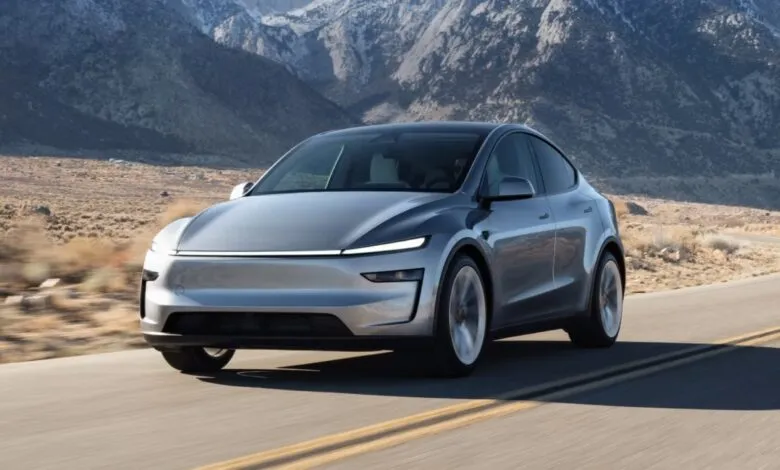
The launch of more affordable Tesla models last fall has not provided the significant sales boost the company needed. Despite introducing lower-priced versions of the Model Y and Model 3, first-quarter global deliveries of 358,023 vehicles fell short of analyst forecasts. This figure represents only a modest six percent increase over the same period last year, which was Tesla’s weakest quarter in recent memory. The company also reported a notable imbalance, producing over 408,000 vehicles while selling far fewer, highlighting a growing inventory challenge.
This stagnation is particularly concerning for a firm that once targeted 50 percent annual growth in electric vehicle sales. The underwhelming results increase the likelihood of a third consecutive year of declining sales, compounding pressure as the company’s profits also contract. The minimal year-over-year gain is even less impressive considering that first-quarter 2025 operations were disrupted by factory retooling shutdowns, suggesting current performance reflects little genuine improvement.
Tesla’s struggle is part of a broader industry trend where EV sales growth has stalled. Established automakers have scaled back or canceled ambitious electric plans, while newer entrants face similar headwinds. Rivian, for example, reported shipping just over 10,000 vehicles this quarter, a number that has remained flat. Rivian does have a potential catalyst with its upcoming, more affordable R2 SUV, though its base model is not slated to arrive until late 2027.
In contrast, Tesla lacks a ready new mass-market vehicle to reinvigorate demand. Development on a promised $25,000 car was halted by CEO Elon Musk, who redirected resources toward a robotaxi project dubbed the “CyberCab.” The recently launched affordable variants of existing models were the substitute for that anticipated low-cost platform. The only entirely new product in Tesla’s recent lineup is the Cybertruck. While it leads the electric pickup segment, its sales have been a disappointment relative to internal expectations. First-quarter figures for “other models,” which include the Cybertruck and discontinued Model S and X, totaled just 16,130 units. This context underscores that Tesla’s current strategy of offering stripped-down versions of older designs is failing to reverse its persistent sales slump.
(Source: TechCrunch)