Rivian R2 Launch: Can They Stick the Landing?
▼ Summary
– Rivian has launched the R2, a midsize SUV starting under $50,000, which is a critical vehicle for the company’s survival and potential challenge to Tesla’s dominance.
– The current EV market is extremely difficult, characterized by disappearing incentives, tariff pressures, and heightened consumer price sensitivity, leading even established automakers to cancel programs.
– Rivian plans an ambitious launch, aiming to sell 20,000-25,000 units of its initial, higher-priced trims in 2025, which would be a faster sales pace than most current EVs aside from the Tesla Model Y.
– The R2 is designed to appeal to a mass market beyond Rivian’s existing fans, positioning itself as a distinctive, outdoor-ready alternative to competitors like the Model Y with practical features.
– While the R2 has positive early reviews and strengths in design, its ultimate success depends on converting skeptical new customers and overcoming Tesla’s advantages in price, scale, and efficiency.
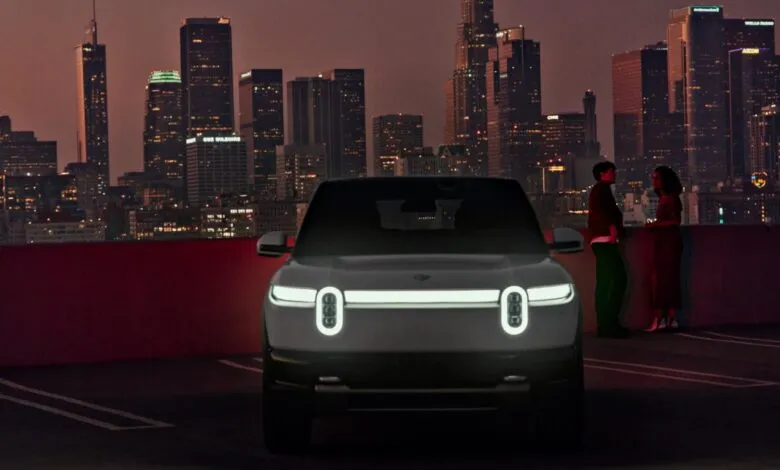
The recent unveiling of the Rivian R2 marks a pivotal moment for the electric vehicle industry and for the company itself. This midsize SUV, with a promised starting price below $50,000, represents Rivian’s bold push into the mainstream market. The success or failure of the R2 could very well determine the future trajectory of the entire company. In a challenging economic climate where other automakers are scaling back electric ambitions, Rivian is placing a monumental bet on this single model.
Industry analysts view the launch as a critical statement of intent. “Rivian’s R2 announcement feels less like a victory lap and more like a statement of intent at a critical moment,” observed Paul Waatti, an AutoPacific director. He points to a difficult market shaped by vanished federal incentives, tariff pressures, and increasingly price-conscious consumers. The timing underscores the risk; on the same day Rivian detailed its R2 plans, Honda announced it was scrapping several U.S. EV programs, writing off billions in the process. This serves as a stark reminder that even established automakers are struggling in the current environment.
Rivian has set an aggressive sales target, aiming to deliver between 20,000 and 25,000 units of the R2 before the end of the year. The initial vehicles will be the higher-priced Launch Edition and Premium trims, starting at $59,485 and $55,485 respectively. Achieving that volume at those price points would be a feat, surpassing the early sales pace of nearly every EV currently on the market except for the Tesla Model Y. While Rivian reported “well over 100,000” reservations last summer, it has been quiet on updated numbers, likely to manage expectations around production capacity and potential delivery timelines.
Early impressions of pre-production models have been positive, with many noting the R2 serves as Rivian’s direct answer to the dominant Tesla Model Y. The vehicle leverages the brand’s existing fanbase, built on distinctive design and clever details. However, the true test lies beyond existing enthusiasts. The R2 must win over skeptical customers who have been priced out of the EV market or discouraged by headlines about slowing sales. Converting new buyers, including those who might otherwise consider a Jeep or Bronco, is essential for broad success.
“The jury is still out on whether Rivian truly stuck the landing,” said Jessica Caldwell of Edmunds. “But the R2 clearly moves the company a step closer to the mass market.” She notes that while the launch edition’s price remains steep, the planned subsequent trims, especially a version around $45,000, bring it into a more accessible range for American budgets, a key threshold the more expensive R1T and R1S trucks never reached.
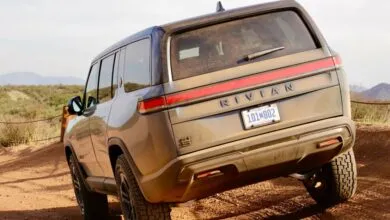
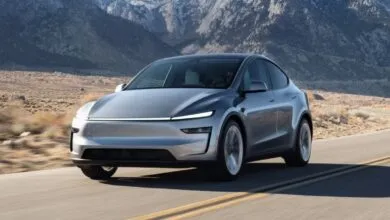
In a direct comparison, the R2 differentiates itself from the Model Y with a more conventional SUV silhouette, a longer wheelbase, and significantly greater ground clearance. It incorporates practical features like a unique power-down rear window, a nod to off-road utility vehicles like the Toyota 4Runner, which will appeal to owners with sports gear or pets. Inside, Rivian offers a gauge cluster and tactile steering wheel scroll wheels, contrasting with Tesla’s more austere minimalist approach. On range, Tesla maintains an edge, with the base Model Y offering 321 miles versus the R2’s estimated 275 miles.
Yet specifications are only part of the battle. Tesla retains formidable advantages in manufacturing scale, pricing, and operational efficiency. Rivian remains a niche player for now. To compete, it must leverage its strengths and carve out a unique identity. “The R2 arrives with a fresher brand image,” Caldwell added. “Rivian is clearly trying to position the vehicle as a new outdoor-ready alternative to the typical commuter crossover.” Ultimately, the R2 isn’t just competing on specs; it’s offering a distinctly different vision for the electric SUV, aiming to attract buyers with its blend of adventure-ready design and emerging mainstream affordability.
(Source: The Verge)