Starlink Now Delivers Internet Directly to iPhones After Apple Rejection
▼ Summary
– Elon Musk offered Apple a $5 billion deal in 2022 to integrate Starlink into iPhones, but CEO Tim Cook declined the ultimatum.
– Apple had its own satellite project (Project Eagle) with Boeing but abandoned it due to regulatory concerns and telecom partner pressures.
– Musk’s Starlink later partnered with T-Mobile to offer “Direct to Cell” service, enabling global satellite connectivity without special hardware.
– Despite rejecting Starlink, Apple iPhones now use the service via T-Mobile, creating an ironic reliance on Musk’s technology.
– Apple’s decision is debated as either strategic caution or a missed opportunity, while Starlink gains dominance in satellite connectivity.
The unexpected partnership between Starlink and Apple marks a fascinating shift in the satellite internet landscape, proving that even rejected deals can resurface in surprising ways. What began as a high-stakes ultimatum from Elon Musk has quietly evolved into a functional alliance, with iPhones now tapping into Starlink’s satellite network through T-Mobile—despite Apple’s initial refusal to collaborate directly.
Back in 2022, Musk reportedly presented Apple with a $5 billion proposal to integrate Starlink’s technology into its devices, giving Tim Cook just 72 hours to decide. When Apple declined, Musk pivoted swiftly, accelerating plans to make Starlink a standalone force in mobile connectivity. Meanwhile, Apple had already explored its own satellite ambitions through Project Eagle, a joint effort with Boeing that was ultimately shelved due to regulatory complexities and pressure from telecom partners like AT&T and Verizon. Instead, Apple opted for a more conservative approach, partnering with Globalstar to offer limited emergency satellite features.
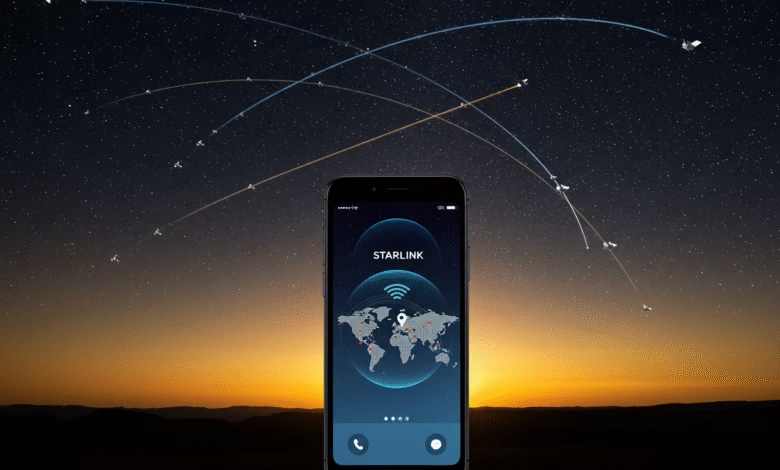
While Apple played it safe, Musk pushed forward. Just before the iPhone 14 launch, Starlink announced its “Direct to Cell” initiative with T-Mobile, enabling smartphones—including iPhones—to access internet service virtually anywhere on the planet, from remote wilderness to open oceans. This breakthrough eliminated the need for specialized hardware, positioning Starlink as a disruptive force in global connectivity.
The irony is undeniable: the same satellite network Apple once dismissed now enhances its devices’ capabilities. Users in off-grid areas report improved connectivity, demonstrating how quickly industry dynamics can shift. Some analysts call it a quiet victory for Musk, while others argue Apple’s caution was justified to avoid reliance on an unpredictable partner.
Whether viewed as a strategic miscalculation or a calculated risk, one thing is clear—Starlink’s influence is growing, and Apple’s devices are now indirectly tied to its success. The evolving relationship between these tech giants underscores how competition and collaboration often blur in the race to dominate next-generation connectivity.
(Source: Manual URL Processing)