NASA’s Artemis Rocket Shuffle: What’s Next for Lunar Landers?
▼ Summary
– NASA announced major changes to the Artemis Program, focusing on increasing SLS rocket launch rates and prioritizing lunar surface activities, with Senate support.
– A critical missing element is a functional lunar lander, which NASA has contracted SpaceX and Blue Origin to develop (Starship and Blue Moon MK2).
– The revised Artemis III mission will now test one or both of these landers in near-Earth orbit before a crewed lunar landing later this decade.
– NASA aims for Artemis III next year and one or two lunar landings by 2028, a timeline considered extremely ambitious by the space community.
– To accelerate development, Administrator Isaacman has directed NASA to streamline processes and remove obstacles for SpaceX and Blue Origin.
NASA’s ambitious Artemis program has undergone a significant strategic shift, aiming to accelerate the pace of lunar exploration by increasing the launch frequency of its Space Launch System (SLS) rocket and prioritizing surface operations. This new direction, announced by Administrator Jared Isaacman and receiving broad support from the US Senate, focuses on infrastructure but leaves a crucial question unanswered: the readiness of the human landing systems essential for getting astronauts from lunar orbit down to the Moon’s surface and back.
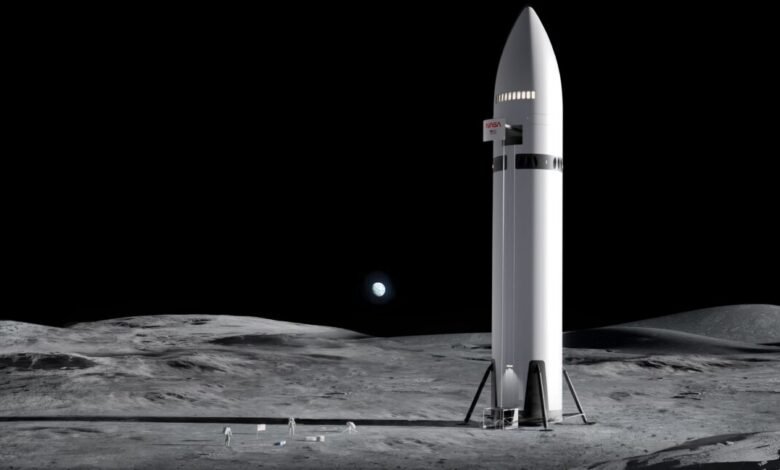
The agency is relying on two commercial partners to build these complex vehicles: SpaceX, developing a lunar-optimized version of its Starship, and Blue Origin, crafting the Blue Moon MK2 lander. While the revised plan calls for using the Artemis III mission to test one or both landers in Earth orbit before a crewed lunar landing, the proposed timeline is exceptionally aggressive. Isaacman stated that Artemis III will launch next year, to be followed by a potential lunar landing as soon as 2028. Achieving even a single landing by that date is viewed by many in the space community as a monumental challenge, requiring both companies to make rapid, unprecedented progress.
The central question now is whether SpaceX and Blue Origin can meet this demanding schedule. Administrator Isaacman appears acutely aware of the hurdles. One of his first major actions was to convene a meeting with engineers from both companies to discuss ideas for accelerating the Artemis timeline. Following that January 13th discussion, Isaacman made a bold commitment, stating NASA would “challenge every requirement, clear every obstacle, delete every blocker and empower the team to deliver.”
This declaration signals a potential cultural shift within the agency. In practical terms, it suggests a directive to streamline NASA’s own processes, making collaboration less cumbersome for its commercial partners. The goal is to remove bureaucratic friction and empower the development teams at SpaceX and Blue Origin, providing them with greater flexibility to innovate and solve problems swiftly. The success of the entire Artemis lunar landing endeavor now hinges on this partnership dynamic and the ability of all parties to execute at an extraordinary speed.
(Source: Ars Technica)


