▼ Summary
– The article analyzes the “wellness to MAHA pipeline,” where a pursuit of health can lead to anti-science beliefs, driven by online misinformation and a specific influencer playbook.
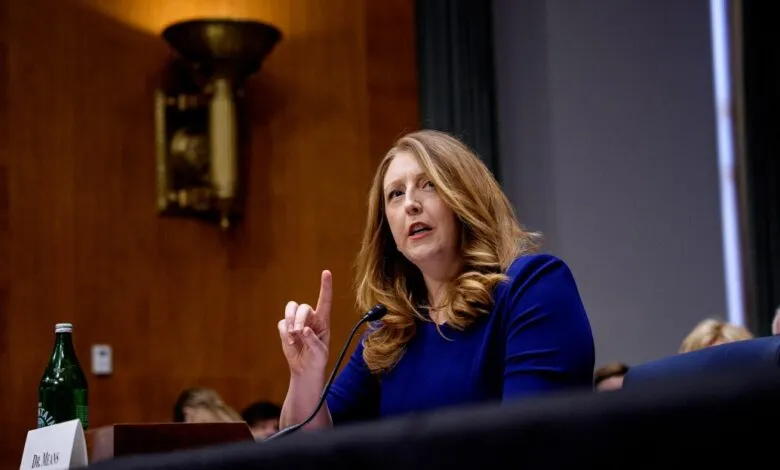
– It uses Casey Means, a controversial nominee for Surgeon General and wellness influencer, as a case study, noting her lack of active medical license and history of promoting dubious health stances.
– The first step of the playbook is establishing credibility by mixing basic, verifiable science with emotional narratives to lead audiences to questionable or misleading health conclusions.
– The second step involves casting doubt on traditional medical and scientific institutions, positioning the influencer as a more trustworthy truthteller against a corrupt system.
– The final step is offering oversimplified solutions, often through products and supplements, while frequently failing to properly disclose the influencer’s financial relationships with these brands.
The path from general wellness interest to embracing medical and health alternatives, or MAHA, often follows a recognizable pattern. This pipeline leverages genuine public frustration with healthcare systems and mixes established facts with speculative theories, creating a profitable playbook that influences public health decisions and consumer behavior. The recent scrutiny of Casey Means, a nominee for Surgeon General, highlights how this model operates, blending medical credentials with influencer marketing to promote specific products and ideologies.
Establishing credibility is the crucial first step, often achieved by weaving basic scientific facts with more contentious claims. Influencers like Means, who co-authored the bestselling book Good Energy, expertly present foundational biology, such as the role of mitochondria or the realities of insulin resistance, alongside common-sense advice on sleep and nutrition. This creates an authoritative veneer. The text is supported by reference links and the author’s Stanford medical degree, which together suggest rigorous scientific backing. However, these verifiable facts are strategically interspersed with broader, less proven assertions. For instance, the book posits that nearly all ailments, from cancer to acne, stem from metabolic dysfunction and can be prevented through “good energy” habits. While metabolic health is important, the claim that optimizing it is a simple panacea oversimplifies complex medical science. Similarly, linking erectile dysfunction primarily to metabolic issues ignores other common causes like stress or medication, presenting a partial truth as the complete story.
This selective use of science makes it difficult for readers to separate evidence-based information from opinion. By the book’s conclusion, readers may uncritically accept a list of common items, from ibuprofen to scented candles, as “toxins,” or share dubious “factoids” about childbirth practices. The blend of accurate and speculative content grants undue credibility to the influencer’s overall philosophy, setting the stage for the next phase.
The second tactic involves systematically casting doubt on traditional medical and scientific institutions. Means’ narrative, repeated across her platforms, describes a disillusionment with the healthcare establishment, supported by personal anecdotes about her mother’s care and her own residency. She pairs these emotional stories with acknowledged systemic issues, such as pharmaceutical lobbying or financial pressures on doctors. From there, she builds a case that conventional medicine is only suitable for acute emergencies, advocating that individuals should essentially “trust yourself, not your doctor” for chronic conditions. This powerful story frames the influencer as a brave truthteller fighting a corrupt system, planting a seed of distrust. Any counter-argument from established institutions can then be dismissed as part of the alleged corruption, making followers resistant to mainstream medical guidance. This step is essential for redirecting trust from public health authorities to the influencer themselves.
Finally, the playbook culminates in offering simplified solutions that lead directly to profit. After establishing credibility and undermining trust in institutions, the influencer presents their proprietary answer. For Means, the core issue is metabolic dysfunction, and the solutions include a specific philosophy, her book, and a suite of recommended products. These range from blood testing services like Function Health to supplements such as WeNatal and ENERGYBits. The critical ethical problem lies in the frequent lack of transparent financial disclosures. Investigations have found that Means often promoted brands she had financial ties to, including investments, sponsorships, and affiliate partnerships, without consistently disclosing those relationships to her audience. This pattern turns health advice into undisclosed endorsements, where the influencer profits from the very solutions they promote as altruistic alternatives to a broken system.
The impact of this wellness influencer strategy extends far beyond individual product sales. It shapes public health discourse, fueling skepticism toward vaccines and evidence-based treatments while popularizing gray-market products. It also drives trends in consumer health technology, spawning a market for gadgets and tests targeting poorly defined conditions like “hormone balancing.” The most concerning aspect is that these influencers often start from a place of legitimate critique, highlighting real flaws in healthcare and information overload. However, where science acknowledges complexity and nuance, the wellness playbook offers a deceptively simple, and often expensive, alternative. The ultimate prescription is rarely just lifestyle change; it almost always involves opening your wallet.
(Source: The Verge)