Scale Your Marketing Team: A 5 to 25+ Person Growth Guide
▼ Summary
– Failing to scale a marketing team as a company grows leads to overwhelm, poor quality, and missed goals, making a scalable structure crucial for preserving momentum.
– The article outlines a three-phase framework for scaling a marketing team, aligned with revenue milestones: Foundation (5-10 people), Specialization (11-17 people), and Scale (18-25 people).
– Common scaling mistakes include unclear role boundaries, leadership bottlenecks, disconnected channels, meeting fatigue, and underutilized talent, which a structured hiring plan can help avoid.
– Each growth phase has specific hiring priorities, starting with generalists in Foundation and adding specialists and management layers in later phases to drive sophisticated, scalable performance.
– Scaling effectively requires assessing current abilities, prioritizing hires based on revenue impact and skill gaps, establishing clear roles and metrics, and regularly reviewing the team structure.
Scaling a marketing team effectively is a critical, yet often overlooked, component of sustainable business growth. The lean team that successfully launched a company is rarely equipped to manage its expansion. Ignoring this necessary evolution leads directly to overwhelmed staff, declining work quality, and missed strategic targets. This guide provides a clear framework for structuring your marketing organization from five to over twenty-five people, aligning hiring and team design with specific revenue milestones to maintain speed and impact.
A well-defined marketing team structure is fundamental for preserving momentum as a company grows. Research indicates that a majority of organizations struggle with inefficiency and complexity, often stemming from poorly defined roles and structures. This confusion results in slower decision-making, redundant efforts, and a overall reduction in team velocity. The root cause frequently ties back to unsustainable workloads. As ambitions and task volumes increase, your team’s size and composition must directly reflect your revenue targets and the operational demands required to hit them. Simply piling more responsibilities onto an already stretched team is a direct path to burnout and turnover.
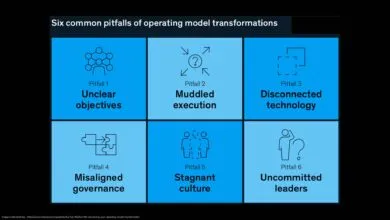
Several common pitfalls emerge when teams scale without intentional design. Unclear role boundaries mean employees often duplicate work or let critical tasks slip, leading to missed deadlines and internal confusion. This ambiguity can also create leadership bottlenecks, where every decision must flow through a single person, crippling efficiency and causing delays. Furthermore, teams can become disconnected, operating in silos that produce inconsistent messaging and campaign quality. An over-reliance on meetings to fix communication issues often backfires, consuming valuable time that should be spent on execution. Finally, hiring specialists too early, before validating which channels truly drive growth, results in underutilized talent and wasted budget.
To avoid these issues, a phased approach to team building is essential. Organizations can sustain significant growth by implementing the right organizational design at the right time. The journey to a team of 25+ typically unfolds across three distinct phases, each triggered by key business milestones.
The first phase, Foundation, is crucial for companies reaching $5–15M in annual recurring revenue (ARR). This stage focuses on establishing core marketing functions with versatile generalists. Essential roles include a VP or Director of Marketing to lead strategy, a Content Marketing Manager for SEO and creation, and a Demand Generation Manager for lead acquisition. Support roles like a Graphic Designer and Paid Media Specialist are also key. During this phase, a flat structure where all members report to the marketing leader aids clarity and collaboration. Hiring agile generalists who can adapt and support multiple areas is more valuable than early specialization.
Phase two, Specialization, begins when a company surpasses $15M ARR. Marketing must become more sophisticated to compete in a broader market. This phase introduces dedicated specialists and a layer of management to improve focus and performance tracking. New roles often include a dedicated SEO Manager, an Email Marketing Manager, and a Social Media Manager. The organizational structure should start forming functional teams with clear leads for areas like content and demand generation. With solid foundational processes in place, exploring remote or hybrid team structures becomes more feasible at this stage.
The final Scale phase is triggered at $40–100M ARR, supporting global operations. This requires a fully layered marketing organization with strategic and executional roles across functions and regions. New role considerations include a Director of Product Marketing, a Director of Brand, and specialists in areas like Account-Based Marketing (ABM), Conversion Rate Optimization (CRO), and International Marketing. The structure should include at least two layers of leadership, with Directors managing Managers within clearly defined functional areas.
Building a scalable team involves a deliberate five-step process. First, identify your current growth phase based on ARR and customer count. Next, conduct an honest assessment of your team’s existing skills and bandwidth to pinpoint gaps. Then, list hiring priorities by ranking roles based on their potential revenue impact and ability to address operational strain. Establishing clear role definitions, responsibilities, and success metrics for each position is non-negotiable to prevent overlap and confusion. Finally, create a regular cadence, such as quarterly reviews, to assess if your team structure still aligns with business goals and be prepared to adjust as needed.
When prioritizing hires, evaluate the direct revenue impact of a role, identify critical skill gaps, and assess which channels are underperforming due to a lack of expertise. Also, consider where the team is operationally stretched and align hires with long-term strategic initiatives like market expansion.
A key strategic decision is determining when to build in-house capability versus outsourcing. Insource roles that depend on deep company expertise, heavily drive pipeline, or are critical to brand voice and messaging. These include demand generation, product marketing, and content strategy. Outsource supporting, specialized, or temporary work such as graphic design, SEO audits, or project-based campaign support. This approach optimizes budget and allows for flexibility, especially in the early phases.
Equipping your team with the right tools is just as important as hiring the right people. In the Foundation phase, focus on core, multi-use platforms like a CRM and a content management system to keep costs low. During Specialization, invest in tools that deepen channel capabilities, such as advanced SEO software and marketing automation, prioritizing strong integrations. At the Scale phase, enterprise platforms for advanced attribution, ABM, and customer data unification become necessary to manage complex, global campaigns. Regardless of phase, choose tools that can grow with your team to avoid costly and disruptive migrations later.
Common questions arise during this scaling journey. A good starting leader-to-individual contributor ratio is roughly 1:5 or 1:6, adjusting as management layers are added. To prevent silos, introduce a management layer before teams grow too large, hold cross-functional meetings, and use shared revenue-focused metrics and collaborative platforms. Hire specialists only after you have validated which channels work for your business, typically in the Specialization phase. Use contractors for executional or temporary needs but prioritize full-time employees for strategic, core functions that require deep institutional knowledge.
Ultimately, your marketing organization will either be a powerful growth engine or a significant bottleneck. Structuring it intentionally to scale removes guesswork and positions your team to not just keep pace with growth, but to actively lead it. Use this framework as a living guide, revisit it regularly, and be prepared to adapt your strategy as your business evolves.
(Source: HubSpot Marketing Blog)