Microsoft’s Xbox Leadership Shake-Up: What’s Next?
▼ Summary
– Phil Spencer retired as Microsoft Gaming CEO after a challenging period marked by the prolonged Activision Blizzard acquisition and a shift away from Xbox-exclusive games.
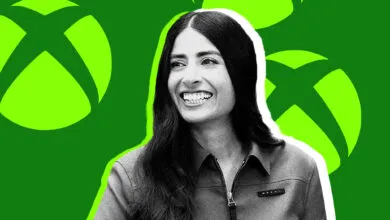
– Sarah Bond, widely seen as Spencer’s likely successor, was unexpectedly passed over for the CEO role, which was given to former Microsoft AI executive Asha Sharma.
– Bond’s “Xbox everywhere” strategy, which de-emphasized consoles in favor of mobile and cloud gaming, faced internal criticism and coincided with declining Xbox hardware revenue.
– The leadership transition announcement was chaotic, leaked early, and internal communications notably omitted mention of Bond, signaling her diminished standing.
– New CEO Asha Sharma promises a strategic reset for Xbox, focusing on a return to its core spirit, though her non-gaming background has raised concerns among some employees.
The recent leadership transition at Microsoft Gaming marks a significant turning point for the Xbox brand, signaling a strategic reset after a period of declining hardware sales and internal uncertainty. The decision to appoint former AI executive Asha Sharma as the new CEO, rather than promoting Xbox president Sarah Bond, has surprised many observers. This move suggests Microsoft is seeking a fresh direction, moving away from the “Xbox everywhere” vision championed by Bond under outgoing CEO Phil Spencer.
For months, speculation had swirled about Spencer’s eventual retirement, a move that became official last week. The announcement timeline was accelerated after details began to leak to the press, leading to a chaotic internal rollout where many teams learned the news from media reports. The communications surrounding the transition were notably uneven. While several executive memos praised Spencer’s legacy, Sarah Bond’s departure was scarcely mentioned in official company channels, with her own farewell note arriving hours later and separate from Microsoft’s main announcement.
Insiders indicate that Bond’s position had been precarious for some time. Promoted to Xbox president in late 2023, she became the public face of the brand as Spencer managed the complex integration of Activision Blizzard. Her strategy focused on expanding Xbox beyond the console through cloud gaming and a planned mobile store, encapsulated in campaigns like “you don’t need an Xbox to play Xbox” and the later, internally controversial “This is an Xbox” initiative. This pivot away from console hardware failed to resonate, coinciding with three consecutive years of declining Xbox hardware revenue. The promised mobile storefront also remains unrealized, years after its initial announcement.
Feedback from current and former employees paints a complex picture. Many acknowledge Bond’s skill in forging partnerships but describe a demanding management style and a strategy that alienated core console enthusiasts. The perception was that the pursuit of future, platform-agnostic customers came at the expense of the existing Xbox community. Following the departures of key executives like Kareem Choudhry and Jerret West, Bond’s marketing team directly promoted the multiplatform message, which many within the company found confusing and off-putting.
With Spencer’s departure and Bond’s exit, Microsoft has handed the reins to Asha Sharma, who promises a return to Xbox’s foundational “renegade spirit.” Her appointment has sparked concern among some staff due to her background in AI and lack of direct gaming industry experience. She has openly stated she is not a gamer but has actively engaged with the community online, soliciting game recommendations. In her introductory memo, Sharma sought to allay fears about an AI-dominated future, asserting that “games are and always will be art, crafted by humans.”
Sharma’s mandate appears to be a course correction. Her statement about “the return of Xbox” is a clear indictment of the recent strategic direction. While some worry she might be an “executioner” for the console, her history at companies like Instacart and Meta points to strengths in platform launches and user acquisition, areas where Xbox has struggled. Those familiar with her work describe an enthusiastic leader focused on execution and rallying teams around a clear vision.
Phil Spencer leaves a formidable legacy, credited with saving Xbox from irrelevance after the Xbox One era and pioneering consumer-friendly innovations like cross-play and the Xbox Play Anywhere program. His tenure also saw the transformative launch of Game Pass, which reshaped industry expectations for subscription services. However, his exit comes at a challenging time. The Xbox Series X|S generation has not meaningfully challenged PlayStation’s market lead, and the division faces ongoing turmoil from post-acquisition layoffs and studio closures.
The central questions about Xbox’s future, the role of the console, the impact of Game Pass on game development, and the integration of its massive acquisitions, now fall to Sharma. She steps into a role with immense pressure but also the opportunity to redefine the brand for its next quarter-century. Her success will depend on unifying a divided ecosystem, re-engaging a skeptical fanbase, and proving that a leader from outside the traditional gaming sphere can navigate its unique challenges. The reset button has been pressed; the industry is watching to see what loads next.
(Source: The Verge)