ULA’s Vulcan Rocket Faces Booster Issue During Launch
▼ Summary
– A ULA Vulcan rocket experienced a booster anomaly shortly after liftoff, releasing sparks and debris before recovering and continuing its mission.
– The incident resembles a previous Vulcan booster malfunction in October 2024, where a nozzle was lost but the mission still succeeded.
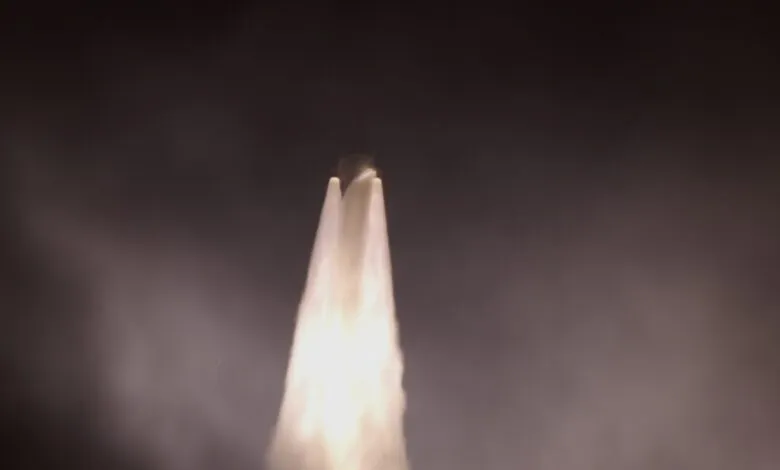
– Video evidence shows a fiery plume near the throat of one of the rocket’s four solid-fueled boosters, the area connecting the motor casing to the nozzle.
– Despite the anomaly, the rocket’s main booster and Centaur upper stage performed nominally, successfully delivering its military satellite payload to the intended orbit.
– ULA has launched an investigation into the root cause and will implement any necessary corrective actions before the next Vulcan launch.
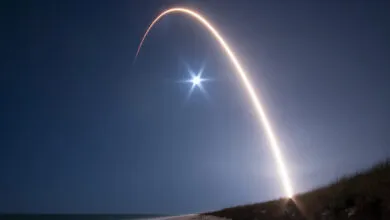
Moments after its early morning liftoff from Florida, the United Launch Alliance’s Vulcan rocket experienced a visible booster anomaly, emitting a shower of sparks and debris before executing a corrective roll and continuing its successful climb to orbit. This event, while not preventing the mission’s ultimate success, has prompted an immediate investigation due to its resemblance to a previous incident. The rocket was carrying a payload of US military satellites to geosynchronous orbit, a primary objective that was achieved despite the technical issue.
Close-up video footage from the launch reveals a fiery plume near the throat of one of the rocket’s four solid rocket boosters. This critical area is where the motor’s propellant casing connects to its bell-shaped exhaust nozzle. The anomaly became apparent less than thirty seconds after the 4:22 AM EST liftoff. Roughly a minute into the flight, the vehicle released a noticeable cloud of sparks, which was followed by a sudden rolling motion along the rocket’s long axis. The Vulcan’s guidance system managed to recover from this roll, and the mission proceeded with the boosters burning out and jettisoning as planned, falling into the Atlantic Ocean.
ULA officials confirmed the rest of the launch sequence, including the performance of the Vulcan booster and its Centaur upper stage, proceeded without further incident, successfully delivering its satellite payload. The company, a joint venture between Boeing and Lockheed Martin, stated that an integrated team of government and contractor personnel is reviewing all technical data and imagery. A recovery operation is also being organized to collect any debris from the booster malfunction.
Gary Wentz, ULA’s vice president for Atlas and Vulcan programs, addressed the situation directly. “Early during flight, the team observed a significant performance anomaly on one of the four solid rocket motors,” Wentz said. “Despite the observation, the Vulcan booster and Centaur performed nominally and delivered the spacecraft directly to geosynchronous orbit.” He emphasized the company’s commitment to a thorough review, noting the team is “establishing a recovery team to collect any debris. We will conduct a thorough investigation, identify root cause, and implement any corrective action necessary before the next Vulcan mission.”
This event bears a striking similarity to a malfunction that occurred sixteen months prior, when another Vulcan rocket lost a booster nozzle shortly after launch from Cape Canaveral. On that occasion, the vehicle also recovered and completed its mission. The recurrence of a booster-related issue underscores the rigorous engineering review that will now take place. Ensuring the reliability of these solid rocket motors is paramount for the future schedule of Vulcan launches, which are critical for both national security space missions and commercial satellite deployments. The investigation’s findings will determine what modifications or inspections are required before the rocket’s next flight.
(Source: Ars Technica)