Intel’s 18A Tech Breakthrough: A Win That’s Also a Wait
▼ Summary
– Intel’s 18A process is a breakthrough, marked by its successful integration into the Panther Lake lineup, but external customer adoption remains limited.
– A key barrier is its Backside Power Delivery Network (BSPDN), a novel technology that requires customers to completely rework their physical design methods.
– While BSPDN offers long-term benefits like power efficiency, its structural departure from conventional design limits immediate adoption by external foundry customers.
– Intel’s early implementation of this technology gives it a potential edge over competitors like TSMC, who plan similar solutions later.
– Analysts suggest Intel may find more external customer success with future nodes like 14A, when industry adoption of new power delivery methods is broader.
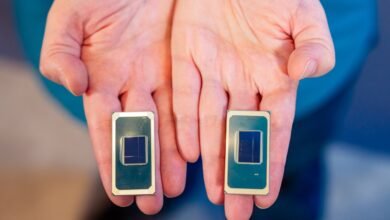
Intel’s recent achievement with its 18A manufacturing process marks a significant technical milestone, particularly following the successful integration into its upcoming Panther Lake processors. This internal success demonstrates tangible progress for Intel Foundry. However, the path to attracting major external clients to this advanced node faces a substantial, though not insurmountable, hurdle. The primary challenge stems from the node’s innovative Backside Power Delivery Network (BSPDN), a feature that requires a fundamental redesign of how chips are physically laid out.
Often referred to as PowerVia, this technology relocates the power delivery wiring to the back of the silicon wafer. This architectural shift frees up valuable space on the front side, which is dedicated to data signals, potentially leading to significant gains in performance and power efficiency. While this offers a compelling long-term advantage, it also demands that potential customers completely re-architect their chip designs from the ground up. For companies accustomed to traditional front-side power delivery, this represents a major investment and a departure from established methodologies, creating a barrier to immediate adoption.
Industry analysis suggests that while Intel’s early bet on backside power is a bold differentiator, broader market readiness for such a shift is still developing. Competing foundries are not expected to introduce comparable solutions until later this decade, with wider industry adoption projected around 2027. This timing gap means that for now, external clients may find it more practical to stick with more conventional process nodes that align with their existing design tools and workflows.
Paradoxically, being first with this technology also grants Intel a potentially massive competitive edge in the long run. The company is showcasing the benefits of PowerVia through its own products like Panther Lake, effectively proving the technology’s value in real-world silicon. This demonstration is crucial for building market confidence. By the time rivals like TSMC introduce their analogous A16 process, Intel will have years of manufacturing experience and refinement with backside power delivery.
Looking ahead, the derivative 18A-P process may see greater external interest as the industry’s comfort level with new design rules increases. Furthermore, Intel might find that its next-generation 14A-class nodes become a more viable target for widespread foundry customer adoption. By that point, the industry’s transition to new transistor architectures and power delivery methods will be more advanced, reducing the friction for clients to embrace Intel’s innovative approach. The current situation illustrates a common dynamic in cutting-edge semiconductor manufacturing: a technical win does not always translate to an immediate commercial one, but it can lay the essential groundwork for future market leadership.
(Source: WCCFTECH)