Lunar Energy Secures $232M for Grid-Stabilizing Home Batteries
▼ Summary
– Stationary battery storage, not EVs, is currently attracting significant buzz and investment in the U.S., as exemplified by startup Lunar Energy’s recent large funding rounds.
– Lunar Energy raised $232 million in two funding rounds and plans to scale manufacturing to 100,000 home battery units by 2028.
– Grid-connected batteries are crucial for boosting grid resiliency as the system strains from increased electrification and data center demand.
– Lunar Energy uses its batteries and virtual power plant (VPP) software to supply power to the grid and manage demand from appliances and EV chargers.
– The stationary storage market is highly competitive with major players like Tesla and new entrants, as batteries have rapidly become major, modular grid assets with falling prices.
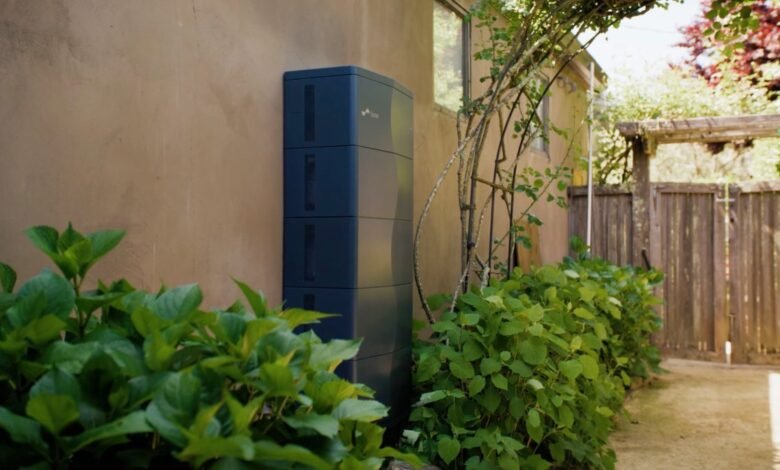
While electric vehicles often dominate headlines, a quieter revolution is unfolding in American homes and on the power grid. Stationary home battery systems are attracting massive investment as a critical solution for grid stability, with startup Lunar Energy securing a substantial $232 million in new funding. The company, which produces battery packs for homeowners in several states, announced the completion of two major investment rounds: a $130 million Series C led by Activate Capital and a $102 million Series D led by B Capital and Prelude Ventures. This fresh capital injection brings Lunar’s total funding to over half a billion dollars, underscoring intense investor confidence in the sector.
The company plans to use these funds to dramatically scale its manufacturing output. The goal is to produce 20,000 battery units by the end of this year, with an ambitious target of reaching 100,000 units annually by 2028. This growth is part of a larger trend where stationary storage has emerged as a resilient investment area. This is particularly notable given the policy uncertainties that have challenged other segments of the battery industry following legislative changes.
The driving force behind this boom is a strained electrical grid facing dual pressures. Increasing electrification of homes and transportation, coupled with exploding demand from data centers, creates instability. Grid-connected batteries offer a uniquely flexible tool to enhance resilience. Lunar Energy’s systems, available in 15 and 30 kilowatt-hour modules, do more than just backup power. The company’s virtual power plant (VPP) software can aggregate these home batteries, directing them to supply power back to the grid during peak demand. This same software can intelligently manage home energy use, controlling EV chargers and appliances to reduce consumption when necessary.
This capability positions VPPs as a potential replacement for traditional, polluting peaking power plants within just a few years. By leveraging thousands of distributed batteries, these virtual networks can provide crucial grid services without the need for building new fossil fuel infrastructure. The market is becoming increasingly competitive as other players recognize the opportunity. For instance, Base Power recently raised a colossal $1 billion for its residential battery VPP, and industry giant Tesla continues to expand its own Powerwall-based virtual power plant network.
The activity extends beyond the residential market. Tesla’s utility-scale storage business is growing rapidly, and Redwood Materials, founded by a former Tesla executive, has launched its own energy storage division. Even automotive companies like Ford are exploring ways to enter this expanding field. In a relatively short time, batteries have evolved from niche products to major grid assets. Their modular nature allows for rapid deployment, and although upfront costs remain, prices continue to fall steadily. This powerful combination of grid necessity, technological maturity, and improving economics explains why investors are eagerly committing significant capital to shape the future of energy.
(Source: TechCrunch)