Blue Origin Ends Its Suborbital Space Tourism Program
▼ Summary
– Blue Origin has paused its New Shepard suborbital tourism program for two years, signaling a likely permanent end.
– The program successfully completed 38 launches, flew 98 people, and deployed over 200 scientific payloads since 2015.
– The company is reallocating its people and resources to accelerate human lunar capabilities, including the New Glenn rocket.
– The cancellation surprised employees, as recent flights continued and expansion was planned, despite long-standing financial viability questions.
– New Shepard employed about 400 people and was considered a financial drain and a distraction from Blue Origin’s long-term space settlement goals.
Blue Origin has announced a significant shift in its operational focus, effectively halting its New Shepard suborbital space tourism program for the foreseeable future. This decision, framed internally as a pause, is widely interpreted as a permanent conclusion to the initiative. The move allows the company to concentrate its workforce and financial resources on accelerating its lunar ambitions, particularly the development of the New Glenn rocket and other technologies critical for establishing a sustained human presence on the Moon.
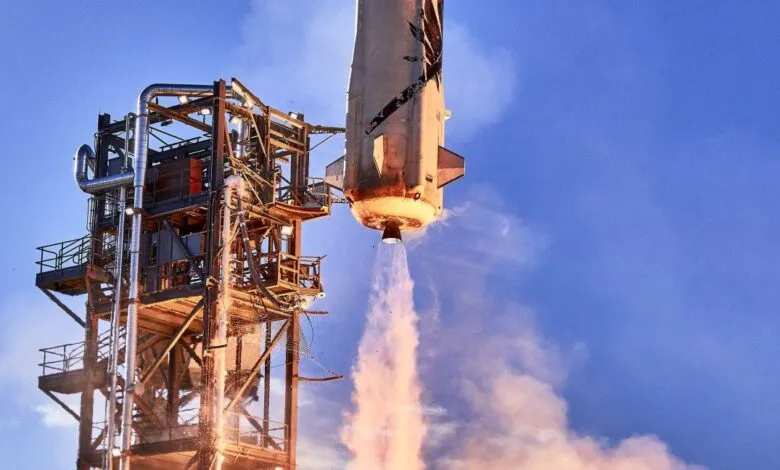
The New Shepard system, comprising a reusable rocket and crew capsule, has a notable operational history. Since its inaugural flight in April 2015, it has completed 38 launches with only one failure, achieving 36 successful landings. The program facilitated brief journeys to space for 98 individuals and deployed over 200 scientific experiments into microgravity. Despite this record of activity and recent missions, including a crewed flight just last week, the company is stepping away. Blue Origin is now prioritizing its human lunar capabilities, a strategic realignment that underscores its commitment to national space exploration goals over its commercial tourism venture.
This announcement caught many within the company by surprise. Operations seemed active, with four new boosters in development, two new capsules under construction, and ongoing ticket sales reportedly priced around $1 million per seat. Discussions about expanding to additional launch sites had occurred as recently as September. However, persistent questions about the program’s financial sustainability have long shadowed its progress. While sources suggest New Shepard was nearing a break-even point, it remained a financial drain, subsidized by founder Jeff Bezos. An internal email from CEO Dave Limp confirmed the reallocation of efforts, stating the company has an “extraordinary opportunity” to support America’s return to the Moon.
Approximately 400 employees dedicate some or all of their time to the New Shepard program, which also consumes shared company resources. Although this represents a minor segment of the overall workforce, leadership views it as a distraction from Blue Origin’s ultimate vision. The company’s long-term ambition extends far beyond suborbital hops, aiming instead to enable millions of people to live and work in space, moving industrial activity off Earth. By concluding New Shepard, Blue Origin is streamlining its path toward these more expansive, foundational goals in space infrastructure and lunar exploration.
(Source: Ars Technica)