NASA’s Mars Mission at a Crossroads: Time is Running Out
▼ Summary
– NASA urgently needs a new Mars communications relay spacecraft, especially after losing MAVEN and relying on the 20-year-old Mars Reconnaissance Orbiter.
– Congress allocated $700 million for a “Mars Telecommunications Orbiter” in a recent supplemental funding bill.
– The legislation’s wording, championed by Sen. Ted Cruz, appears designed to favor companies like Rocket Lab that received prior funding for Mars sample return studies.
– The bill specifies the orbiter must be selected from U.S. companies that proposed a separate, independently launched telecom orbiter for the sample return mission.
– Industry experts question the $700 million cost, stating a communications orbiter and launch could be provided for significantly less, potentially under $500 million.
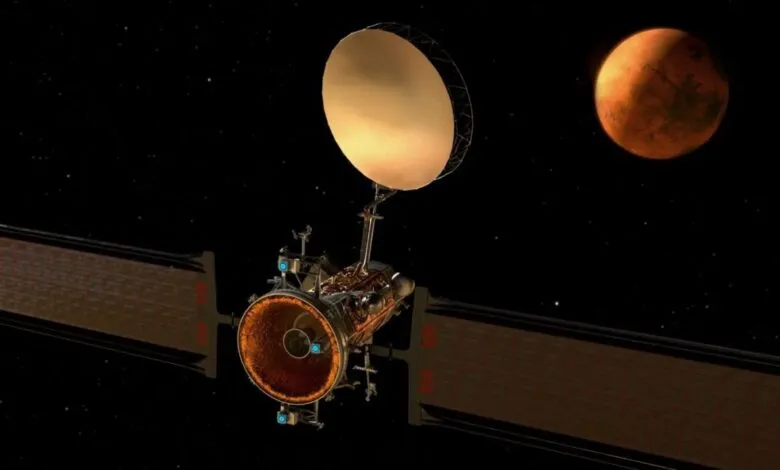
A critical decision point is approaching for NASA’s Mars exploration program, as internal discussions intensify over the selection of the agency’s next spacecraft destined for the red planet. This choice will fundamentally shape the strategic direction and scientific return of Martian missions for the next ten years. The urgent consensus is that NASA requires a new, dedicated communications relay orbiter to maintain the vital data link between Earth and its surface assets. This need has become a pressing priority following the loss of the MAVEN orbiter, leaving the aging Mars Reconnaissance Orbiter, now two decades into its mission, as the primary communications backbone.
Recognizing this vulnerability, the U.S. Congress allocated significant funding to address the gap. Last year’s legislative package included $700 million specifically earmarked for a “Mars Telecommunications Orbiter.” This substantial investment underscores the perceived importance of restoring robust, redundant communications infrastructure at Mars to support current rovers and future ambitious projects.
However, the legislative language crafted by Senator Ted Cruz has introduced specific, and some say restrictive, parameters for how this money can be spent. The bill mandates that the orbiter must be selected from U.S. companies that received federal funding in 2024 or 2025 for commercial design studies related to Mars Sample Return. Furthermore, these companies must have proposed a separately launched telecommunications orbiter designed to support that sample return mission.
This clause appears to reference a set of 2024 NASA awards to commercial entities exploring faster, lower-cost methods for retrieving samples from the Martian surface. Several space policy analysts suggest the wording seems tailored to advantage specific proposals, with many pointing to Rocket Lab’s concept for a telecom orbiter as a likely beneficiary of this directed funding approach.
A second point of debate centers on the allocated budget itself. While $700 million for a spacecraft and its launch vehicle is a considerable sum, some industry experts question whether it is excessive for the stated purpose. One knowledgeable official noted that a capable communications payload, satellite bus, and launch could be secured for a figure closer to $500 million, and potentially for even less. This discrepancy raises questions about the true scope of the intended mission and whether the funding level anticipates capabilities or complexities beyond basic telecommunications. The coming resolution of this debate will determine not only the technical specifications of the next Martian orbiter but also the pace and ambition of NASA’s exploration efforts in the late 2020s and beyond.
(Source: Ars Technica)