Tesla Ditches Autopilot, Pushes FSD for Recurring Revenue
▼ Summary
– Tesla faced a potential sales suspension in California, its largest US market, over deceptive marketing claims related to Autopilot.
– The company responded by making its Full Self-Driving (FSD) feature a paid option, initially for a one-time fee and then solely via a $99 monthly subscription.
– Elon Musk announced the subscription price will increase as FSD’s capabilities improve, with a major value jump expected when unsupervised use is possible.
– The automotive industry is increasingly pursuing recurring revenue streams through subscriptions to appeal to investors.
– Tesla’s motivation for this shift may include falling profit margins and declining sales, despite its currently high stock price.
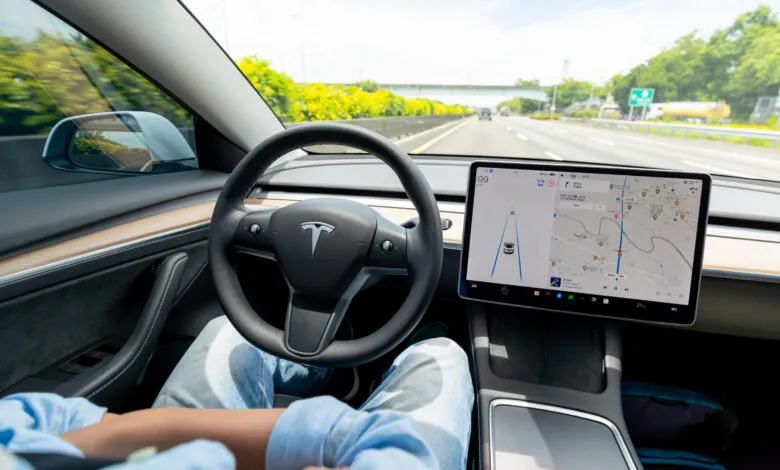
In a significant shift for its driver-assistance technology, Tesla has made a decisive move in response to regulatory pressure. The company is phasing out its standard Autopilot feature on new vehicles, effectively requiring customers to purchase the more advanced Full Self-Driving (FSD) package for automated steering functions. This strategic pivot comes after California regulators threatened to suspend the automaker’s sales license in its largest U.S. market over concerns that the “Autopilot” name was misleading to consumers. Rather than simply renaming the feature, Tesla has opted to restructure its entire offering, pushing drivers toward a recurring revenue model.
Previously, new Tesla vehicles included the basic Autopilot system. Now, to access comparable automated steering and lane-keeping capabilities, buyers must opt for FSD. Initially, this could be done with a one-time payment of $8,000, but that option is being eliminated. Starting February 14, the only way to obtain FSD will be through a monthly subscription priced at $99. This change fundamentally alters the ownership experience, transitioning from a traditional upfront purchase to an ongoing software-as-a-service payment.
This move is not just about regulatory compliance; it’s a clear play for predictable, recurring income. Industry observers note that automakers are increasingly chasing subscription-based revenue streams to appeal to investors and stabilize finances beyond the initial vehicle sale. Tesla’s stock valuation remains high, but with shrinking profit margins, declining sales growth, and fewer regulatory credits to sell, securing regular payments from its existing customer base is becoming more attractive. CEO Elon Musk has already indicated that the $99 monthly fee is just a starting point, noting that the price will increase as FSD’s capabilities advance. He highlighted that the most significant value leap will occur when the system progresses to “unsupervised” operation, where the driver would not need to monitor the road.
The broader automotive industry is witnessing similar shifts. Companies like General Motors and BMW have explored their own subscription services and software-locked features, though sometimes facing customer backlash. Tesla’s approach integrates this model directly into its core driver-assistance technology, a critical differentiator for the brand. By making FSD a subscription-only service, Tesla ensures a continuous revenue flow from customers who wish to maintain access to what the company frames as its most advanced and improving software. This strategy locks in customer investment over the life of the vehicle, potentially creating a more stable financial foundation as the competitive landscape for electric vehicles intensifies.
(Source: Ars Technica)