Influencers Pushing Peptides: What’s the Real Risk?
▼ Summary
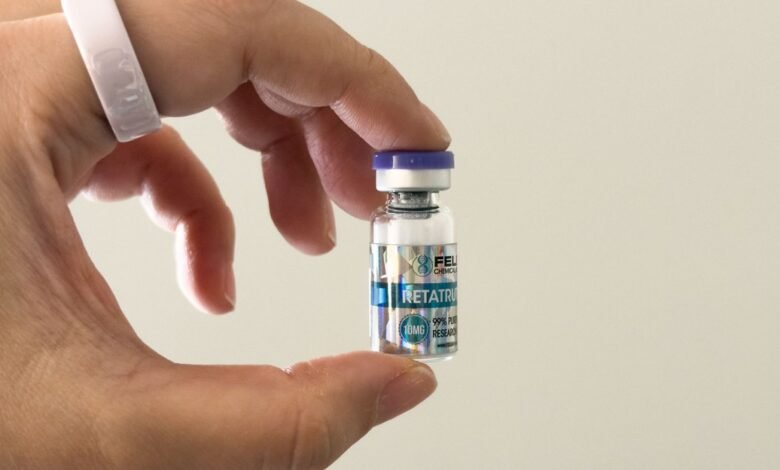
– TikTok influencers are promoting the dangerous, at-home reconstitution of gray-market retatrutide, an unapproved weight loss drug, often with minimal safety precautions.
– The gray market for peptides is distinct from legitimate compounding pharmacies, as it involves unverified sources selling outside authorized networks with no guarantee of safety, purity, or authenticity.
– A key risk is the lack of official standards for unapproved drugs like retatrutide, making third-party lab results on purity or potency difficult to interpret and largely meaningless.
– Legitimate compounding pharmacies are regulated, perform sterility and potency testing, and should be able to provide verifiable sourcing and licensing information upon request.
– The author’s personal experience obtaining a dubious vial highlights the systemic desperation driving people to gray-market alternatives due to healthcare access issues, cost, and insurance denials.
Scrolling through social media, you might stumble upon a surprising trend: influencers demonstrating how to mix powdered peptides for injection at home. These videos often showcase substances like retatrutide, an unapproved weight loss drug sometimes called GLP-3 or “reta.” The process appears straightforward, with vials, syringes, and bacteriostatic water laid out on a kitchen counter. Viewers are told to use an online calculator for dosage and to simply refrigerate the final mixture. What these clips frequently omit are fundamental safety steps, like thorough handwashing, surface disinfection, or wearing protective gloves. Showing these tutorials to a professional pharmacist typically results in a look of profound concern.
The allure of these substances is understandable, especially amid shortages and high costs for approved medications. However, the gray market for peptides operates in a dangerous space of uncertainty. When you purchase from these unofficial sources, you genuinely have no idea what you’re getting. Websites may claim 99 percent purity and display official-looking certificates, but such documents are often meaningless without rigorous, standardized testing. The substance in the vial could be anything, a different compound entirely, an incorrect dosage, or a mixture contaminated with harmful endotoxins.
There’s a critical distinction between the regulated world of compounding pharmacies and the unverified gray market. Legitimate compounding pharmacies create customized medications when standard commercial options aren’t suitable, often due to allergies or supply issues. They operate under strict regulations, with testing for raw ingredient purity, sterility, and potency. Their practices are overseen by state pharmacy boards and must adhere to standards like USP 797 for sterilization. The gray market, in contrast, involves manufacturers or distributors selling outside authorized networks. Here, you become your own pharmacist, assuming all the risks of sourcing, mixing, and administering.
A key problem with unapproved drugs like retatrutide is the absence of an official quality benchmark. A pharmacist would explain that potency (the correct amount of active ingredient) and purity (the absence of harmful contaminants) are separate concerns. For an FDA-approved drug, a USP monograph defines the acceptable limits for both. For a research chemical not yet on the market, no such universal standard exists. A “third-party lab test” promoted by a gray-market seller might check for one thing but completely ignore another critical safety parameter.
So, how can someone seeking these medications protect themselves? If you are exploring options through a telehealth service, med spa, or wellness clinic, your first question should always be: “What pharmacy is this coming from?” A legitimate operation will transparently name a licensed compounding pharmacy. You have the right to verify that pharmacy’s license in your state and ask about their sterile compounding endorsements. Inquire where they source their active pharmaceutical ingredients and if they provide third-party certificates of analysis for each batch. Be wary of any provider that cannot or will not give clear answers.
The reality is that navigating healthcare can be frustrating, with insurance denials and high costs pushing people toward alternatives. This doesn’t make the risks of the gray market vanish. The vial might arrive in innocuous packaging, like a small jewelry box, with minimal instructions, a stark contrast to the controlled, cleanroom environments where real medications are prepared. Before considering such a route, the most important question to ask isn’t about discount codes or lab certificates. It’s a personal and sobering one: “How much risk am I willing to take?” The answer requires weighing potential benefits against the very real possibility of injecting an unknown and potentially dangerous substance into your body.
(Source: The Verge)