Drone Delivery: The Future of Burritos?
▼ Summary
– Zipline is a drone delivery company that has completed over two million deliveries globally since 2016, transporting items from medical supplies to retail goods.
– The company operates two autonomous drone systems: the long-range, fixed-wing P1 for remote areas and the more flexible, hovering P2 with a tethered “Zip” for suburban deliveries.
– Zipline has a strong safety record with over 125 million miles flown and its P2 drones are equipped with redundant sensors for safe operation in busy airspace.
– While generally well-received, the drones have occasionally been mistaken for UFOs, but they operate quietly and expansion into Houston and Phoenix is planned.
– The service offers fast, fresh deliveries with low fees, and Zipline currently leads competitors like Wing and Amazon Prime Air in the retail drone delivery sector.
On a windy afternoon last year, just outside City Hall in Rowlett, Texas, an unusual aircraft cleared the treeline and paused overhead. It lowered a smaller, white craft on a thin tether down to a dry patch of grass. This little device deposited a brown paper package before riding the line back up to its carrier, which then turned and flew away. The entire event took less than half a minute. This was not a scene from science fiction; it was a real-world Zipline drone delivery, and the package contained my lunch. It represents just one of the millions of deliveries this company has completed since 2016, transporting items ranging from household goods in the American heartland to critical medical supplies in distant parts of Africa. The reach of this technology is poised to expand significantly in the near future.
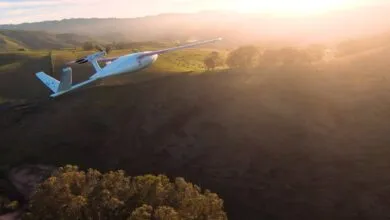
Zipline, headquartered in California, began its operations in Texas in 2025, but its story started nearly a decade earlier on another continent. The company launched its first service in Rwanda in 2016, focusing on rapidly delivering medical supplies to hard-to-reach areas. Independent studies have validated the lifesaving impact of these deliveries, giving the startup a compelling humanitarian foundation. In Africa, Zipline uses what it designates as Platform 1, or P1, aircraft. These are fixed-wing, uncrewed vehicles that resemble large model airplanes. Ground teams load payloads of up to four pounds into the craft, which are then launched into the sky using a powerful catapult system.
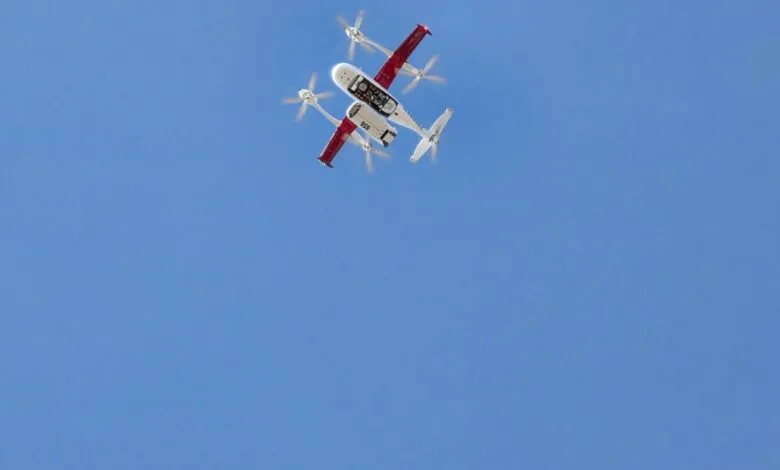
Once airborne, the P1 drones navigate autonomously on round trips of up to 120 miles. They process real-time weather information to steer around storms. Upon reaching their destination, they release their cargo by parachute before returning to base for a fresh battery and another load. The drones operating in the United States represent a more advanced generation. Known as the P2, these vehicles utilize five motors and can seamlessly shift from a hover to forward flight. This design allows for vertical takeoff and landing, as well as the ability to hold position over a specific location. While their maximum range is shorter at 24 miles, they offer greater flexibility, making them ideal for suburban environments.
A key feature of the P2 is its tethered companion, called a Zip. Each Zip has its own motor and carries payloads up to eight pounds in a compartment about the size of a breadbox. Its propeller stabilizes it against wind as it is lowered from the hovering P2 above. The P2 aircraft itself is equipped with a comprehensive suite of redundant sensors, including technology to detect signals from other aircraft. This sophisticated system enables it to operate safely in complex urban airspace, flying beyond the visual line of sight of any ground operator, a capability known as BVLOS in aviation regulations.
Zipline’s safety credentials are supported by a record of over 125 million miles flown without major incident. But beyond the technology, public acceptance is crucial. Rowlett Mayor Jeff Winget noted that community reaction has been largely positive. “Generally speaking, compared to some things that we picture in our community, there was not as much opposition as you might expect,” he said. The local approval process took roughly five months, facilitated by Zipline’s efforts to minimize its physical footprint in the area.
After receiving my lunch, I visited one of the company’s pickup stations, known as Zipping Points. This particular unit was situated in a Wendy’s parking lot, demonstrating how these stations can be quickly set up where needed. They consist of a white kiosk with extending metal arms. In practice, a retail employee can place a package into the station and leave. A P2 drone then arrives, lowers its Zip to retrieve the payload, and departs for delivery. During my observation, the process sometimes required assistance from Zipline staff to ensure smooth operation, but all packages were dispatched efficiently.
Notably, even on a gusty day when drone motors typically work harder, the sound from the P2 hovering at altitude was quieter than the ambient noise from a nearby street intersection. The low acoustic profile is a significant benefit for community integration. Despite the generally favorable reception, there have been moments of confusion. John Erik Ege, the Texas director for the Mutual UFO Network (MUFON), reported receiving a handful of inquiries from puzzled residents. One report from September described a strange hovering object that lowered something straight down before retracting it and flying off. These sightings, of course, were of delivery drones in action. With Zipline preparing to launch services in Houston and Phoenix, local MUFON chapters might want to brace for a few more calls.
As for the delivered meal, the burrito arrived fresher and hotter than any I’ve received from traditional car-based services. Ordering through Zipline’s app was as straightforward as using any popular food delivery platform. The delivery fee was $0.99, plus a service charge capped at six dollars. There is, thankfully, no option to tip the drone. Current partners include several major brands like Walmart, Wendy’s, and Chipotle. In the competitive landscape of retail drone delivery, Zipline’s main rival is Alphabet’s Wing, which also partners with Walmart. While Wing has accomplished a notable 750,000 deliveries, this figure is less than half of Zipline’s total. Amazon Prime Air has recently paused its testing following incidents. Zipline’s commanding position in the market was underscored by a recent funding round that valued the company at $7.6 billion.
The shift toward automated delivery does represent a change in how goods are transported, potentially affecting certain jobs. However, the efficiency gain is difficult to ignore. In communities like Rowlett, the alternative is a person driving a multi-thousand-pound vehicle to deliver a single meal, a system that seems remarkably inefficient by comparison. The quiet drone descending from the sky offers a glimpse into a streamlined future for last-mile logistics.
(Source: The Verge)