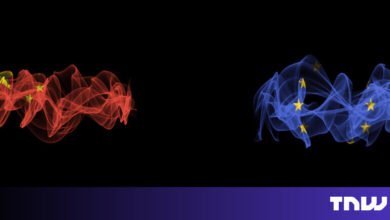
Brussels Launches New Push to Boost European Competitiveness

▼ Summary
– The EU is proposing a major structural shift called “Europe Inc,” centered on creating an optional, EU-wide corporate framework known as the 28th regime to simplify cross-border business.
– This initiative aims to solve the practical fragmentation of the single market, where companies currently face 27 different national sets of company laws and administrative hurdles.
– A key ambition is to allow entrepreneurs to digitally set up a company under this single regime within 48 hours, though this is a future target requiring formal approval, not current law.
– The push is driven by hardened global conditions, including weaponized trade and supply chain shocks, making regulatory fragmentation a strategic vulnerability for Europe.
– The optional framework would coexist with national systems, representing a political recalibration towards competitiveness, but risks creating a two-speed Europe and depends on future legislation and compromise.
Amidst a global conversation focused on trade barriers and state support, European leaders have turned the spotlight inward, critically examining the structural barriers that hinder their own economic potential. At the World Economic Forum in Davos, European Commission President Ursula von der Leyen signaled a significant pivot in the EU’s approach to business and global competition. The central theme of this shift is encapsulated in the new political framing of “Europe Inc,” a concept pushing a long-debated policy idea into the mainstream: the creation of an optional, EU-wide corporate framework.
This proposed system, often called the “28th regime,” would allow companies to incorporate once under a unified EU legal structure, enabling them to operate seamlessly across all member states. The core problem it addresses is the persistent fragmentation of the single market. While goods and capital move freely, businesses still navigate 27 distinct sets of company law, registration procedures, and capital requirements. This legal maze stifles startups looking to scale and often drives successful firms to seek simpler jurisdictions outside the EU.
The Commission’s vision is one of radical simplification through centralized digital tools. The ambition, as presented, includes enabling full company creation online within a mere 48 hours. However, this specific timeframe represents a future goal rather than current reality. The proposal must still be formally drafted, negotiated, and approved by both the European Parliament and individual member states, a process where political ambition often meets legislative complexity.
The urgency behind this initiative stems from a transformed global landscape. Trade is increasingly weaponized, and assertive industrial policies in the United States and China have forced a strategic rethink. Recent supply chain disruptions and the energy crisis laid bare Europe’s economic vulnerabilities, turning regulatory fragmentation from a bureaucratic nuisance into a critical strategic weakness. “Europe Inc” is an acknowledgment that rules alone cannot build economic power; scale and speed are essential.
This represents a notable recalibration for the EU, which has historically prioritized its role as a regulator. The emerging focus places competitiveness, capital mobilization, and strategic autonomy closer to the heart of policymaking. Yet, inherent limits define the proposal. The 28th regime would be optional, not mandatory. It does not harmonize corporate taxation, and key areas like labor law and social policy would remain under national control. The system is designed to coexist with, not replace, national frameworks.
This optional nature presents both an opportunity and a risk. It could attract high-growth companies seeking efficiency but could also inadvertently create a two-tier European market if not implemented with care. The tension between a unified business front and national sovereignty remains unresolved.
The Davos discussion did not unveil a finished product but revealed a Commission openly admitting that Europe’s current economic model is too slow. Whether “Europe Inc” evolves from a compelling slogan into a transformative tool hinges on the arduous legislative journey ahead, requiring compromise and political will across 27 capitals. For now, it stands as a clear declaration of intent: Europe aims to compete as a cohesive bloc, and the time to build that capacity is rapidly dwindling.
(Source: The Next Web)