Inside the Secret LEGO Museum: The Key to Its Longevity
▼ Summary
– LEGO maintains a secret museum in Denmark for employees, showcasing the toy’s evolution from its 1950s origins and its founder’s philosophy of “play well.”
– The core innovation is the universal “system” introduced in 1955, where every brick ever made can connect, enabling creations from simple towns to massive, intricate builds.
– While adult fans are a growing market, LEGO’s primary focus remains on children, with designers aiming to see the world through a child’s eyes.
– The company faces a significant environmental challenge, as its plastic bricks rely on petrochemicals and it has struggled to find a sustainable alternative that meets its strict quality and safety standards.
– Despite this challenge, LEGO continues to test new materials and aims for 60% of its sourced materials to be sustainable by the end of the year.
In the quiet Danish town of Billund, a globally recognized brand has its roots. The familiar click of interlocking plastic bricks is a sound that transcends generations, evoking a universal sense of creative possibility. This enduring appeal is celebrated in a private museum, accessible only to LEGO employees, which chronicles the remarkable journey of a simple toy into a cultural icon. The collection offers a tangible link from the company’s modest origins to its current status as a creative powerhouse.
The museum is situated beside the original home of founder Ole Kirk Kristiansen, a carpenter who started it all. The very name LEGO is derived from the Danish phrase “leg godt,” meaning “play well,” a philosophy that continues to guide the company. Among the treasured artifacts are some of the first bricks produced in the 1950s, including the inaugural “system” play town. This model demonstrated a revolutionary concept: every LEGO brick, no matter its vintage, is designed to connect with any other. That foundational principle of universal connectivity, established in 1955, unlocked infinite potential, allowing builds to grow from basic villages into astonishingly complex structures.
Visitors to this exclusive archive can see vintage sets that still operate perfectly, like a 1970s castle with a functional drawbridge. The evolution is clear, showcasing a trajectory from simple designs to incredibly ambitious projects. Alongside classic sets, the museum displays intricate modern creations, from detailed miniatures of global landmarks to artistic floral bouquets. It also highlights popular sub-brands, such as the fantasy world of Ninjago, whose tiny characters are fixtures in many contemporary households.
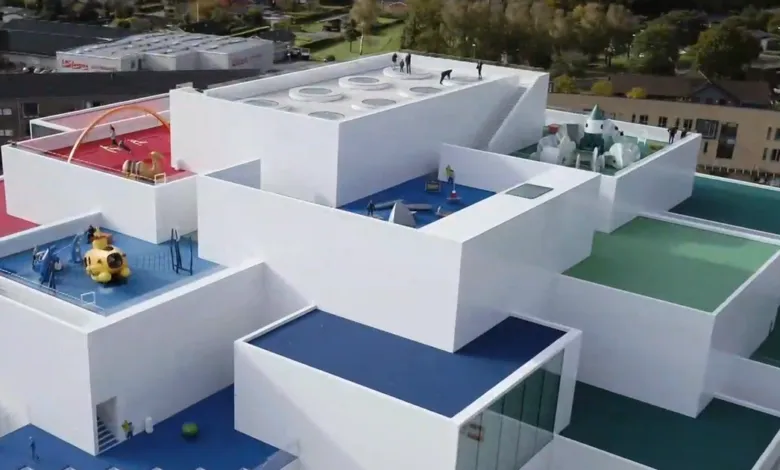
A short distance away stands the public LEGO House, a sprawling tribute to the brick containing around 25 million pieces. Its centerpiece is the breathtaking “Tree of Creativity,” a structure nearly 50 feet tall crafted from over 6 million bricks, making it the largest LEGO build known to exist. Every branch is meticulously detailed, representing the pinnacle of what the system can achieve.
This creative output is driven by an internal team of about 700 designers. André Doxey, the LEGO Group’s first American Head of Design, emphasizes that creativity, not technical skill, is the core of the brand’s lasting success. He believes the toy’s power lies in the freedom it provides. “Our system is a creative medium. It enables them to imagine anything they want to imagine,” Doxey explains. The appeal has proven ageless, with a passionate community of Adult Fans of LEGO (AFOLs) representing a substantial market. Yet, Design Master Milan Madge confirms that children remain the primary inspiration. The design process often begins by seeing the world through a child’s eyes, even if many concepts are now initially rendered digitally. Madge, however, still values the tactile connection of physical bricks, feeling it creates a direct link between the mind and the creative act.
This hands-on, brick-by-brick experience has cemented LEGO’s place as the world’s top-grossing toy company. It fosters family bonding, collaborative projects among friends, and global communities, all united by the distinctive rattle of bricks in a box, a sound instantly recognizable to millions.
Behind the creativity and nostalgia, the company confronts a significant challenge. In an era of climate concern, LEGO’s empire is built on plastic, a material reliant on fossil fuels. Manufacturing one ton of LEGO bricks requires about two tons of petrochemicals. With annual production around 60 billion bricks, the environmental footprint is substantial. The company has made ambitious sustainability pledges but has struggled to find a viable alternative material that meets its exacting standards for safety, durability, and precision. A high-profile initiative to use recycled plastic bottles was abandoned in 2023 when it was found the material would not reduce carbon emissions.
LEGO states it has rigorously tested more than 600 alternative materials, including bio-based options from sugarcane and recycled waste from other industries. Finding a solution that maintains the iconic clutch power and longevity of the bricks, where a piece made today still perfectly fits one from sixty years ago, has proven difficult. The company remains committed to its goal, aiming for 60% of its materials to come from sustainable sources by year’s end. The search for a greener brick continues, representing the next critical chapter in the evolution of a beloved global brand.
(Source: CBS News)