Rad Power’s Radster: A Practical Commuter Bike for Everyday Rides
▼ Summary
– China’s e-bike manufacturing has expanded significantly, leading to a surge in affordable e-bike companies over the past five years.
– Rad Power is an established e-bike company that predates the recent market boom, offering cargo, folding, and commuter bikes with electric assists.
– The Radster, a commuter bike tested, is well-built with solid components and can switch among three e-bike classes via a menu option, though performance remains unchanged.
– Priced higher than budget competitors, the Radster requires buyers to consider if its features justify the cost.
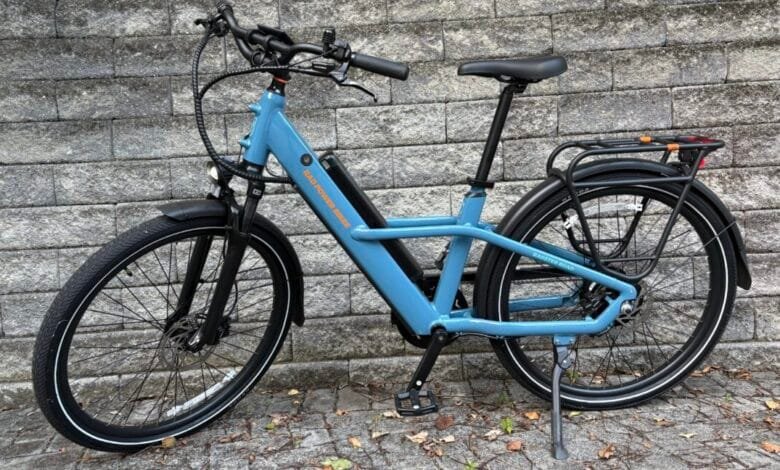
– The Radster’s robust frame, with added bracing for durability, ensures long-term use despite requiring a higher step to mount.
Electric bikes have surged in popularity, but finding a reliable, well-built commuter option requires careful consideration. Among the established players in this space, Rad Power has consistently delivered quality e-bikes since long before the recent market boom. Their latest offering, the Radster, stands out as a durable, thoughtfully designed choice for everyday riders.
Rad Power’s lineup spans cargo, folding, and commuter models, each featuring electric assist capabilities. After previously testing their cargo bike, we shifted focus to the Radster commuter bike, available in road and trail configurations. Our review unit was the road version, which impressed with its sturdy construction and premium components. The bike excels in areas where competitors often cut corners, though its class-switching feature, while innovative, doesn’t significantly alter performance.
Priced slightly above budget alternatives, the Radster justifies its cost with exceptional build quality and smart design choices. Riders prioritizing longevity over rock-bottom pricing will appreciate its robust engineering.
From the first ride, the Radster’s durability is unmistakable. Its step-through frame includes reinforced bracing near the cranks, with additional bars connecting the down tube and seat tube to strengthen the rear triangle. This design demands a slightly higher step when mounting but ensures the bike can handle years of daily wear and tear. The attention to structural integrity makes it clear this isn’t just another mass-produced e-bike, it’s built to last.
(Source: Ars Technica)