2025: The Year Wearables Embraced AI
▼ Summary
– The year 2025 marks a fundamental shift where wearables are increasingly being positioned as vehicles for AI, moving beyond their traditional health and fitness association.
– A key example is the rebranding of “smart glasses” to “AI glasses,” led by companies like Meta and Google, who see glasses as the ideal form factor for discreet, hands-free AI interaction.
– These AI glasses are defined as lightweight, stylish devices where interacting with an AI assistant, like asking questions about the surroundings, is the primary function.
– Another emerging category is always-listening AI pendants, pins, and rings designed to be constant companions that summarize conversations and manage tasks throughout the day.
– The trend is driven by the belief that wearables, due to their guaranteed on-body presence, are the perfect platform for AI assistants that need constant access to user context to function effectively.
Looking back, 2025 will likely be remembered as the pivotal moment when wearable technology fundamentally changed direction. For the past ten years, these devices have been almost exclusively linked to tracking health and fitness metrics. While that remains a core function, a new and powerful narrative emerged this year: wearables are becoming the primary physical vessel for artificial intelligence.
The most obvious shift is happening with what we used to call smart glasses. At CES in January, the influence of Meta’s surprisingly popular Ray-Ban collaboration was undeniable. The show floor was packed with companies showcasing both audio-focused and display-equipped eyewear, all promoting a future of seamless, hands-free interaction. Interestingly, many representatives began correcting my language. “Please, stop calling them smart glasses,” they’d say. “We refer to these as AI glasses.”
This wasn’t just industry jargon. Meta itself deliberately markets its product as “AI glasses,” not smart glasses. CEO Mark Zuckerberg has publicly argued that glasses represent the perfect form for AI, combining discreet audio, a camera for visual context, and the ability to ask questions about your surroundings in real time. This rebranding isn’t confined to one company. During a recent demonstration of new Android XR features, Google also drew a clear distinction. They categorize lightweight, stylish glasses designed mainly for interacting with an assistant like Gemini as “AI glasses,” separating them from bulkier extended reality headsets.
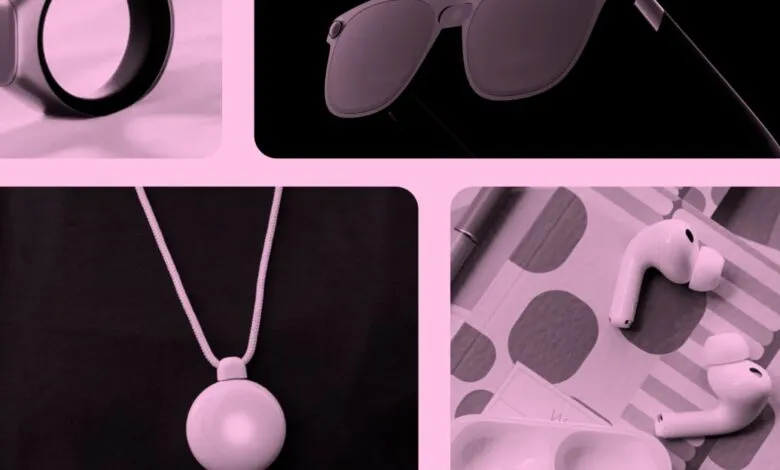
Beyond eyewear, a new class of wearable is appearing: always-listening pendants and pins. Devices like the Bee AI (now owned by Amazon) and the controversially advertised Friend necklace are entering the market. Startups are pitching similar gadgets, such as the Plaud NotePin and Limitless pendant, and there’s even an AI-powered smart ring for capturing voice memos. The shared vision is a passive, always-present companion that uses AI to summarize meetings, transcribe conversations, and even generate to-do lists based on your daily interactions.
A key insight came from a conversation with a Google product lead for wearables. He described these devices as the “only guaranteed on-body presence” in our computing ecosystem. Your phone can be left in another room, but a wearable is designed to be with you constantly. For an AI assistant to be truly effective and personalized, it needs continuous access to your context and routines. A wearable provides that persistent, intimate connection in a way no other device can.
This evolution is both fascinating and, for some, disconcerting. The very definition of a “wearable” is expanding beyond step counts and heart rates to encompass ambient, always-on artificial intelligence. As long as major tech firms see wearables as the ideal platform to deliver AI, this profound shift is not a passing trend, it’s the new foundation for the category.
(Source: The Verge)