AI Server Racks Are Dangerously Heavy
▼ Summary
– The number of data centers in the US quadrupled from 2010 to 2024, with a similar global trend of more and larger facilities being built.
– Experts state that most legacy data centers cannot be retrofitted for AI due to structural issues, primarily their inability to support the extreme weight of modern AI server racks.
– AI server racks are vastly heavier and more power-dense than traditional ones, often requiring specialized cooling and power delivery systems that older buildings cannot accommodate.
– The explosive growth in data center construction is largely driven by the demands of artificial intelligence, which requires entirely new, purpose-built facilities.
– Despite the focus on AI, traditional data centers remain essential for handling non-AI workloads, which continue to grow and will not be replaced.
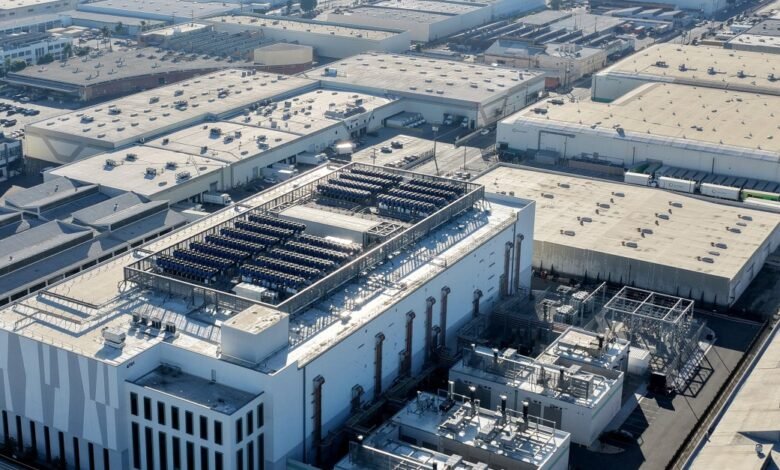
The rapid expansion of data centers across the United States and globally is driven by an insatiable demand for computing power, particularly for artificial intelligence. Over the last four years alone, hundreds of massive new facilities have been announced. This building boom raises a critical question: could the industry simply upgrade existing data centers to handle AI, avoiding the environmental and financial cost of new construction? Experts deliver a sobering verdict, legacy data centers cannot support the immense physical weight of modern AI server racks, making widespread retrofits impractical and often necessitating a complete rebuild from the ground up.
The core issue is fundamentally structural. Older data center floors were engineered for much lighter equipment. Decades ago, a standard rack might weigh between 400 and 600 pounds. Today’s high-density AI racks routinely reach 2,500 pounds, with projections pointing toward a staggering 5,000-pound benchmark. This isn’t just about more servers; it’s about an unprecedented concentration of hardware. To prevent data bottlenecks and maximize processing speed for AI model training, companies pack racks with hundreds of graphics processing units (GPUs) and vast amounts of memory. This density creates extreme power demands, with AI workloads consuming up to 350 kilowatts per rack, a 35-fold increase over traditional computing from just ten years ago.
All that power generates intense heat, requiring advanced cooling systems that add even more weight. Simple air cooling is often inadequate, replaced or supplemented by liquid-cooling plates filled with specialized fluids. Water weighs over eight pounds per gallon, and these systems require significant plumbing. Furthermore, delivering sufficient electricity to each rack necessitates heavier, wider power distribution systems like thick cables or solid copper busways, which can weigh 37 pounds per linear foot. The cumulative load from processors, memory, cooling hardware, and power infrastructure creates a physical burden that most older facilities were never designed to bear.
Many legacy data centers feature raised floors with static load limits around 1,250 pounds per square foot, a threshold easily exceeded by today’s AI equipment. Even reinforcing the floor fails to solve other geometric constraints. Modern racks have grown taller, now standing at nine feet, which can exceed the height of older industrial doorframes and freight elevators. Moving a several-thousand-pound rack requires a heavy-duty apparatus, and the combined weight of the rack, its moving gear, and personnel can surpass the capacity of existing building infrastructure. As one construction executive noted, you suddenly need a “pretty beefy elevator” for a multi-story facility, which simply isn’t present in older buildings.
Consequently, the race for AI supremacy is fueling a parallel construction boom. When tech giants exhaust their own dedicated AI data center space, they turn to specialized colocation providers, who are themselves building new, purpose-built facilities. This surge is so pronounced that it overshadows the continued growth of traditional, non-AI computing needs. Universities, hospitals, and countless businesses still rely on conventional data centers for everyday cloud storage and processing. The legacy data center market remains vital and is not disappearing; it is simply being outpaced by the specialized, physically demanding requirements of artificial intelligence. The industry faces a dual reality: a enduring need for traditional infrastructure and an unavoidable imperative to build anew for the weighty future of AI.
(Source: The Verge)