Google AI Overviews & AI Mode Cite Different Sources: Ahrefs Report
▼ Summary
– A study found Google’s AI Mode and AI Overviews produce answers with similar meaning (86% semantic similarity) but cite the same URLs only 13% of the time.
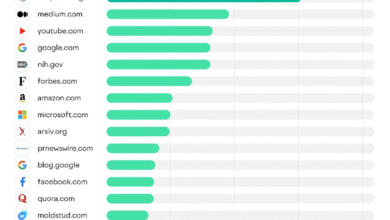
– The two features show different source preferences, with AI Mode citing Wikipedia and health sites more often, while AI Overviews heavily favor YouTube and video content.
– AI Mode responses are about four times longer on average and include significantly more mentions of entities and brands than AI Overviews.
– AI Mode is more likely to include citations, with only 3% of its responses lacking sources compared to 11% for AI Overviews.
– The low citation overlap means visibility in one feature does not guarantee visibility in the other, impacting how brands monitor their presence.
A recent analysis reveals that Google’s AI-powered search features, AI Mode and AI Overviews, frequently cite different websites even when providing answers with nearly identical meaning. This finding, based on extensive data from Ahrefs, highlights the distinct sourcing behaviors of these two systems. The study examined hundreds of thousands of query pairs, uncovering significant variations in the specific links and content types each feature prefers to reference.
The data shows a remarkably low rate of citation overlap. AI Mode and AI Overviews cited the same URLs only 13% of the time. When researchers narrowed the comparison to just the top three citations in each response, the overlap increased only slightly to 16%. This indicates a strong divergence in how each system selects its supporting sources. Despite this, the core information presented remains highly consistent. The analysis found an average semantic similarity score of 86%, meaning the answers conveyed the same fundamental message in nine out of ten cases. They simply used different wording and drew from different pools of information.
The preferences for specific websites and content formats vary noticeably between the two features. AI Mode demonstrated a stronger tendency to cite Wikipedia, Quora, and health-related sites. For instance, Wikipedia appeared in 28.9% of AI Mode citations, compared to 18.1% in AI Overviews. Conversely, AI Overviews showed a pronounced leaning toward video content. YouTube emerged as the most frequently cited source for AI Overviews, while both features referenced Reddit at similar rates. Overall, AI Overviews cited video pages and core website pages nearly twice as often as AI Mode did.
Beyond citations, the responses differ in length and detail. AI Mode answers were, on average, about four times longer than AI Overviews and included more mentions of specific entities and brands. AI Mode averaged 3.3 entity mentions per response, compared to 1.3 for the shorter AI Overviews. In a majority of cases, AI Mode’s response included all entities from the corresponding AI Overview and then added more. However, a substantial portion of queries, especially informational ones, generated answers with no brand or entity mentions at all.
Another key difference lies in citation frequency. AI Mode was far more likely to include source links, with only 3% of its responses lacking citations. In contrast, 11% of AI Overviews provided no supporting links. These gaps typically occur for calculations, sensitive topics, or queries in unsupported languages. For professionals monitoring brand visibility, these distinctions are crucial. Being cited in one AI experience does not guarantee a citation in the other for the same search. Furthermore, AI Mode’s more detailed responses may introduce mentions of competing entities that do not appear in the concise AI Overview format.
Google’s own documentation explains that both systems may use “query fan-out,” performing multiple related searches to gather information from various subtopics and sources. The company also notes that AI Mode and AI Overviews can employ different underlying models and techniques, which naturally leads to variations in the final responses and the links they display. This inherent variability is underscored by other research showing that nearly half of all AI Overview citations can change when the answer is regenerated.
The core takeaway is that while Google’s AI features consistently aim to deliver accurate information, their pathways to that information are not uniform. The sources they trust and the depth they provide can differ significantly, creating two distinct landscapes for digital visibility within a single search engine.
(Source: Search Engine Journal)