Tesla Robotaxis Spotted Driving Without Safety Monitors
▼ Summary
– Tesla has been spotted testing robotaxis without human safety monitors on public roads in Austin, marking a shift from its previous supervised approach.
– The company had previously used safety monitors with emergency kill switches in its Austin and San Francisco test fleets, which are not yet fully public.
– Elon Musk had predicted the removal of safety monitors by the end of 2025, framing their earlier use as an excess of caution rather than a technological deficiency.
– Despite Tesla’s progress, Waymo maintains a significant lead with millions of paid rides and expansion plans, while Musk argues Tesla’s advantage lies in its large existing customer fleet.
– Tesla has not yet carried paying customers in these unsupervised vehicles or released comprehensive safety data comparing its technology to human driving benchmarks.
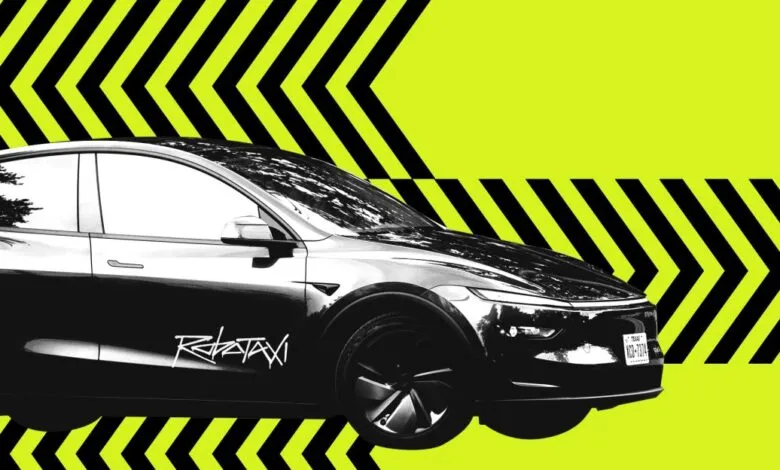
Several Tesla vehicles have been spotted operating on public roads in Austin without any human safety monitors present, marking a significant step in the company’s long-promised autonomous driving program. This development follows years of ambitious predictions and delayed timelines from CEO Elon Musk regarding the deployment of fully self-driving cars. The sighting of these unmonitored robotaxis suggests Tesla is accelerating its testing phase, moving closer to its stated goal of removing human oversight from the process.
For many months, Tesla’s pilot robotaxi services in cities like Austin and San Francisco have required a safety employee in the vehicle. This person, positioned in either the passenger or driver’s seat, had access to a manual override or kill switch to intervene if the autonomous system encountered a problem. This safety protocol stands in contrast to competitors like Waymo, which operates its commercial robotaxi service without any human safety drivers onboard. Musk has previously framed the use of these monitors as an excess of caution rather than a technological necessity, forecasting their removal by the end of 2025.
Recent video evidence posted online appears to show Musk following through on that timeline ahead of schedule. Footage from Sunday depicted two separate Tesla robotaxis navigating Austin streets with visibly empty front seats. Musk later confirmed on his social media platform that autonomous testing without human monitors had indeed begun in the Texas capital. This move represents a bold leap in Tesla’s real-world validation of its Full Self-Driving (FSD) technology.
This progress comes at a time when Waymo is significantly expanding its operational lead in the autonomous vehicle sector. The Alphabet subsidiary reported completing over 14 million paid rides just in 2025 and has announced plans to launch services in 20 additional cities. Despite this competitive gap, Musk maintains that Tesla possesses a critical advantage due to its enormous global fleet of customer-owned vehicles. He argues this fleet provides a vast data collection network and will swiftly transition to full autonomy, a claim that overlooks the fact that most Teslas currently on the road are not equipped with the hardware suite the company now deems necessary for true driverless operation.
While the appearance of unmonitored cars indicates tangible advancement, Tesla has not yet begun carrying paying passengers in these driverless vehicles, nor has it publicly released rigorous safety data comparing its system’s performance to human driving benchmarks. Public assessments of the technology thus far have relied heavily on anecdotal reports, often from enthusiastic Tesla advocates and influencers granted early access. These accounts, while sometimes glowing, do not substitute for the comprehensive, independently verifiable safety statistics that regulators and the public increasingly demand from companies operating autonomous systems on public roads.
(Source: The Verge)