Samsung Galaxy S26 Ultra: Powerful Upgrades Confirmed
▼ Summary
– The Samsung Galaxy S26 Ultra is expected to launch in early 2026 and will set the tone for smartphone specifications and software for the year.
– Regulatory filings confirm the US models will use Qualcomm’s Snapdragon 8 Elite Gen 5 chipset, answering a key community question.
– Further certifications reveal the S26 Ultra will feature 60W wired charging, an increase from the previous 45W, and will include satellite connectivity.
– While the Snapdragon chipset is perceived as higher-performing, benchmarking shows the latest Exynos chip is competitive, with each excelling in different areas.
– The phone’s AI capabilities are a focus for 2026, though the performance differences between the Snapdragon and Exynos chipsets for AI tasks are not yet publicly clear.
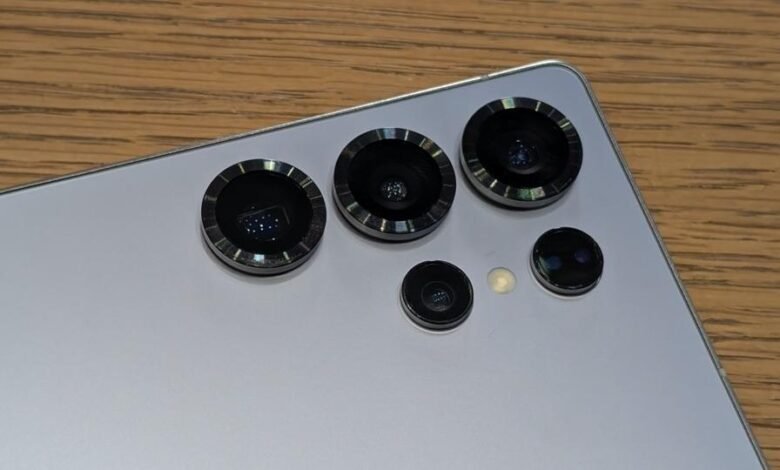
Anticipation is building for the Samsung Galaxy S26 Ultra, poised to launch in early 2026 and set the benchmark for the year’s smartphone technology. A key question from enthusiasts has centered on which processor will power the device. Recent regulatory filings have now provided a definitive answer, confirming the chipset choice for this flagship model.
The answer comes from the Federal Communications Commission (FCC) in the United States. The certification lists two model numbers: SM-S948U for US carrier models and SM-S948B for the global unlocked version. Crucially, both variants are documented as using the SM8850 model number, which corresponds to Qualcomm’s Snapdragon 8 Elite Gen 5 processor. This strongly indicates that the Galaxy S26 Ultra will utilize the Snapdragon chipset, at least for these major markets, putting to rest speculation about a switch to Samsung’s own Exynos silicon for this top-tier model.
Additional certifications have surfaced, revealing more about the device’s capabilities. Documentation from China’s 3C authority lists a model, SM-9480, confirming the inclusion of direct satellite connectivity for the Chinese market. This feature, expected to support standard and emergency messaging, aligns with the functionality of its predecessor. The 3C filing also details the included charger, confirming a significant upgrade to 60W wired charging from the current 45W. This supports rumors of an 80% charge in roughly thirty minutes for the expected 5,000 mAh battery, alongside 25W wireless charging.
The choice of Snapdragon is significant due to prevailing market perceptions. Historically, Snapdragon chipsets have been viewed as offering superior performance and thermal management compared to Exynos variants in Galaxy S phones, though Exynos chips often provide better power efficiency. Recent benchmark data suggests the performance gap is narrowing, with the Exynos 2600 even leading in some single-core tests. However, the multi-core advantage and the established reputation for peak performance still favor Snapdragon, reinforcing the idea that the S26 Ultra will deliver the absolute best specifications available.
Raw processing power is only part of the story. The rise of on-device AI features means that hardware-accelerated AI performance will be a critical differentiator. How each chipset handles AI workloads locally remains to be seen publicly. While the Snapdragon 8 Elite Gen 5 is confirmed for the Ultra model, it is widely expected that the Exynos 2600 will power the standard Galaxy S26 and S26+ models, potentially offering a cost-effective alternative without the premium Ultra branding.
Samsung typically unveils its new Galaxy S series at a Galaxy Unpacked event in late January. All signs point to the Galaxy S26, S26+, and S26 Ultra making their debut at such an event in early 2026, officially kicking off the next generation of smartphone innovation.
(Source: Forbes)


