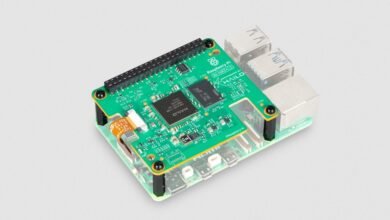
Raspberry Pi Price Hike: What It Means for Makers

▼ Summary
– Raspberry Pi is raising prices for its Raspberry Pi 4 and 5 models by $5 to $25 due to soaring memory costs.
– The price increase also affects the 16GB Compute Module 5, which is now $20 more expensive, starting at $140.
– The company’s CEO attributes the price pressure to competition from AI infrastructure roll-outs but calls it a temporary issue.
– A new, more affordable 1GB variant of the Raspberry Pi 5 is being introduced for $45 with several key features.
– Other hardware companies like CyberPowerPC and Maingear are also facing similar RAM price pressures, leading to or expecting increases.
The recent announcement of a price increase for several Raspberry Pi models has sent ripples through the maker and hobbyist community. Citing the significant pressure on global memory costs, the Raspberry Pi Foundation has implemented immediate price adjustments for its popular single-board computers. This move directly impacts the Raspberry Pi 4 and Raspberry Pi 5 product lines, with increases ranging from five to twenty-five dollars depending on the specific model and its RAM configuration. Notably, the 16GB versions of the Compute Module 5 will see a twenty-dollar hike, now starting at $140. In a statement addressing the change, CEO Eben Upton described the memory price surge as a painful but temporary situation driven largely by the massive infrastructure rollout for artificial intelligence systems. He reaffirmed the organization’s long-standing mission to reduce computing costs and expressed an intention to reverse these increases once market conditions allow.
Alongside the price adjustments, the company is introducing a new, more accessible entry point for its latest hardware. A 1GB variant of the Raspberry Pi 5 will now be available for forty-five dollars. This budget-friendly model retains the core features of its more powerful siblings, including a capable quad-core 2.4GHz Arm Cortex-A76 processor, dual-band Wi-Fi connectivity, and a PCI Express port for expansion. This strategic release appears designed to maintain an affordable gateway for educational projects and basic applications, even as costs rise elsewhere in the lineup.
The broader computing hardware sector is experiencing similar pressures, with Raspberry Pi far from alone in navigating these turbulent supply chain waters. Other system integrators and PC builders, including CyberPowerPC and Maingear, have publicly discussed how the skyrocketing price of RAM is affecting their operations, leading to price increases that are either already in effect or anticipated soon. The current market dynamic features limited supply coupled with intense demand, prompting some retailers to sell memory at volatile market rates. This development is particularly frustrating for consumers and builders, as it comes just as the exorbitant and unpredictable pricing for graphics processing units had finally begun to stabilize earlier this year. For the global community of developers, educators, and DIY enthusiasts who rely on these accessible computing platforms, these market forces represent a tangible challenge to innovation and project budgets.
(Source: The Verge)