Google AI Removes Major Game Leaks Overnight
▼ Summary
– Google’s new Nano Banana Pro image generation system has launched and is creating highly realistic fake images that are spreading rapidly online.
– The technology has effectively ended the concept of media leaks by making AI-generated images indistinguishable from real ones or discrediting actual leaks.
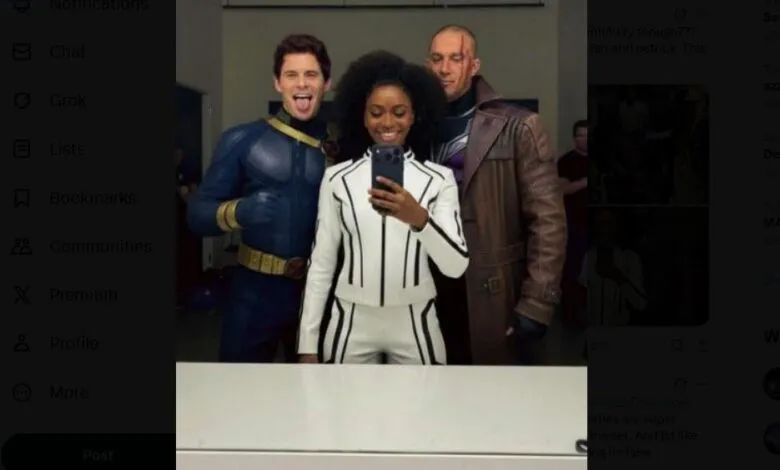
– Recent examples include fake images of X-Men in Avengers Doomsday, The Boys season 5, and Fortnite Chapter 7 that accumulated millions of views in days.
– The system has no guardrails for public figures and can generate convincing fake celebrity images in minutes with simple prompts.
– This advancement makes it impossible to trust online images, forcing people to scrutinize content repeatedly or potentially give up on verification entirely.
A single new AI tool from Google is dramatically reshaping how we perceive online information, particularly within entertainment circles. Google’s recently launched Nano Banana Pro image generation system has created a surge of hyper-realistic fake leaks for movies, television shows, and video games, effectively erasing the line between genuine content and artificial fabrication. The speed and quality of this technology have thrown the entire concept of a “leak” into question, forcing fans and media to doubt everything they see.
For many years, leaks followed a predictable pattern. We relied on blurry spy photos, accidental early releases from official channels, or internal documents that found their way online. Creating a convincing fake required significant effort and skill, often leaving tell-tale signs of digital manipulation. That era is over. Now, Nano Banana Pro can produce images so flawless that distinguishing them from reality is nearly impossible. This has an unexpected side effect: even legitimate leaks are now viewed with intense suspicion, as the default assumption is that they are AI-generated. Marketing and PR departments at major studios are likely celebrating this development.
In just the last forty-eight hours, several fabricated images have gone viral, amassing millions of views and sparking widespread discussion. Among the most prominent examples are fake shots from a non-existent “Avengers: Doomsday” film, convincing promotional stills for a theoretical fifth season of “The Boys,” and screenshots from a purported “Fortnite Chapter 7.” The range is impressive, from intentionally grainy “leaked” images to what appear to be polished, official publicity photos.
Even for those of us who have been tracking the evolution of AI image generation, the results are startling. Some of the “The Boys” season five fakes were so well-executed they almost passed for real. Without prior knowledge of Nano Banana Pro’s release, one would have confidently believed they were authentic. To test the system’s capabilities firsthand, a believable image of Hugh Jackman’s Wolverine on a “Doomsday” green screen was generated in under four minutes using only three simple text prompts.
A dedicated community of online sleuths works to identify and expose these AI fabrications. However, their efforts are a double-edged sword. In their zeal, they sometimes target and discredit legitimate, real leaks. The ultimate consequence is a pervasive climate of distrust. You simply cannot trust any image you see online anymore, whether it’s supposedly fake or supposedly real. This problem extends far beyond entertainment leaks. Unlike some competing models, Google’s system appears to have minimal guardrails preventing the generation of images featuring public figures, opening the door for more widespread misinformation.
This situation mirrors the challenges that have plagued the digital art community. While many AI art pieces are easy to identify, some are not, leading to a tragic trend where human artists are falsely accused of using AI. Many now feel compelled to record their entire creative process just to prove their work is legitimate, and even that evidence can potentially be faked. We have entered a new era where photorealism is achievable by anyone with an internet connection, and the full implications are not yet widely understood.
In the specific context of entertainment leaks, one could argue there are no true victims. However, witnessing an entire sector of online discourse and media consumption transform overnight is a profound experience. The casual glance is no longer sufficient; every image now demands intense, repeated scrutiny. The mental effort required to constantly question visual evidence is exhausting, leading many to wonder if the only sane response is to simply stop believing anything at all.
(Source: Forbes)