The AI Monopoly: Welcome to the Blob

▼ Summary
– Elon Musk co-founded OpenAI as a nonprofit counterforce to profit-driven AI development after Google acquired DeepMind.
– OpenAI has since transformed into a highly valuable for-profit entity, while Musk now runs his own for-profit AI company xAI.
– The AI industry is now dominated by a complex, interconnected network of companies and government interests dubbed “the Blob.”
– A recent deal between Microsoft, Nvidia, and Anthropic demonstrates circular financial arrangements where companies invest in and become customers of each other.
– These interlocking partnerships create a self-reinforcing system where AI development is increasingly controlled by a few powerful entities prioritizing growth over safety.
The initial vision for artificial intelligence was one of open collaboration and public benefit, but today’s reality tells a very different story. The AI industry has rapidly consolidated into a tightly interwoven network of corporate giants, government interests, and massive financial investments. This concentration of power, which some have nicknamed “the Blob,” raises profound questions about who ultimately controls the trajectory of this transformative technology and for whose benefit it is being developed.
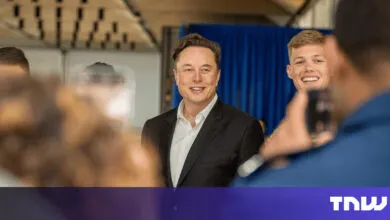
The origins of this situation can be traced back to figures like Elon Musk, who in the early 2010s grew deeply concerned that AI’s immense potential could be misdirected if guided solely by corporate profit motives. His early investment in DeepMind reflected this belief, and when Google acquired the lab, Musk severed his connection. He then co-founded OpenAI with Sam Altman, publicly committing the organization to a principle of prioritizing human welfare over shareholder returns. The contrast with the present landscape is stark. OpenAI now commands a valuation in the hundreds of billions, operates a for-profit arm, and Musk himself leads a separate for-profit AI venture, xAI. The idealistic notion of nonprofit leadership in AI has largely evaporated, replaced by a monolithic and financially driven ecosystem.
What has emerged is a deeply interconnected complex where the lines between competitors, partners, and government entities are increasingly blurred. This structure is partly bankrolled by overseas capital and enjoys support from a U.S. government that appears more focused on achieving technological supremacy than ensuring robust safety protocols. The intricate web of partnerships, mergers, and strategic investments effectively ties together nearly every significant player in the field, creating a single, powerful entity whose primary driver is financial gain.
Unraveling the dense connections within this network is a monumental task. Even with the assistance of advanced AI models, the picture that emerges is one of a self-perpetuating financial engine. A recent, illustrative example is the complex arrangement between Nvidia, Microsoft, and Anthropic. Microsoft’s terse announcement belied the deal’s circular nature: Microsoft invests billions in Anthropic, a direct competitor to its own partner OpenAI, while Anthropic commits to purchasing tens of billions in computing power from Microsoft’s cloud. Simultaneously, Nvidia invests in Anthropic, which pledges to build its technology on Nvidia’s hardware.
The outcome is a closed loop of mutual benefit. Nvidia deepens its involvement with its own customers, Microsoft hedges its bet on OpenAI, and Anthropic’s valuation nearly doubles in a matter of months. The deal was presented in a remote video call, a sign of how routine such massive, industry-shaping agreements have become. During the presentation, Microsoft’s CEO Satya Nadella, positioned centrally and smiling broadly, articulated what could be the Blob’s unofficial motto: “We are increasingly going to be customers of each other.” His counterparts nodded in agreement, with Anthropic’s CEO securing a crucial partnership for a company that lacks its own cloud infrastructure. Nvidia’s CEO, for his part, celebrated the deal as a “dream come true,” highlighting his company’s pervasive global reach and the new partnership’s power to deliver AI to “every enterprise, to every industry, around the world.”
(Source: Wired)