Robot Flies Drone in Startling Ease-of-Use Demo
▼ Summary
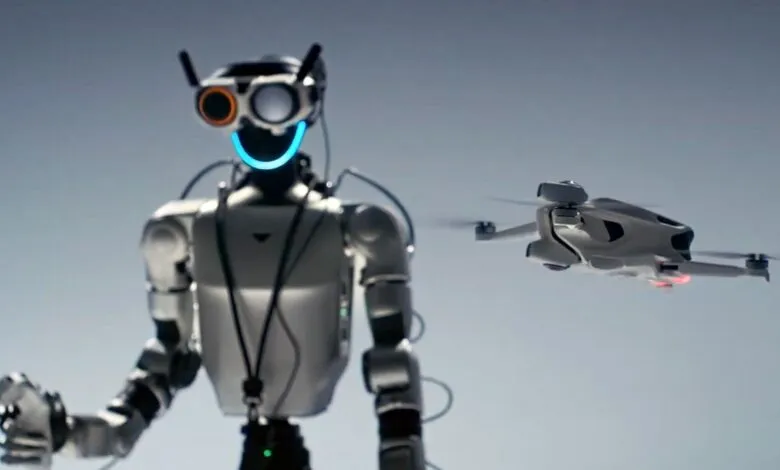
– The Unitree G1 humanoid robot was shown flying the Antigravity A1 drone using goggles and a motion controller.
– Antigravity confirmed the G1 was remotely operated by a human during the drone demonstration, not acting autonomously.
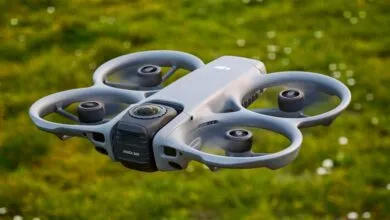
– The Antigravity A1 drone features dual cameras that create an 8K 360-degree immersive flying experience.
– TechRadar’s review noted the A1 drone is exceptionally easy to fly, described as “child’s play” with its motion controller.
– The demonstration was likely intended to showcase how simple the A1 drone is to operate, even by a robot under human control.
Imagine a compact humanoid robot sporting a pair of goggles, its hands gripping a joystick as it pilots a drone through the air. This isn’t science fiction; it’s a real demonstration showcasing the surprising ease of use of modern drone technology. The scene highlights a fascinating intersection in robotics, where different forms of advanced machinery are beginning to interact in novel ways.
The demonstration pairs two distinct pieces of hardware. On one side is the Antigravity A1, a 360-degree drone from an Insta360 spinoff. Weighing less than 250 grams, this quadcopter is equipped with dual cameras, one facing upward and another downward. Sophisticated onboard software stitches their feeds together to create a seamless, immersive 8K, 360-degree view of the environment, which is displayed in a headset.
On the other side stands Unitree’s G1 humanoid robot. This four-foot-tall, 77-pound machine has gained internet fame for its agility and, in one memorable instance, for wearing a maid outfit. In this latest showcase, the G1 was tasked with flying the A1 drone. Early hands-on impressions from experts noted that piloting the A1 feels incredibly intuitive, with one reviewer stating that using its Motion Controller makes the process “child’s play.”
This naturally leads to a compelling question: is it also robot’s play?
Antigravity released a video showing the G1 robot wearing the VR goggles, holding the Motion Controller, and successfully directing the drone’s flight. When the robot moved its hand to the left, the drone followed suit, and the same occurred with a rightward motion. While the footage was polished, a more raw, amateur clip provided convincing evidence that the interaction was genuine.
However, this prompts several technical questions. The G1 robot is equipped with a 3D LiDAR sensor and an Intel RealSense Depth camera, but it lacks stereoscopic vision comparable to human eyes. Its hands also do not possess tactile sensors. This raises doubts about whether the robot can genuinely “see” through the goggles or “feel” the controller in its grasp.
Furthermore, a significant portion of the G1’s demonstrated capabilities are typically managed via remote control. This led to speculation about whether the robot was autonomously flying the drone or merely acting as a physical puppet for a human operator. Antigravity confirmed the latter, clarifying in a statement that a human operator was currently controlling the G1 to manage the A1 drone. They noted that while the G1 cannot fully interact with the Motion Controller, the drone’s innovative “point-to-flight” feature allows the robot to exert a degree of control. The company expressed enthusiasm for continuing to explore collaborative possibilities with Unitree.
This demonstration ultimately serves a broader purpose. The primary goal appears to be proving a specific point about the drone’s user-friendliness. The underlying message is powerful: the Antigravity A1 is so remarkably simple to operate that even a robot can be tasked with flying it.
While this is a clever marketing stunt that effectively highlights the product’s intuitive design, it also invites reflection on practical applications. The idea of autonomous robots piloting drones overhead may not be a welcome one for most people. For the time being, it seems wiser to leave complex aerial tasks in human hands, allowing robots to focus on mastering other domestic challenges, like efficiently loading a dishwasher.
(Source: techradar)