AI-Powered Robots: The Secret Army Training Them
▼ Summary
– AgiBot has developed a system for two-armed robots to learn manufacturing tasks through human training and real-world practice on a production line.
– The system combines teleoperation and reinforcement learning and is being tested at Longcheer Technology, a manufacturer of smartphones and VR headsets.
– This innovation demonstrates how advanced AI is enhancing industrial robots, potentially increasing productivity and reducing reliance on low-wage human workers.
– While robots are common for simple tasks, complex assembly requires dexterity and adaptation that current AI cannot reliably train them to perform.
– The AgiBot robot at Longcheer handles placing tested components onto a production line, a task suitable for robots as it avoids fine manipulation or fragile parts.
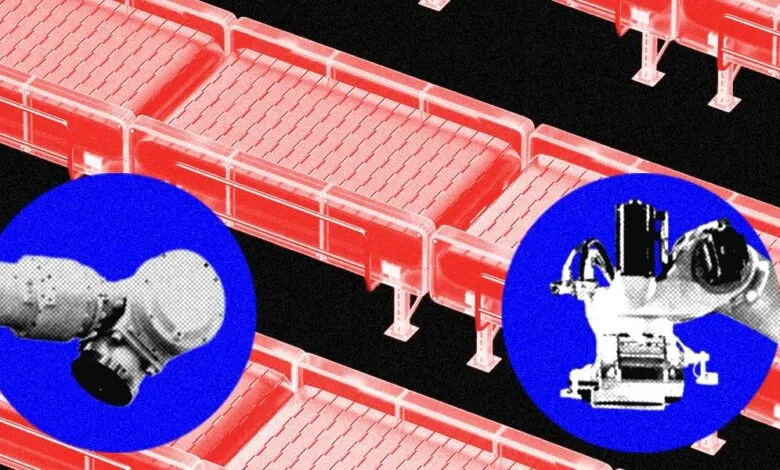
A Shanghai-based humanoid robotics firm, AgiBot, has developed a method enabling two-armed robots to master manufacturing duties by combining human instruction with hands-on experience on actual factory floors. This approach, which integrates teleoperation with reinforcement learning, is currently undergoing trials at a production facility operated by Longcheer Technology, a manufacturer specializing in smartphones, VR headsets, and various electronic devices. The initiative highlights how sophisticated artificial intelligence is progressively enhancing the capabilities of industrial machinery, a development poised to spread across manufacturing sectors in China and globally.
This technological shift promises to boost manufacturing efficiency significantly and may reduce reliance on large numbers of low-wage human laborers. While certain traditional roles could diminish as a result, new positions are expected to emerge in their place, reflecting the dynamic nature of the industrial workforce. Presently, robots are commonly employed for repetitive physical tasks such as lifting and transporting heavy containers. However, assembling intricate products like smartphones demands a level of dexterity, precise sensing, and adaptive problem-solving that has largely eluded automated systems until now.
Although AI already assists robots in identifying objects on conveyor belts and determining how to grip them, it has not been consistently effective for teaching complex manipulation skills. AgiBot’s current deployment at the Longcheer plant involves a robot retrieving components from testing equipment and transferring them to the assembly line, a job well within existing robotic capabilities since it avoids handling delicate, flexible, or fragile items. According to AgiBot representative Yuheng Feng, this role does not require the fine motor skills or nuanced interaction that more advanced assembly tasks would demand.
(Source: Wired)