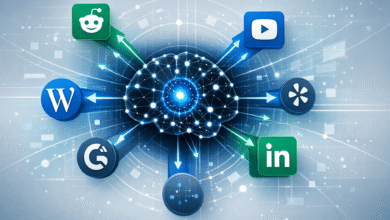
Social & UGC: The New Trust Engines of Search

▼ Summary
– AI search is transforming SEO into “search everywhere optimization” where social platforms and user-generated content drive discoverability.
– Modern search behavior occurs across multiple platforms like Reddit, TikTok, and YouTube rather than just traditional search engines.
– User-generated content and social discourse now shape what both AI systems and humans consider authoritative in search results.
– Search success now depends more on earning audience preference through authenticity and trust than on traditional ranking metrics.
– Breaking down silos between SEO, social, PR, and brand teams is essential for effective cross-platform discoverability strategies.
The landscape of search is undergoing a profound transformation, moving beyond traditional search engine results pages to embrace a multi-platform reality. Search everywhere optimization represents this new approach, where social media and user-generated content (UGC) function as primary drivers of trust and discoverability. Rather than replacing SEO, artificial intelligence is accelerating its evolution into a discipline that spans multiple channels and touchpoints.
At a recent industry conference, five prominent experts, Wil Reynolds, Josh Blyskal, Samanyou Garg, Ross Hudgens, and Ashley Liddell, collectively highlighted how audience trust and engagement are increasingly shaped by social interactions and community-driven content. Their presentations revealed four consistent themes that outline how marketers can adopt a search everywhere mindset.
Search Behavior Extends Beyond Single Platforms
Search is no longer confined to a search bar. Users now explore information through conversations, communities, and creators. While AI tools participate in this process, a significant portion of discovery occurs on platforms like TikTok, Reddit, YouTube, and LinkedIn, where authentic dialogue thrives. Modern search journeys are fragmented, often beginning on social platforms, progressing through AI interfaces, and concluding with brand discovery.
Samanyou Garg, founder and CEO of Writesonic, emphasized that a brand’s presence across the entire web has become its most valuable asset. He noted, “Brands optimizing only for Google are missing 40% of their audience who’ve already moved to ‘search everywhere.’” This concept was echoed by other speakers. Ashley Liddell described a similar framework where social, brand, and search efforts align to boost visibility. Ross Hudgens pointed out that social platforms are evolving into the new open web, with data showing substantial growth in traffic and engagement from these ecosystems.
Josh Blyskal provided compelling data to support this shift. His analysis revealed that AI platforms such as ChatGPT and Perplexity reference Reddit and YouTube far more frequently than traditional corporate websites. He explained, “Search everywhere isn’t a trend anymore, it’s reality. Consumers are asking AI tools the same questions they once asked Google, but the answers are now built from fundamentally different sources. UGC platforms like Reddit drive more influence in AI recommendations because they represent unfiltered human experience at scale.”
UGC and Social Content Fuel Modern Discovery
User-generated content and social discussions have become integral to how people find and evaluate information. From product reviews to LinkedIn posts and Reddit threads, these interactions shape what both AI systems and human users consider authoritative. Social platforms often serve as the starting point for search intent, sparking curiosity that eventually leads users to branded content.
Blyskal’s research, which examined 40 million AI search results, identified Reddit as the most frequently cited domain across multiple AI platforms. Garg supported this finding, observing that community-driven content consistently dominates citations across various industries. Ashley Liddell’s award-winning BullyBillows case study illustrated the measurable impact of a social-first approach, reporting a 65% increase in brand searches, a 195% rise in “brand + keyword” searches, and a 139% lift in revenue.
Wil Reynolds stressed the importance of investing in content that resonates on social platforms, even if it underperforms in organic search. Data from Seer Interactive revealed that while social media generates 89% less traffic than search, it produces 20% more leads. This evidence confirms that social and UGC are not merely amplification channels, they are essential inputs in the search everywhere ecosystem.
Ross Hudgens added, “Search traffic to LinkedIn pages is up significantly, and I expect it to continue growing. Brands must consider how they show up and contribute on LinkedIn to impact all search surfaces effectively.”
Preference Now Outweighs Ranking
Simply appearing in search results is no longer enough. Many marketers observe declining click-through rates even when rankings remain stable. The true objective has shifted toward preference, being chosen by users, not just displayed. Both people and AI systems increasingly prioritize authenticity and collective consensus over keyword optimization and link volume.
Liddell articulated this shift through the formula: preference = authority + trust + relevance. Reynolds urged SEO professionals to focus on community platforms like LinkedIn, Reddit, and WhatsApp, where content is shared with personal endorsement, offering more genuine reach than traditional SERP-focused formats. Hudgens described the evolution from valuing high domain rating links to prioritizing high-influence mentions, indicating that social proof now functions as a modern form of PageRank.
Garg quantified this change, noting that AI now weighs third-party mentions three times more heavily than a brand’s own website content. In essence, as search systems learn to emulate human behavior, they place greater trust in authentic signals than in optimized tactics.
Liddell summarized, “Brands can’t win on rankings alone anymore; they win on trust. Modern discovery happens where people talk, not where algorithms dictate. Investing in authentic UGC and social visibility is as critical to search as backlinks once were.”
Breaking Down Silos Is Essential for Search Everywhere Success
Organizational silos continue to hinder growth for many companies. Industry experts agree that maximizing discoverability now requires cross-functional collaboration. Search teams can no longer work in isolation; public relations, branding, and social media teams all contribute to the trust loop that AI, search engines, and users depend on.
Future success will rely on these groups meeting regularly, sharing insights, and aligning around common objectives. Conference presentations highlighted the importance of creating cross-channel roadmaps that integrate social, content, PR, and paid efforts so that each team’s work reinforces the others. Hudgens illustrated how blending PR, organic social, thought leadership, and SEO generates compounding impact rather than treating each as a separate channel.
Reynolds emphasized the need for shared metrics that measure trust, reach, and conversion instead of rankings alone.
Trust Powers the New Search Equation
While each speaker offered a unique perspective, all agreed on a central truth: search success is shifting from manipulating algorithms to authentically earning audience trust. Reddit discussions, offsite reviews, social media activity, and third-party references now serve as critical trust signals, not because they include links, but because they validate and build confidence in a brand.
This transformation, evident across all four themes, underscores a broader reality: search is no longer just an action. It is an experience that happens everywhere. The brands poised to thrive in this new era will not be those with the most backlinks or the most precise keyword strategy, but those with audiences who genuinely connect with and advocate for them.
(Source: Search Engine Land)