Vinod Khosla: US Should Take 10% Stake in Firms to Cushion AGI Impact
▼ Summary
– Vinod Khosla proposed the U.S. government take a 10% stake in all public corporations to redistribute corporate wealth to the public.
– He was inspired by President Trump’s decision for the government to purchase a 10% stake in Intel.
– Khosla believes sharing AI-generated wealth is necessary to maintain social cohesion and address economic disruption from artificial general intelligence.
– He predicted AI will create a hugely deflationary economy by 2035 and displace many current jobs, requiring societal adaptation.
– Khosla suggested startup founders have opportunities to build AI applications for every profession as work evolves away from tasks humans shouldn’t perform.
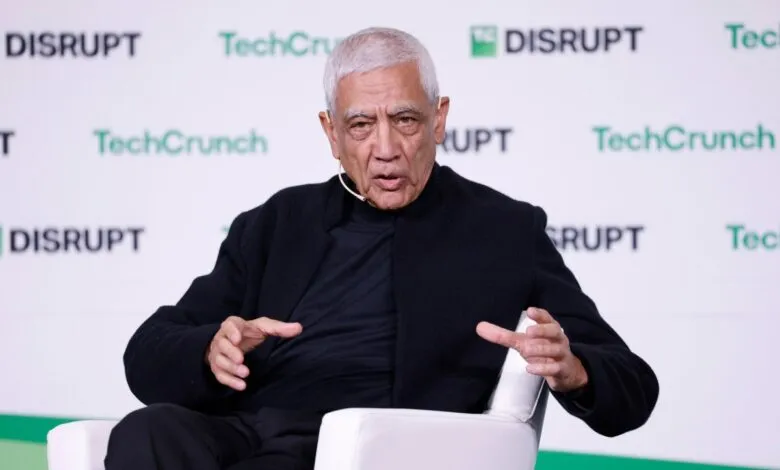
The potential economic upheaval driven by artificial general intelligence (AGI) demands bold policy solutions, according to venture capitalist Vinod Khosla, who recently proposed a radical wealth redistribution model. Speaking at TechCrunch Disrupt 2025, the Khosla Ventures founder suggested the U.S. government acquire a ten percent ownership stake in every public corporation, creating a national fund to distribute corporate wealth directly to citizens.
Khosla credited this unconventional idea to former President Donald Trump’s move to purchase a ten percent stake in Intel. He explained, “When Trump bought 10% of Intel, I wondered if it wasn’t a good idea. Take 10% of every corporation and put it in a national pool for the people. That’s really interesting. Just take 10% of every public company.”
While universal basic income has been explored by other AI leaders, including OpenResearch’s cash payment studies partly backed by Sam Altman, Khosla’s proposal stands out for its direct call for government equity in private industry. He acknowledged the controversial nature of his suggestion but argued that extreme measures may be essential for maintaining social stability as AGI transforms the economy.
“I’ll get critique for this idea,” Khosla admitted during his talk. “But sharing the wealth of AI is a really, really big need to level the benefits to everybody. We won’t need to do it in 15 years, but we do have to take care of those people. We will, by 2035, have a hugely, hugely deflationary economy.”
Khosla also highlighted the massive job displacement expected from AI advancements, emphasizing that many current roles will become obsolete. He described tasks like mounting tires on an assembly line or traditional farming as “not a job that humans should have,” calling such labor “servitude to survival.”
For entrepreneurs, however, Khosla sees tremendous opportunity. He noted that nearly every profession, from accounting and medicine to chip design, auditing, marketing, and entertainment, has room for AI-focused startups. This shift will redefine the nature of work itself, moving people away from routine tasks toward more creative and strategic roles.
(Source: TechCrunch)