Build a Bold AI Startup: Embrace Risk, Defy Norms

▼ Summary
– There are over 10,000 AI startups globally, with more than 2,000 receiving their first funding last year amid intense competition and rapid market changes.
– The author investigated AI founders to understand how AI tools are transforming product development and the challenges of competing in a crowded field.
– Navvye Anand, a 19-year-old cofounder of Bindwell, is developing AI models to create protein-based pesticides that predict experimental results quickly.
– Anand and his teenage team built their own large language models in high school, published a scientific paper, and secured $750,000 in venture capital to launch their startup.
– The founders rapidly learned biochemistry and lab skills, setting up a testing facility to validate AI-generated molecules, showcasing AI’s dramatic acceleration of startup capabilities.
Our planet now hosts a staggering number of AI startups, with estimates exceeding ten thousand. These ventures are popping up everywhere, far outnumbering some of the world’s rarest species. While the exact count fluctuates daily, last year alone saw more than two thousand of these companies secure their initial funding rounds. With billions of investor dollars flowing into artificial intelligence, a critical question emerges: What exactly are all these new enterprises aiming to accomplish?
To find out, I connected with numerous founders who have recently launched AI companies. My objective wasn’t to predict which ones might succeed, but to understand the reality of building with AI today. I wanted to learn how these powerful tools are reshaping their workflows and what it feels like to compete in such a ferociously crowded arena. The entire scene brings to mind someone attempting to tap-dance on the sun’s turbulent surface. Every time a giant like OpenAI announces a new feature, social media erupts with predictions of mass startup extinction. The environment is, in a word, brutal.
Is this technological revolution destined to leave countless engineers with burned ambitions? Absolutely, the harsh truth is that not every venture can survive. A startup is essentially a high-stakes experiment, and most experiments ultimately fail. However, by running thousands of these experiments across the global economy, we gain invaluable insights into what the future may hold.
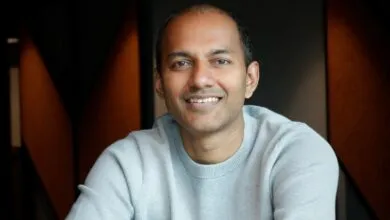
One founder, Navvye Anand of the company Bindwell, joined me for a video call. He spoke with a calm, half-smile and a refined demeanor as he explained his work developing pesticides using bespoke AI models. His company’s website once boasted that these models were “insanely fast,” capable of predicting experimental outcomes in mere seconds, a process that traditionally took days. Listening to Anand describe how he’s applying AI drug discovery principles to agriculture, it was easy to forget he is only 19 years old.
Anand grew up in India, where he and his father would read Hacker News together. He was already constructing his own large language models by his mid-teens in high school. Before graduating, he, his 18-year-old cofounder, and two friends from summer camp published a paper on bioRxiv. Their research detailed an LLM they built to predict a specific aspect of protein behavior, which generated significant buzz among scientists on social media and was later cited in a reputable journal. This success spurred them to launch a startup. After brainstorming, they settled on the idea of creating protein-based pesticides. Then, in a storybook turn of events, a venture capitalist discovered them on LinkedIn and offered $750,000 in funding if they would leave school to work on the company full-time. They accepted the offer and began their work in earnest last December, despite having almost no prior knowledge of the agricultural industry.
Just five months later, Anand and his cofounder had established their first biological testing lab in the San Francisco Bay Area. They later moved to another facility where they now personally pipette droplets of promising molecular compounds into tiny vials. The underlying theory is that a protein-based compound can target pests like locusts or aphids with surgical precision, avoiding collateral damage to humans, earthworms, and vital pollinators like bees. When I asked Anand how he acquired the specialized skills needed for wet lab work, he cheerfully replied, “I hired a friend.” This friend provided coaching throughout the summer before returning to college in the autumn. “Now I can perform some biochemical assays,” Anand stated. “Not an extensive range, but I can handle the basic, wet-lab validation for our models.”
The sheer scope of their achievement gave me pause. Here was a group of teenagers who, in just a few months, had built their own LLMs, mastered relevant biochemistry, used their models to pinpoint potential molecules, and were now conducting hands-on experiments in their own laboratory. It was far from shabby; upon reflection, the totality of their progress seemed almost unbelievable. I had anticipated that AI tools were accelerating certain aspects of company building, but I hadn’t fully grasped the magnitude of their impact. This realization led me to my next interview with the founders of Roundabout Technologies, a startup just over a year old. I started with a direct question: break down exactly what has changed, and by how much.
(Source: Wired)