AI FDI Hits 22% in 2025, Set to Top $1.2 Trillion by 2029
▼ Summary
– AI and sustainability are interconnected drivers transforming capital flows, value chains, and long-term prosperity, as highlighted at the Sharjah Investment Forum.
– AI-related foreign direct investment is projected to grow significantly, from 12% of global FDI in 2024 to 22% in 2025, with infrastructure investments expected to exceed $1.2 trillion by 2029.
– AI implementation must prioritize ethical safeguards, including data privacy, bias prevention, and human oversight, to empower the workforce and ensure responsible, sustainable outcomes.
– Investment promotion agencies are urged to proactively pilot AI in operations to enhance efficiency, with AI serving as an assistant to human professionals rather than a replacement.
– The UAE is making substantial AI investments, including a major campus and a $100 billion global fund, to boost economic diversification, with AI expected to contribute up to $96 billion to its economy by 2030.
The global investment landscape is undergoing a profound transformation, with artificial intelligence and sustainability emerging as twin engines for economic growth and capital allocation. At the recent Sharjah Investment Forum, industry leaders emphasized that these two forces are no longer peripheral trends but central drivers reshaping investment decisions, value chains, and long-term prosperity worldwide.
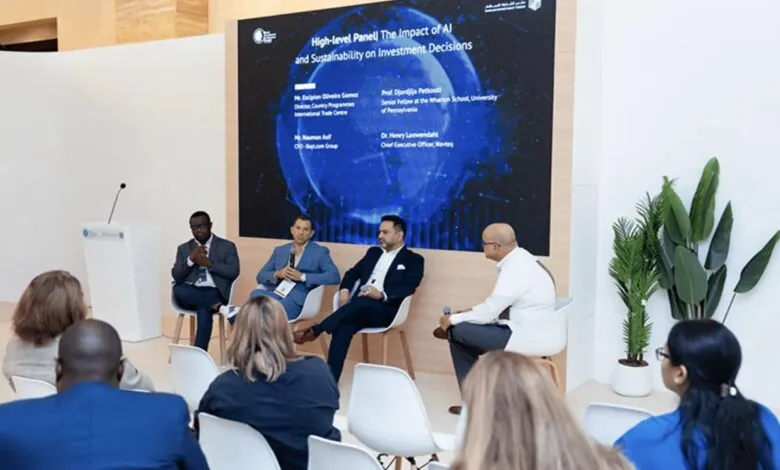
During a pivotal session focused on how AI and sustainability influence capital flows, experts provided actionable data for investors, government bodies, and investment promotion agencies. Dr. Henry Loewendahl, CEO of Waveteq, revealed that AI-related foreign direct investment is projected to constitute 22% of global FDI in 2025, a dramatic surge from just 6–7% in 2023. He further forecast that worldwide investments dedicated to AI infrastructure will exceed $1.2 trillion by 2029, fueled by massive demand for data centers, semiconductor manufacturing, and the necessary energy and water systems to support them.
Dr. Loewendahl highlighted that the current global data-center expenditure is heavily concentrated, with the United States accounting for 50% and China for 35%. Meanwhile, emerging economies, particularly in Africa, represent a frontier of opportunity, with close to 700 data-center sites planned across the continent.
The concept of return on investment is being fundamentally redefined. Nauman Asif, Group CFO of bayt.com, explained how his company leverages AI across a database of over 50 million job seekers to achieve both operational efficiency and positive social outcomes. He stated that modern ROI now encompasses the long-term sustainable impact of capital deployment, not merely financial gains. Asif stressed that AI must be implemented to augment human capabilities, not replace them, and that robust ethical frameworks covering data privacy, bias mitigation, and human oversight are non-negotiable for responsible adoption.
Kofi Joseph of the West African Development Bank outlined both the potential and the obstacles facing his region. He noted vibrant local innovation, such as Senegalese applications developed for fishing markets, but also significant challenges including unreliable electricity, underdeveloped data infrastructure, and policy gaps. He advocated for governments to champion homegrown AI solutions that directly address local socio-economic needs instead of depending entirely on imported technology.
A call for proactivity was directed at investment promotion agencies. Dr. Loewendahl urged them to move beyond a wait-and-see stance and begin piloting AI within their own operations to identify efficiency gains and value addition. He shared how his firm integrated AI to drastically accelerate the research and redevelopment of investment-promotion websites, completing projects in days rather than months. The consensus among speakers was clear: AI should act as an assistant to professionals, not their replacement, and must be guided by a long-term vision grounded in ethics and legal compliance.
Addressing the apparent slowdown in clean-technology FDI, Dr. Loewendahl clarified that this trend stems from geopolitical headwinds, including subsidy reductions in the US and European restrictions on Chinese renewable investments, rather than a decline in investor appetite. In contrast, AI is currently riding a powerful wave of technological progress and global economic restructuring.
The panel concluded that artificial intelligence has evolved from a specialized sector into a foundational element of global capital movement, infrastructure planning, and competitive strategy. For the Gulf region and other international players, achieving success will depend on harmonizing technological deployment with sustainable, human-centric principles and building institutional resilience.
Held alongside the World Investment Conference for the first time, the eighth Sharjah Investment Forum featured more than 160 sessions across two days, with 95 expert speakers addressing an audience exceeding 10,000 participants.
The United Arab Emirates is reaping substantial rewards from its strategic commitment to artificial intelligence, a central pillar of its plan for economic diversification and technological prominence. The nation’s comprehensive AI strategy encompasses infrastructure development, public service modernization, business process automation, and industrial innovation, firmly establishing the UAE as a leading global hub for AI activity.
Major infrastructure projects underscore this ambition. A landmark initiative in Abu Dhabi involves constructing one of the planet’s largest AI-dedicated campuses outside the United States. This sprawling 26-square-kilometer facility is designed to host 5 gigawatts of data center capacity. Its initial phase aims to deploy 100,000 advanced NVIDIA AI chips by 2026, enabling the domestic training of large-scale AI models and application development. The campus will operate sustainably, powered by affordable solar energy and supported by high-speed connectivity. Bolstering this, the state-supported MGX fund intends to deploy $100 billion internationally into AI chips and related technologies. Domestically, a $3.5 billion government investment is set to automate all federal services between 2025 and 2027. These efforts significantly expand the nation’s AI computational power and create export potential across vital sectors including healthcare, energy, and finance.
AI is a critical component of the UAE’s strategy to diversify its economy beyond hydrocarbons. Projections indicate AI could contribute up to $96 billion to the national economy by 2030, representing approximately 14% of GDP. Key sectors are already experiencing transformation: healthcare benefits from AI-powered diagnostics and personalized medicine; finance utilizes automation for VAT reporting, predictive cash flow analysis, and credit assessment; the energy sector optimizes production and integrates clean sources; and public services are enhanced through smart city infrastructure that improves safety and operational efficiency. These advancements are generating new employment opportunities, elevating service quality, and cultivating vibrant innovation ecosystems.
Business adoption of AI in the UAE ranks among the highest globally, with 64% of companies increasing their investments in automation technologies. The goal is to drastically reduce time spent on manual, repetitive tasks within finance, human resources, and customer service operations. Abu Dhabi’s Digital Strategy, backed by an investment of AED 13 billion, aims to accelerate this digital shift, potentially saving over 40 hours per employee each week currently lost to manual data entry and compliance work. This drives greater operational efficiency, minimizes errors, lowers costs, and frees the workforce to concentrate on more strategic, value-added activities.
Government and regulatory frameworks provide strong support for this technological shift. The UAE has appointed a dedicated Minister of AI, established clear regulatory guidelines, and created innovation hubs that allow startups and established enterprises to test and scale AI solutions. Strategic collaborations with global technology giants like OpenAI, Oracle, NVIDIA, Microsoft, and Cisco further empower the nation’s ambitions. Government initiatives include regulatory sandboxes and specialized AI labs that facilitate experimentation in finance, healthcare, and smart city projects, alongside funding mechanisms designed to accelerate technological advancement.
(Source: Economy Middle East)