OpenAI’s Atlas: ChatGPT’s Power, Not the Web
▼ Summary
– OpenAI launched ChatGPT Atlas, an AI browser designed to keep ChatGPT central rather than improving web browsing, with potential access to 800 million weekly users.
– The browser is initially available on Mac but will expand to Windows, iOS, and Android, and it aims to make ChatGPT the primary interface for search instead of Google.
– Atlas integrates features like memory and a hovering writing assistant to gather user data and context, enhancing ChatGPT’s capabilities and product development.
– OpenAI views Atlas as a step toward making ChatGPT an “operating system for your life,” evolving beyond a simple chatbot into a connected hub for daily tasks.
– The challenge for OpenAI is convincing users to switch from default browsers like Chrome or Safari, requiring widespread adoption of ChatGPT as a replacement for traditional search habits.
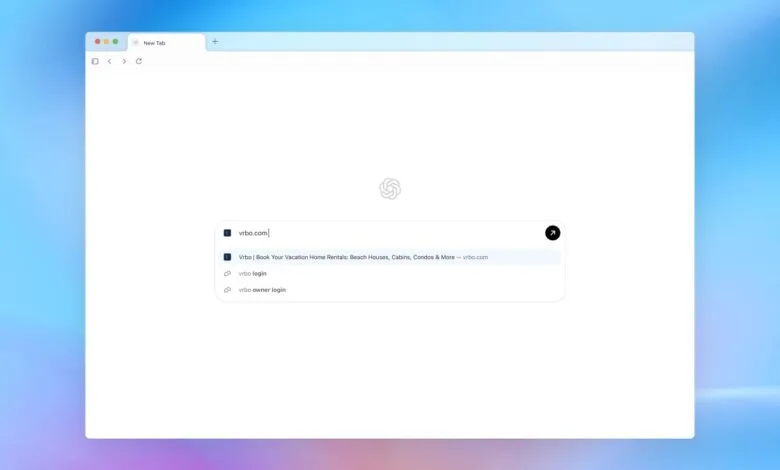
OpenAI’s new Atlas browser represents a strategic move to cement ChatGPT’s position as the central hub for information retrieval, rather than simply offering an alternative web navigation tool. During a recent livestream event, the company introduced this application, which enters a market already populated by competitors like The Browser Company’s Dia, Opera’s Neon, Perplexity’s Comet, and Strawberry. What makes OpenAI’s entry particularly significant is its potential to reach an enormous user base of up to 800 million weekly ChatGPT users. The primary goal appears to be reinforcing ChatGPT’s role as the go-to interface for queries, not necessarily improving traditional web browsing.
Initially available only for Mac, development is underway to expand Atlas to Windows, iOS, and Android platforms. Unlike some competitors that use invitation-only access, OpenAI has opened the browser to all users from the start. Its fundamental purpose is to position ChatGPT as the initial point of contact for searches and answers, directly challenging Google’s dominance.
These new AI browsers share a common approach: instead of typing search queries that return pages of links, users enter questions directly into the address bar to receive AI-generated responses. Sam Altman emphasized this shift during the launch, stating that artificial intelligence presents a rare opportunity to completely reimagine browser functionality and web interaction. He noted that while tabbed browsing was a major innovation, little has changed in browser design since its introduction.
Industry leaders frequently discuss AI as a transformative platform shift, yet most consumers still access AI tools through their phone or desktop operating systems. OpenAI aims to control as much of ChatGPT’s distribution network as possible. Recent developments highlight why this matters, Meta’s decision to block third-party chatbots like ChatGPT and Perplexity from WhatsApp demonstrates how platform owners can suddenly restrict access to billions of users.
Atlas provides OpenAI with enhanced integration capabilities for ChatGPT and its other products. Users can reference multiple websites directly within the interface rather than sharing external links. The company already employs a headless browser for its AI agent, but Atlas offers greater control over this functionality. A floating writing assistant that appears in text fields represents one of the existing integrations, with plans to incorporate an App SDK that will allow users to access other applications through ChatGPT.
The memory feature represents another significant element for power users. By combining browsing history with ChatGPT interactions, the system maintains context across sessions. You might ask “Where did I save that presentation plan for work?” and receive the specific link in response. As users spend more time with the browser, ChatGPT accumulates deeper understanding of their preferences and behavior. This contextual knowledge could eventually be shared with other applications when OpenAI widely implements its “Sign in with ChatGPT” feature.
Both establishing ChatGPT as the default search mechanism and implementing memory capabilities serve to collect extensive user data, providing OpenAI with valuable insights into behavior patterns that can guide product development. Notably absent are conventional browsing enhancements like ad-blockers, VPNs, reading modes, or translation tools. Instead, users must ask ChatGPT to summarize content or locate specific page elements, functionality that seems designed primarily to give the AI more context rather than to improve direct content consumption.
The Browser Company’s Arc offers contrasting features that genuinely reimagine the browsing experience, using AI to automatically rename downloaded files or customize web pages by removing unwanted elements.
OpenAI envisions Atlas as more than just another browser, it’s an expanded platform for ChatGPT itself. Applications CEO Fidji Simo elaborated on this concept in her launch announcement, explaining that user feedback from hundreds of millions of people has made it clear that ChatGPT must evolve beyond its original chatbot format. She described a future where ChatGPT becomes “the operating system for your life,” functioning as a connected hub that helps manage daily activities and long-term objectives.
The central challenge for OpenAI involves convincing users who currently default to Chrome, Safari, or Edge to switch browsers and capture market share from Google, Apple, and Microsoft. While ChatGPT continues to experience steady growth, it remains uncertain whether average users will combine their browsing and chatbot experiences. Chrome succeeded because it offered superior speed and integrated Google search as the natural starting point for internet use. ChatGPT Atlas perfectly serves users who have already replaced Google with ChatGPT, but for OpenAI to truly compete with Chrome, it must convince billions of users to adopt this new approach to information gathering.
(Source: TechCrunch)