My AI Glasses Promised a Genius Upgrade, But I Got Clippy Instead
▼ Summary
– Optimizer is a weekly newsletter by Victoria Song covering new tech gadgets and their impact on life, sent Fridays at 10AM ET.
– The author tested Halo Glass, an AI-powered smart glasses prototype that records, transcribes, and provides real-time answers during conversations.
– Halo Glass aims to act as a “second memory” by discreetly displaying relevant information, but the prototype faced technical issues and awkward interactions.
– The device raised ethical concerns about privacy, consent for recording, and potential risks to confidentiality in personal and professional settings.
– Ultimately, the AI interruptions and unreliable performance made Halo more distracting than helpful, leading the author to prefer traditional methods like notes and direct questions.
Testing AI glasses that promise to enhance memory and intelligence reveals a gap between the futuristic vision and today’s awkward reality. The Halo Glass prototype, an always-listening AI assistant built into eyewear, aims to discreetly feed you answers and summaries during conversations. But in practice, the experience felt less like a genius upgrade and more like dealing with an overeager digital intern.
My colleague Sean Hollister and I, both intrigued by smart glasses, volunteered to test Halo. Created by former Harvard students previously known for modifying Ray-Ban Metas, Halo records, transcribes, and injects relevant facts into your field of view. It’s pitched as a second memory, a tool to help busy, occasionally forgetful people recall commitments or grasp esoteric terms mid-conversation. Instead of a pin or wristband, you view information through smart glasses, which sounded brilliantly subtle.
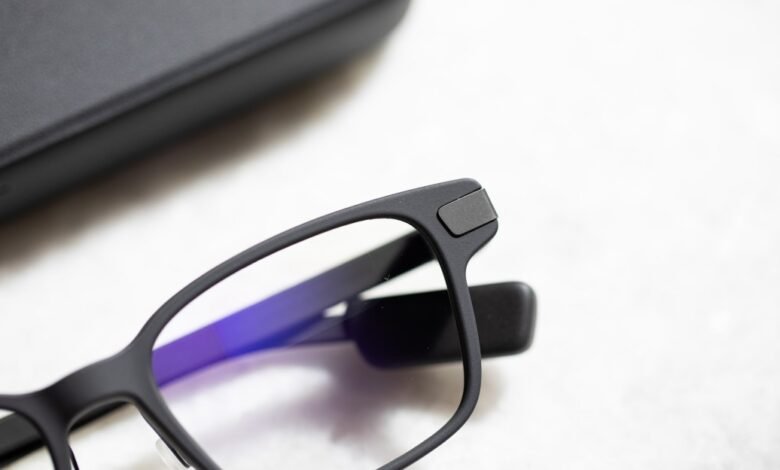
We received the Halo app to run on Even Realities G1 Glasses, a lesser-known but promising hardware maker. The plan was simple: try the prototype, compare notes, and document our findings. Reality, however, had different ideas.
Right away, we faced hurdles. Using third-party hardware introduced annoying technical glitches, kicking off our test call with a 20-minute troubleshooting session involving firmware updates and disconnections. But the awkwardness didn’t stop there. To view alerts on the G1 glasses, you must look upward. The default setting requires a 40-degree head tilt, like staring at the ceiling. We adjusted it to 15 degrees, but the gesture remained comically obvious.
Beyond the clunky hardware, we grappled with ethical questions neither of us had fully anticipated. Sean lives in California, where all parties must consent to being recorded. Was he breaking the law by wearing these glasses without notifying everyone? His wife’s job demands confidentiality, so an always-on recorder at home was out of the question. My own spouse had reached his limit with AI wearables after a previous device transcribed one of our arguments. To avoid these issues, we decided to test Halo together on a video call, each wearing a pair of glasses.
In theory, Halo displays a live transcription of your conversation, pops up related facts, and later provides a summary with action items, much like meeting notes. During our call, it did transcribe our discussion and occasionally offered useful bits, like defining “nits” when we talked about display resolution or explaining “doomerism” as we debated the ethics of perpetual recording.
Too often, though, the AI interjected with pointless trivia. After I correctly used the word “ensconced,” it showed me the definition, as if I needed a vocabulary lesson. When I mentioned another AI startup named Cluely, Halo served up details about the movie Clueless. The low point came when Sean referenced mobile phones, and we both received a notification that phones first arose in the 1970s and ‘80s. My glasses showed it, then his did, and then mine again, trapping us in an absurd, AI-powered loop. We spent much of the call tilting our heads back and forth like confused sea lions.
The constant interruptions made it hard to stay present. Roughly ten percent of my mental energy was spent anticipating the next alert or disconnection. Rereading our transcript later, I noticed several interesting threads we dropped, conversations we might have explored without all the digital interference.
Sean shared that his interest in Halo stemmed from a very human wish to “remember better.” I relate to that. Who wouldn’t want a reliable second memory? Yet this prototype felt more like a distraction than an aid. It brought to mind Microsoft’s Clippy, always popping up with marginally useful tidbits and breaking your concentration just as it gathered steam.
For now, I’ll stick with my imperfect system of analog Post-its and to-do lists. I’d rather occasionally ask, “What does that mean?” and risk looking uninformed than nod along with a device that pulls me out of the moment. The dream of seamless AI assistance is compelling, but today’s reality still has a long way to go.
(Source: The Verge)