GITEX 2025 Day 3: Groundbreaking Tech & Industry Partnerships
▼ Summary
– GITEX GLOBAL 2025 set records with high turnout and deal activity, hosting over 6,800 exhibitors and 2,000 startups from 180+ countries.
– Breakthroughs in AI and biotech showcased potential to cure genetic diseases and restore communication through brain-computer interfaces.
– Quantum algorithms and animal genome studies were highlighted as methods to accelerate drug discovery and unlock new medical treatments.
– Emerging technologies like smart contact lenses and AI behavioral analysis tools demonstrated real-world applications in health and computing.
– Strategic partnerships, such as Dubai Municipality with Cisco, and upcoming cybersecurity discussions aim to advance smart city infrastructure and digital trust.
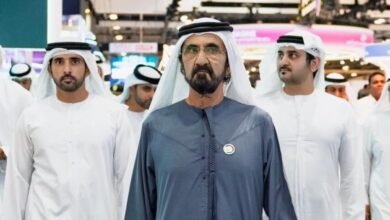
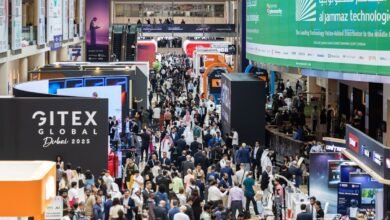
GITEX GLOBAL 2025 continues to demonstrate its powerful influence as the Middle East’s premier technology and investment hub, with Day 3 delivering a remarkable showcase of innovation and strategic alliances. The event’s momentum remains strong, drawing unprecedented participation and fostering high-impact collaborations across the entire technology spectrum.
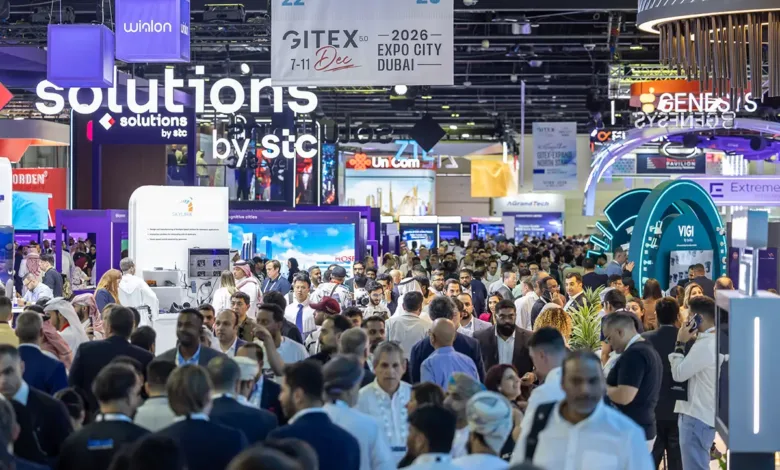
Now in its 45th year, GITEX GLOBAL has brought together more than 6,800 exhibitors, 2,000 startups, and 1,200 investors, alongside official delegations from over 180 nations at the Dubai World Trade Centre. The recent conclusion of Expand North Star 2025 further underscores Dubai’s pivotal position in advancing the future of digital entrepreneurship.
Healthcare and biotechnology emerged as dominant themes, with pioneering companies unveiling technologies poised to transform medical science. Trevor Martin, CEO and co-founder of Mammoth Biosciences, captivated the audience with his presentation on synthetic biology. He detailed how CRISPR and biologically inspired computing could one day eliminate genetic diseases and unlock new human capabilities. Martin emphasized, “We currently have over eight active programs targeting the liver, muscle, and brain, all focused on curing genetic disorders by altering DNA. While we’re beginning with rare conditions, the potential to save millions of lives is immense.”
In a landmark moment for neurotechnology, Matt Angle, CEO of Paradromics, discussed the first successful brain-computer interface implant. This breakthrough device records neural signals and restores communication abilities for individuals with severe disabilities. Angle explained, “Our clinical trials aim to give a voice to those who cannot speak. By implanting the device in the motor cortex, a high-data brain-computer interface translates the intention to speak into immediate, audible speech.”
Ashley Zehnder, CEO of Fauna Bio, explored how studying exceptionally resilient animals could unlock a vast library of new pharmaceuticals. “We are only beginning to understand the lessons nature offers through adaptation,” Zehnder noted. “Animals like the spiny mouse, capable of regenerating spinal cord, brain, and kidney tissues, provide invaluable insights for drug discovery.”
Jack Hidary, CEO of SandboxAQ, demonstrated the power of quantum algorithms to compress pharmaceutical research and development from decades to just months. “Our Large Quantitative Models are not trained on internet text but on numerical data, equations, and molecular structures,” Hidary said. “We’ve created a virtual atomic simulator that allows for millions of rapid, efficient tests.”
Broadening the healthcare conversation, Dimitris Moulavasilis, Group CEO of M42, and Dr. Georges-Pascal Haber, CEO of Cleveland Clinic, advocated for a fundamental shift from reactive treatment to proactive, data-driven health intelligence. Moulavasilis observed, “Current systems prioritize treatment and hospitals while underfunding prevention. Building resilient, sustainable healthcare requires not just reallocating investment but completely redesigning systems to maintain patient health.”
Across the exhibition halls, global technology leaders and agile startups presented live demonstrations of emerging technologies set to redefine multiple industries. Siemens highlighted its leadership in industrial AI, showing how domain expertise combined with data and artificial intelligence is creating smarter factories, intelligent buildings, and more sustainable energy grids.
Snowflake attracted considerable attention with its AI Data Cloud platform. Live demos of Cortex AISQL, OpenFlow, and the Data Science Agent illustrated how businesses can build, deploy, and scale AI applications in real time without sacrificing performance.
XPANCEO made a stunning debut with the world’s first display of six smart contact lens prototypes. These devices merge augmented reality with micro-optics to overlay digital information directly onto the user’s field of vision. Applications range from non-invasive health monitoring, such as detecting glucose levels in tears, to immersive real-time data displays, signaling the next evolution in wearable computing.
Among the featured startups, Sharedpro Technologies introduced an AI-driven behavioral analysis tool that enhances early autism screening by analyzing children’s focus during video sessions and tracking developmental milestones. Arlan Biotech showcased a generative AI platform that speeds up antibody discovery for pharmaceutical companies, while Sonic Group presented sound-based technology designed to improve wellbeing and cognitive performance in healthcare, sports, and entertainment.
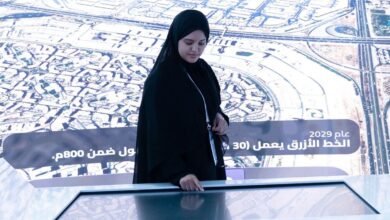
Dubai’s smart city ambitions received a significant boost through strategic partnerships announced on the MoU Stage. Dubai Municipality and Cisco formalized a collaboration aimed at accelerating the development of next-generation digital infrastructure. This agreement reinforces the city’s commitment to becoming a globally recognized, data-driven intelligent metropolis.
Looking ahead to Day 4, the focus will shift to cybersecurity, data sovereignty, and resilience in the intelligent economy. Key sessions will explore the future of AI governance, quantum computing, secure cloud infrastructure, and critical applications across public services, maritime, e-commerce, and financial technology.
(Source: Economy Middle East)