Coco Robotics launches AI lab led by UCLA professor
▼ Summary
– Coco Robotics is establishing a physical AI lab with UCLA professor Bolei Zhou to analyze five years of data collected by its delivery robots.
– The company aims to advance autonomous operations for its last-mile delivery robots to reduce delivery costs, moving beyond initial teleoperator assistance.
– Coco Robotics has accumulated millions of miles of urban data, which it considers crucial for training reliable real-world AI systems.
– Zhou, an expert in robot navigation and reinforcement learning, has joined as chief AI scientist and will help recruit top researchers to accelerate the company’s AI efforts.
– The lab’s research will focus on improving automation and efficiency for Coco’s services, with plans to share findings with cities to address operational obstacles.
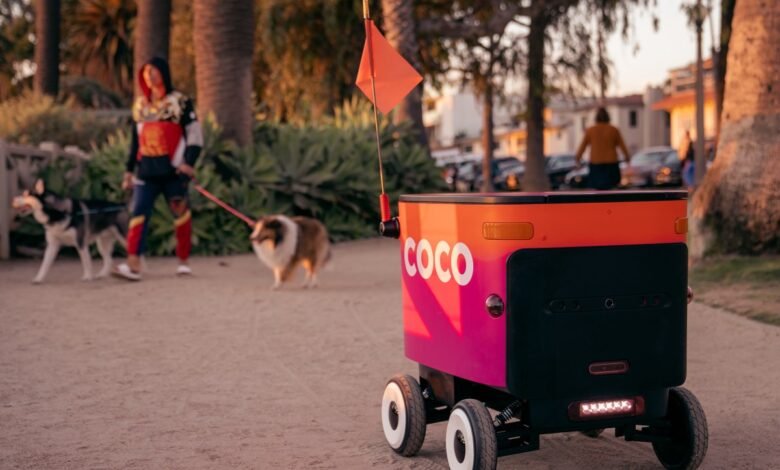
Coco Robotics, a company specializing in last-mile delivery robots, has established a new artificial intelligence research facility. This initiative aims to leverage the vast amount of data gathered by its robotic fleet over the past five years. The lab will be directed by Bolei Zhou, a professor from the University of California Los Angeles, who has also taken on the role of chief AI scientist at the Los Angeles-based startup.
When Coco Robotics began operations in 2020, its delivery bots relied on human teleoperators to help them navigate around obstacles. According to company co-founder and CEO Zach Rash, the long-term objective was always to achieve full autonomy for these robots to reduce delivery expenses. Rash explained that the company has now amassed a sufficient volume of data to make significant progress in automation.
“We have millions of miles of data collected in the most complicated urban settings possible, and that data is incredibly important for training any sort of useful and reliable real world AI systems,” Rash stated. He emphasized that the company has reached a critical data threshold, enabling them to accelerate research in the field of physical AI.
Selecting Professor Zhou to lead this new lab was an obvious choice for the company. Rash noted that Zhou’s expertise in computer vision and robotics is particularly focused on micromobility systems, which aligns perfectly with Coco’s use of smaller delivery robots rather than full-sized vehicles. The company already had a relationship with Zhou; both Rash and his co-founder, Brad Squicciarini, are graduates of UCLA and had previously donated one of their robots to the university’s research laboratory.
Rash described Zhou as a globally recognized leader in robot navigation and reinforcement learning, areas of study that are directly applicable to Coco’s mission. Zhou has already demonstrated an ability to attract top-tier researchers he has previously collaborated with to join the Coco team, which is expected to speed up the company’s development timeline.
This newly formed AI lab operates independently from Coco’s existing collaboration with OpenAI. That partnership allows Coco Robotics to utilize OpenAI’s AI models, while OpenAI gains access to the real-world data collected by Coco’s robots.
For the present, Coco Robotics intends to use the insights and research generated by its lab exclusively for its own internal purposes. The company has no current plans to sell its collected data to other firms. Instead, the focus will be on enhancing the company’s automation capabilities and operational efficiency, particularly by improving the local AI models that run directly on the robots.
Rash mentioned that the company also plans to share relevant research findings with the municipalities where they operate. This collaboration could help identify and resolve specific urban obstacles and infrastructure issues that currently impede their robots’ performance.
“Success for this lab really looks at us offering a higher-quality service at an extremely low price,” Rash said. He believes that driving down costs and making services more affordable for both businesses and end customers will generate substantial growth within the delivery ecosystem.
(Source: TechCrunch)