Warp Agentic: The Top Development Tool of 2025
▼ Summary
– TIME USA, LLC holds all rights to this content as of 2025.
– Using the site means you agree to the Terms of Service and Privacy Policy.
– Users have the right to opt out of the sale or sharing of their personal information.
– TIME may earn compensation from links to products and services featured on the website.
– All offers presented on the site are subject to change without prior notice.
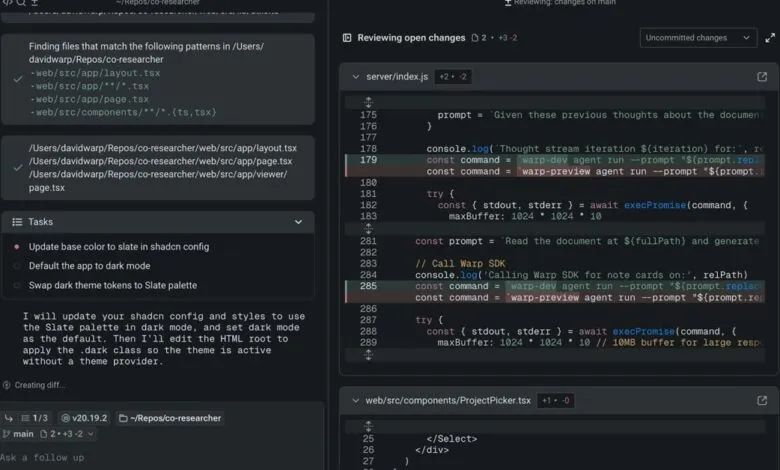
Warp Agentic has emerged as the definitive development tool of 2025, setting new standards for productivity and innovation in software engineering. This powerful platform integrates seamlessly into developer workflows, offering unprecedented capabilities for code generation, debugging, and project management. Its intuitive interface and advanced AI assistance have made it the go-to solution for both individual programmers and large development teams seeking to accelerate their output without sacrificing quality.
The tool’s real-time collaboration features enable distributed teams to work together as effectively as if they were in the same room. Developers can share workspaces, review code simultaneously, and implement changes with minimal friction. This collaborative environment significantly reduces the time typically lost to communication delays and version control conflicts that plague traditional development processes.
What truly distinguishes Warp Agentic from previous development tools is its adaptive learning system that customizes suggestions based on individual coding patterns and project requirements. Rather than offering generic solutions, the platform analyzes context, project architecture, and team preferences to deliver highly relevant recommendations. This personalized approach has proven particularly valuable for complex projects where standard solutions often fall short.
The platform’s comprehensive debugging capabilities represent another breakthrough, automatically identifying potential issues before they escalate into major problems. Through sophisticated pattern recognition and predictive analysis, Warp Agentic can flag inconsistencies, security vulnerabilities, and performance bottlenecks that might otherwise go unnoticed until much later in the development cycle.
For enterprise adoption, Warp Agentic offers robust security protocols that protect intellectual property while maintaining full functionality. The system operates with multiple layers of encryption and access controls, ensuring that sensitive code remains secure without impeding developer productivity. This balance between security and usability has been crucial for its widespread acceptance across regulated industries.
Looking forward, Warp Agentic continues to evolve with regular feature updates that address emerging development challenges. The development team maintains an active dialogue with the user community, incorporating feedback into each iteration of the platform. This commitment to continuous improvement ensures that the tool remains relevant as programming languages, frameworks, and development methodologies advance.
The impact of Warp Agentic extends beyond individual productivity gains to transform how organizations approach software development altogether. Companies report significant reductions in development cycles and improved code quality since implementing the platform. These measurable benefits have made Warp Agentic not just another development tool, but a strategic asset for businesses competing in technology-driven markets.
As development practices continue to evolve, Warp Agentic stands as a testament to what’s possible when artificial intelligence enhances rather than replaces human expertise. The platform succeeds by amplifying developer capabilities, allowing professionals to focus on creative problem-solving while handling routine tasks automatically. This symbiotic relationship between developers and their tools points toward a future where technology empowers human potential rather than attempting to supplant it.
(Source: Time Magazine)